Showing posts with label debt. Show all posts

Saturday, 25 January 2014

The two faces of Ed Balls


During the Labour leadership election, many people were impressed by Ed Balls' apparent conversion to a social democratic economic settlement as espoused in his Bloomberg speech.

But since then Balls has committed a Labour government in 2015 to sticking with Tory spending plans for at least the first year. He has also said that Labour will not promise to reverse Tory cuts, and that Labour would have to make more in office. He has supported the public sector pay freeze, while Ed Miliband somewhat contradictorily waxes on about the cost of living crisis.

This morning the media was filled with similar tough messages, briefing ahead of Balls' speech at the Fabian Society, including the parliamentary garbage that "Balls will promise to legislate for new fiscal rules within 12 months of the general election, including a commitment to a budget surplus by the end of the parliament". Legislate for it? Really? Will the chancellor be surcharged if the target is not met? Or will a technocrat be installed to make cuts? It really is nonsense. On the upside, it should be noted that Balls is committing to a current account surplus, which allows for borrowing for capital investment - see 'Borrowing for Growth - some advice for Ed'.
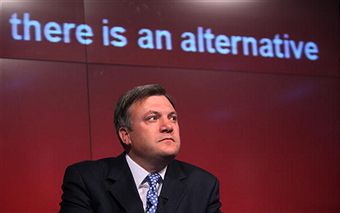
Nevertheless, like any wannabe chancellor, Balls knows how to pull a rabbit out of a hat. And so the tough, 'we'll enforce austerity too' message will be overshadowed by a debate about a modestly higher rate of income tax on a few high earners. It is very welcome that Balls has committed to restoring the 50% tax rate on those earning over £150,000. It was probably the most popular policy in Gordon Brown's premiership.

What is also welcome, and will hopefully be widely reported, is that Balls also said:
"The latest figures show that those earning over £150,000 paid almost £10 billion more in tax in the three years when the 50p top rate of tax was in place than when the government conducted its assessment of the tax back in 2012"
This corrects the crap put out by the Treasury in its dodgy dossier of the 2012 Budget. Both the move to pledge to restore the 50% rate and the analysis is welcome, and hints at a return to '
Bloomberg Balls'.

However, before Labour activists start getting weak at the knees about a return to some form of modest social democracy, Balls also told the Fabian conference that Labour supported the benefit cap, the public sector pay freeze, thought public utilities belonged in the open market, and that universal winter fuel payments for pensioners should be means-tested.

We've seen the two faces of Ed Balls today in one day. Capitulating to Osborne, the financial markets and the Murdoch media this morning, while throwing a modest redistributive morsel to the left at lunchtime. Bon appetit!

Thursday, 5 December 2013

Autumn Statement 2013: Evaluating Osborne ... 15% successful!


Are the austerians right and the opponents of austerity proved wrong? Is Osborne's strategy vindicated?

Let's judge by his own standards. In June 2010, just as the ink had dried on the coalition agreement, George Osborne rushed to the House of Commons to deliver an 'Emergency Budget'.
"It supports a strong enterprise-led recovery. It rewards work. And it protects the most vulnerable in our society. Yes it is tough; but it is also fair."
With this rhetoric, Osborne opened his remarks. But the devil was in the detail of the accompanying forecasts. So how has he done 3 years on? We evaluate:

Osborne predicted that economic growth would be 2.8% this year - a target he may get close to (we'll find out next month), but that was on the back on growth of 2.8% last year as well (instead, in 2012 the economy grew by just 0.2%). The OBR predicts that growth will be 1.4% in 2013 (but this is still an underestimate)

Far from being back on track, the UK economy still lags 2.5% below where we were in 2008. So at best half marks for Osborne on economic growth. And that's before we factor in growing concerns about the sustainability of George's recovery. Half marks.
  • Economic growth 0.5/1
That same June 2010 forecast predicted that average wage growth in 2013/14 would be 4.9%. With average wage 'growth' currently at just 0.7% there is no gentle way to put this, that was woefully wrong.

While this year the FTSE100 directors will see their seven-figure salaries increase by an average of 14%, for the rest of us there is no recovery. People's incomes have been cut in real terms. The ONS points out that the median household income has dropped 6.4% for working age households over the last five years. Fail.

  • Wages 0/1
Unemployment has declined marginally in recent months, but is still high at 7.6% of the economically active population. That figure however conceals stubbornly high youth unemployment and long-term unemployment - failed by shambolic government programmes.

In 2010, Osborne told us unemployment would today be just 6.8%. So 250,000 fewer people should be unemployed today had Osborne hit his target. Fail.
  • Unemployment 0/1
Given Osborne erroneously said he would deal with "our country's record debts" (they were nowhere near record levels) with austerity, one would assume he would have at least had some success in reducing our debt (or at least stemmed the rate of rising debt).

By now, predicted Osborne in 2010, our debt should be 73.7% of GDP. Instead it's 75.5%.

But much of that is because GDP is far lower than predicted, so not even half marks for getting close, so quarter marks.
  • Debt 0.25/1
The reason the Chancellor is not reducing the debt, is because the deficit has not been closed at anything like the rate he predicted. By now the deficit should have been just 5% of GDP. Today Osborne announced it would be 6.8%. In cash terms they predicted £63 billion in 2010, but today it's £111bn - 75% higher than the 2010 forecast. So he'll borrow £198 billion more than he planned. Fail.
  • Deficit 0/1

Overall 0.75 out of 5 (or 15%)

Thursday, 21 November 2013

Should Osborne be praying for the economy to stall?


After three quarters of economic growth, George Osborne has already transitioned from cautious optimism to full-on self congratulation. "The UK has been singled out as an example of the improvement and there is recognition that we have stuck to our economic plan", he said last month.

Let's leave aside that he hasn't stuck to his plan at all (the deficit was forecast in 2010 to be far lower today than it is, and as a result of two flatlining years he is borrowing over £200 billion more than planned). Let's even underplay that even today's public debt figures £8.1 billion this October, down from £8.2 billion for October last year, are hardly impressive.

Nevertheless the level of UK economic growth in the last three quarters (nine months) has surprised and exceeded most independent forecasts. The Bank of England declared earlier this week that
the UK is in "sustained recovery".

Three consecutive quarters of reasonable growth (by historical standards) is fairly hard to dismiss. What economists now disagree about is not whether recovery has been sustained, but whether it  is sustainable.

There's a good analysis of this question by the Independent's Ben Chu here. The key point is that the recovery is driven (largely) by debt, which has been both encouraged (through schemes like Help to Buy) and enforced (through declining real wages, benefits and high unemployment). As the chart below, personal debt remains at crisis-era highs
The question therefore is can growth continue with debt at high levels and real incomes declining?  The unstable retail sales figures - with October registering a fall that confounded predictions - are a warning sign to the optimists.

So the question is whether the recovery will stall - due to people reining in their spending without any compensating surge in government or corporate investment - or will it continue to grow as people take on ever greater debts?

If the latter is the case, then the ultimate result may be a sharp crash, caused by unsustainable levels of debt. That scenario should make George Osborne pray for the economy to stall (while he devises a sustainable growth strategy - something some of his opponents have been advocating and outlining since 2010).

Sunday, 4 August 2013

Nine million more struggle to pay bills


by Luke James
Austerity-Addicted Chancellor George Osborne has left nine million more people in financial difficulty compared with seven years ago, Money Advice Service revealed today.
The independent body found that 26 million people across Britain are now living on the brink of financial ruin - a massive 35 per cent rise since their last survey in 2006.
Failing Tory economic policies have sent hourly income plumetting by 6 per cent and sparked a "live for now" attitude to cash among the population.
For example, more than one in five of the 5,000 people surveyed would rather have £200 immediately than £400 in four months' times.
A Treasury spokesman claimed the government had helped households meet the rising cost of living by raising the personal tax allowance and freezing fuel duty.
He said: "We recognise that times are still tough for families, but Britain is holding its nerve, we are sticking to our plan and the British economy is on the mend."
But Labour shadow Treasury minister Catherine McKinnell said the figures bust George Osborne's "out of touch claims that people are better off."
She said: "This government's failed economic policies mean prices are rising much faster than wages. And their unfair choices have seen hard-working people hit hard while millionaires get a huge tax cut."
Ms McKinnell said Labour would help families "with a lower 10p starting rate of tax, paid for by a mansion tax, and take action to tackle soaring rail fares and energy prices."
TUC general secretary Frances O'Grady added that only "strong growth underpinned by decent jobs and higher pay" would end the "longest real wage squeeze since Victorian Times."
Separate figures showed there had been a 3 per cent rise in the number of people being force to declare themselves bankrupt over the last three months.
And the Left Economic Advisory Panel's Andrew Fisher warned: "As personal debt starts rising again it is clear that the squeeze on living standards also creates a huge economic risk if loan and mortgage defaults rise, threatening the banking sector again."

This article first appeared in the Morning Star

Wednesday, 1 May 2013

Borrowing for growth - some advice for Ed

Earlier this week Labour leader Ed Miliband made the case (somewhat haphazardly) for more short-term borrowing to stimulate the economy.

Not unexpectedly, Miliband's reluctance to admit that an alternative to austerity might involve borrowing was seized upon by the the right wing press.

Miliband's unease reflects a battle within Labour that has yet to be won. Seumas Milne analyses that ongoing political fight in his Guardian column. As Milne correctly observes:
"The Tories want to lure Labour into signing up for the same medicine – or a mildly watered down variant – as they did in the far more benign economic environment of 1997.

"If Miliband and Ed Balls (who still defends the 1997 decision to stick to Tory spending limits) fall into that trap, it would be a disaster – both for Labour's election prospects and the chances of rebuilding an economy that delivers for the heavily squeezed majority".
But I want to look at the economic timidity (and the power of the Tories' economic framing) that made Ed stutter in that interview.

Ed should have responded by saying this:
"Yes of course it means borrowing - but borrowing to grow the economy. George Osborne is borrowing over £240 billion more than he said, our debt is rising, because his policies are failing. He has to borrow for his failure, we would borrow for growth."

The graph to the right shows how Osborne's plan set out in his emergency budget has faltered - as many predicted it would - due to the self-defeating nature of austerity policies in an economy with already weak demand.

Labour should be ramming this home. The choice - framed by the Tories and put to Labour - is not between cutting spending or borrowing more. It is between borrowing for failure or borrowing for growth.

Ed Miliband should have had these arguments to his fingertips. The Labour leadership still seem caught in this false trap between borrowing or austerity. This stems from the acceptance of another narrative that Labour borrowing and investment in public services is the reason for the deficit today. It's not, no matter what economic illiterates like Liam Byrne scrawl.

In office New Labour spent less as a percentage of GDP than the governments of Thatcher and Major (as this graph shows) and had reduced the national debt prior to the economic collapse caused by the banking crisis (as this graph shows).

So while Ed should swat aside the silly jibes about Labour's spending, saying:
"The last Labour government invested in public services, while the governments of Thatcher and Major spent more on social failure, just like David Cameron's government today."

Finally, Labour's borrowing plans. All the World at One furore was caused by Ed Miliband's plan for a temporary VAT cut - "The point I was making yesterday was to get growth going by cutting VAT, then over time you will see borrowing actually fall. That was the point I was making."

There's a good solid case for permanently reducing VAT - a regressive flat tax - and redistributing the tax burden onto those on higher incomes (e.g. restoring 50% tax rate) or by taxing wealth (mansion tax). Assuming some revenue neutral combination of the above, there is a stimulus effect because poorer people have to spend their income, whereas the rich invest their surplus wealth. Taxing wealth of course unlocks capital.

However, a temporary VAT cut (and the timid message it sends) is hardly the most effective way of stimulating demand.

Why not instead argue for a mass housebuilding programme - that would create thousands of construction jobs (a sector where there is excess capacity) and more in the supply chain. Getting people into work (or more work) means more taxes and fewer benefits.

Building new homes, with a hefty chunk of council homes, would also meet an urgent social need and provide revenue to local government through rents. The knock-on impact of furnishing new homes would also boost the retail sector.

Housing is of course only one example, but there are others from new energy infrastructure, energy efficiency programmes to new transport networks.

By enmeshing economic stimulus with meeting social need, Labour could then mobilise thousands of people into backing their demands. But that needs the political fight to be fought and won within the party ... back to Seumas.

Wednesday, 13 March 2013

Why David Cameron is economically illiterate

David Cameron has managed to find folksy metaphors that have resonated. His one about the last Labour government "maxing out the nation's credit card" may be economically illiterate - implying that the state is like an individual consumer (a point demolished in this Guardian editorial) - but it certainly conveyed the claim that Labour had spent too much and that was why we're in a crisis.

"They didn't fix the roof when the sun was shining" resonated equally, even though it implies a classic Keynesian demand management strategy (that Labour should have raised taxes during the boom*) which Cameron would presumably reject ... but it did communicate a point that Labour was reckless.

However, his latest claim - from his speech on the economy last Thursday and repeated at Prime Minister's questions today - is that:
“They think that by borrowing more they would miraculously end up borrowing less ... Yes, it really is as incredible as that.”
But it's not incredible, in fact it's a common occurence for most people - and lends itself to a Cameron-style metaphor. Balls or Miliband could simply retort:
"It's like when you borrow money today to buy a house with a mortgage, so that tomorrow you spend less because you don't have any housing costs in later life"

The metaphor can actually be stretched even further:
"And why do we borrow more today? Just like the mortgage holder: to get an asset at the end of it. That's exactly like the infrastructure Labour is advocating on a million new council homes. As well as creating jobs, reducing unemployment, tackling homelessness and overcrowding, we'd also get extra income from council rents and save on the housing benefit bill. So yes, Mr Cameron we'll borrow more today so that we borrow less tomorrow."
In the FT today, Martin Wolf also assesses Cameron's economic credibility - and pulls no punches.


*instead Labour cut corporation tax from 33% to 28% during its period of office and only introduced the 50% tax rate from 1 April 2010, well after the boom had bust.

Saturday, 5 January 2013

Watch out – vultures about


By Mick Brooks

Argentina’s President Cristina Kirchner is having a little difficulty with vultures. ‘Vulture funds’ are trying to suck Argentina dry. A case in point is hedge fund Elliott Associates, run by American billionaire and Republican supporter Paul Singer.  

This is their modus operandi. In 2001 Argentina defaulted on foreign debts and 93% of bondholders agreed to take a loss. The vultures are the ‘holdouts’, the 7% of bondholders who refused to take a loss on their bonds and are now pursuing Argentina through the courts to get all their money back. They are vultures because they want to pick the carcass clean even though they don’t have the strength to kill the creature outright.

Argentine debts have been rolled over many times but they were ultimately incurred by military dictatorships that tortured and murdered thousands of Argentinean citizens. Why should ordinary Argentineans have to pay for their debts?

Whatever the outcome of the present quarrel, the existence of these vultures is evidence of the useless and parasitic forms of capitalism knocking around. It is normal under capitalism for failing firms to go bankrupt and for creditors to take a loss. Yet this process is not allowed to happen in the case of nation states.

In the old days they used to send a gunboat to collect the debts. Now the pressure is more subtle. The Argentinean case has been taken to a US court. Judge Griesa found in favour of the vultures. Among other things the judgement depended on his novel interpretation of the Latin phrase ‘pari passu’. It seems that an obscure New York judge can ignore the wishes of the elected government of Argentina and tell an entire country of 41 million people what they must do. He is acting as the hired gunslinger of Singer and the rest of the holdouts. An Argentine naval vessel has already been impounded in Ghana by an American court order. Such is the global reach of US law and US imperialism.

The USA is the most powerful country in the world. How did it build up this wealth and power?  Nobody now remembers that states such as Mississippi in the 1830s repudiated its debt to British bankers – and got away with it.

If the American judgement is confirmed, Argentina may have to repudiate all its debts, since the 93% who took a ‘haircut’ (a loss) on their bonds will be back for the rest of their money too. This could cause an international crash, and send the world economy back into recession. The USA would then lose, as well as the rest of the world. And all because some greedy speculator was let loose by a maverick American court!

Mainstream economists are unhappy at the judgement. Anne Krueger, former chief economist at the World Bank, comments, “Unless the Griesa ruling is overturned, this will open a can of worms that will have to be dealt with.”

The problems posed by the vultures pursuing Argentina are of general application. Greece is trying to buy off its creditors at a discount and bring down its mountain of debt. Again the perverse incentive applies: let everybody else cash in their bonds so the risk of Greek default fades and bond prices rise; then demand your money back. As economist Gabriel Stern notes, “The more you raise the price and the more you encourage participation, the better it is for those who don’t participate.” It’s a free ride for the vultures.

Already hedge funds have been in operation applying this principle. They bought Greek bonds when they were regarded as most useful as toilet paper and sold for just 11% of their face value. They gambled that the authorities would do all in their power to prevent a default and therefore Greek bond prices would rise one day. They were right. The rumour is that they stand to make 200% profit in six months.

The good news is that the European authorities intend to introduce Collective Action Clauses (CACs) to whip holdouts into line in debt restructuring deals in future. The bad news is that the main lawyer dealing with the Greek debt problem affirms that it will take decades before CAC clauses are fully incorporated into a government’s debt stock.

The shenanigans of the vulture funds are all instances of what Adair Turner, head of the Financial Services Authority called “socially useless activity.” At least vultures keep the veldt clean. The vulture funds are a case of capitalism devouring its own entrails.

Saturday, 18 February 2012

Unemployment, the economy and the new slave labour

"Look after unemployment and the Budget will look after itself" - John Maynard Keynes, 1933

Unemployment rose by 48,000 in the past three months to 2.67 million, the economy managed only 0.3% growth in the past year, and Osborne is having to borrow far more than he planned - not to invest in the economy, but just to service debt.

Keynes made that statement in the 1930s when politicians were heading in completely the wrong direction under Ramsay MacDonald's national government. Reducing unemployment is the key to closing the deficit and reducing Britain's mounting debts. More people in work means more taxes coming to Treasury coffers, and less being paid out in benefits (not just the pitifully low jobseeker's allowance, but in housing benefit and other reliefs).

More people in work means more disposable income in the economy to help sustain jobs in the service and retail sectors. This will keep more people in work in those areas and would give businesses the confident to invest; creating more jobs. There's also the added bonus of extra VAT revenues too (a virtuous circle you might say).

The right will be quick to jump on the Keynesian analysis - and ask how will all these new jobs be funded? The simple answer is by borrowing. The knuckle-dragging morons of the right will then glibly quip 'oh so your solution to a debt crisis is to borrow more'. This is your chance to quip back 'yes, like George Osborne is - an extra £46bn in fact, because your stupid way doesn't work'. What would £46bn fund? Well crudely over 1.8m jobs paying £25,000 (which would in turn give back billions in tax revenue).

Instead of this Keynesian approach, Osborne is following the Thatcherite monetarist approach. Osborne also recognises that welfare costs will rise when unemployment is high, but his solution is cutting £20bn from welfare over four years. This is attacking the victims of the economic crisis.

Workfare is a particularly vile element of this 'welfare reform', in which claimants are offered, or forced onto, placements in large corporations to work near full-time hours for free. This benefits the profit margins of the companies, but does not create jobs. In fact given there are to be at least 250,000 of these placements then it is fair to assume that some job substitution will go on, and that it will have some effect in suppressing wages.

While 2.67 million people are unemployed, there are only 476,000 vacancies in the economy. The TUC has done valuable work showing that actually there are as many as 6.3 million people looking for work, by applying the US U6 model to the UK - and those just wanting to change jobs.

Are workfare placements included in the vacancies figures?

More worrying still is that some of the 476,000 vacancies, the ONS cites, might actually be unpaid work placements. Following the emergence of a Tesco ad for night shift workers on 'JSA+Expenses', LEAP asked the ONS 'do the 476,000 vacancies in the Labour Market Survey data include unpaid work placements through DWP work experience schemes?' The reply was underwhelming: 'It is unlikely to be included as businesses are asked how many people they are looking to recruit from outside their business'. 'unlikely' is not the reassurance we wanted, but the rest of the message is worse - workfare placements are recruited from outside the business as the numerous workfare ads now emerging in Jobcentres prove.

Ineffective and immoral

The DWP's own research has found that "workfare is least effective in getting people into jobs in weak labour markets where unemployment is high" (so like now then), and further adds "schemes that pay a wage can be more effective in raising employment than 'work for benefit' programmes".

For 16-24 year olds - 22.2% of whom are unemployed and who make up around 40% of all the unemployed - the Work Experience Programme offers the opportunity to experience slave labour in a modern setting. Now, some people have criticised groups for calling workfare, 'slave labour', and they're right: slave labour was often provided with food and tied housing.

Many of us point to the 1930s and Keynes because he was arguing against a political consensus of idiots who were wrecking the economy and with it millions of lives. Many of us have argued that this government is winding back the clock to the same period - ripping up the post-war welfare state. Now with the reintroduction of slave labour, it is clear the Tories and Liberals want to go back even further to the early 19th century - a time when slavery had only relatively recently been made illegal. But even then the Tories didn't argue for its restoration.

Wednesday, 12 October 2011

End the rule of the 1% as economy implodes

The force of the global economic implosion, which has seen unemployment skyrocket to a 17-year high in the UK, overwhelmed its first eurozone government last night. It is unlikely to be the last.

The Slovakian parliament voted to reject a stronger European Financial Stability Fund (EFSF) and hence a second rescue package for Greece. This was despite immense political pressure from the European Central Bank, the European Commission and the International Monetary Fund, as well as the US administration.

They all warned of the systemic nature of the worsening crisis and the direst of consequences for the world capitalist economy should Greece be allowed to fail. As a result of the vote, the coalition government of Slovak Prime Minister Iveta Radicova fell after a small party in her ruling coalition refused to back the plans.

The EFSF is the capitalist powers’ main weapon in dealing with the debt crisis that threatens the European common currency, the region's banks and the global financial system. But eurozone rules require all of the 17 member states to ratify the new plan and Slovakia was the last to vote after all the others had given their agreement.

Now the international lending agencies, responsible for holding the crumbling system together, have to stitch together a new interpretation of the rules allowing the package to be put into operation, whilst they wait to see if a more compliant government will emerge in Slovakia.

Just a few short weeks remain before the Greek government will run out of money and cease to be able to pay wages or pensions for the public sector employees who make up one fifth of the country’s workforce. But the price of the new, wholly inadequate deal would see further tax rises, jobs destroyed, wages cut and – to the banks’ horror – a write-down of the money they are owed by the Greek government by as much as 50%.

As those in the race to contain or deflect the impact of the deepening crisis struggle with its European expression, insolvency practitioners in the United States and elsewhere are gearing up for a busy time ahead.
Bankrupt book chain Borders, for instance, recently closed its doors after failing to find a buyer. Moody's credit rating agency says the number of troubled companies rose for the third month in a row in September, an ominous sign similar to the third quarter of 2007 when the economy slid into recession and the ensuing crash engulfed the world.

And in another blow for the New Green Dealers who are promoting an eco- friendly growth-oriented capitalist solution to climate change, recent failures included renewable energy companies Evergreen Solar and Solyndra. The latter collapsed in a politically-charged bankruptcy after taking a $535 million loan from the US federal government.

This time around China cannot come to the aid of the ailing system. As is now becoming clear, its huge injection of spending on infrastructure developments to ward off the impact of the global crisis on its domestic economy, has taken its toll internally.

A Reuters special report on China noted:
Local governments had amassed 10.7 trillion yuan in debt at the end of 2010. The government expects 2.5 to 3 trillion yuan of that will turn sour, while Standard and Chartered reckons as much as 8 to 9 trillion yuan will not be repaid – or about $1.2 trillion to $1.4 trillion. In other words, the potential debt defaults could be even larger than the $700 billion U.S. bail-out programme during the 2008 crisis.
Be warned. Any and every attempt at shoring up the defences of the capitalist system will involve an unimaginable, intolerable assault on the lives of billions of people. Almost a million young people are on the dole in Britain already, according to today’s figures.l

Saturday’s global occupation of city and town squares should become the focus for shaping a new social, economic and democratic political system founded upon the satisfaction of human needs. The 1% cannot be allowed to continue their rule over the 99%.

Gerry Gold
Economics editor
12 October 2011
reposted from
www.aworldtowin.net 

Thursday, 6 October 2011

Dismantling the government’s ideological economic argument


Mehdi Hasan is a prolific tweeter, blogger and writer, and the senior political editor of the New Statesman. Earlier this year he also found time to write a
biography of Ed Miliband.

The Debt Delusion would be of great use to Ed Miliband since Hasan has assembled an array of arguments that dismantles the government’s economic agenda far more effectively than the official opposition has so far managed.

The short book takes aim at 10 myths perpetuated by the coalition about the debt and the deficit – and what remedies are most effective to reduce the debt, close the deficit and get the economy growing again.

One of the most alluring arguments deployed by the prime minister and the chancellor has been their equating of the national debt with a credit card, accusing Labour of
“maxing out the nation’s credit card”. But, as Hasan points out:

"Governments can increase their revenues by raising taxes; households cannot. Governments can print money and issue currency; households cannot."

As well as arming activists with some useful conceptual arguments, the book also puts
its case with some indisputable facts and statistics: like how there are only two cases out of 15 studied by the International Monetary Fund when cuts preceded economic growth.

There is also an interesting international comparison demonstrating that in 2009 the
UK took less as a proportion in tax than Denmark, Sweden, Italy, Belgium, France, Luxembourg and Germany – and yet George Osborne’s first move as chancellor was to cut business taxes.

The conclusion is straightforward: the government’s economic policy “is part of a
political and ideological project to roll back the frontiers of the state”. As Hasan says: “The debt is just a distraction.”

For activists it is a useful complement to our own union’s pamphlet ‘There is an Alternative’ – see pcs.org.uk/alternative – which has helped change the terms of the debate and won praise from other unions.

Saturday, 1 October 2011

There is an Alternative ... but a few less cuts a bit slower is not it

The UK does not have a debt crisis. Our debt is only around 60% of the annual value of the UK economy, or GDP. The UK’s debt was over 100% of GDP for every year between 1918 and 1963. The UK has £9 trillion of wealth, while our total debt is about £850 million. It’s like panicking about owing someone 95p when you have £10 in your pocket.

There is a problem that we are spending more than we are receiving in revenue. This is the deficit. No one denies there is a deficit. How to close the deficit is where we disagree.

The Tory and Lib Dem coalition says there must be savage cuts to public services and jobs. This is the same strategy that has failed in Greece and Ireland.

It’s like the medieval quacks who used to keep cutting away the infected parts of the body – and then they wondered why the patient died. The medical profession has learned to treat the problem not just to hack away. Some economists and politicians need to learn the same lesson too.

Labour has to offer an alternative to the failed policies of this Cabinet of millionaires. That alternative cannot be based on the demands of the City but on the demands of people: for jobs, decent pay, fair pensions and good public services.

Our economy has to shift away from its dangerous over-reliance on a deregulated and risky finance sector. We need state-controlled banks that act and invest in the public interest – not investing in what produces the highest returns for an already super-rich elite, but what benefits our communities.

Did we nationalise the banks in the 2008/09 bailouts or did we just privatise public money? If we allow the same bankers to run our banks and our economy again, how can we reduce inequality, how can we get investment in jobs, and how can we stop the tax avoidance schemes that deprive us of the revenue to invest in decent public services and welfare for all.

The LRC supports the ‘One Million Climate Jobs Now’ pamphlet: a costed programme to create jobs and invest in industry that can also transform our economy to environmental sustainability.

Above all we need an economy that operates in the public interest. If the mass people’s party is not in favour of this it has lost its way.

This text was prepared for the LRC's bulletin for Labour Party conference 2011.

Wednesday, 21 September 2011

Delusional IMF in the dark

Confusion and disarray is apparent in every national and global capitalist institution – and nowhere more so than in the corridors of the International Monetary Fund. Despite access to confidential data, they don’t really have a clue as to what’s going on. When Olivier Blanchard, the IMF’s director of the research, introduced its latest World Economic Outlook (WEO) with sombre demeanour and measured words, he wasn’t pulling his punches:
The global economy has entered a dangerous new phase. The recovery has weakened considerably and downside risks have increased sharply,” he announced. "Fear of the unknown is very high. Stock prices have fallen. These will adversely affect spending and growth in the months to come.
Blanchard added:
Markets have clearly become more sceptical about the ability of many countries to stabilise their public debt.
Bad enough.

 But in the first paragraph of his foreword to the WEO, in which he calls himself “economic counsellor”, he makes an astonishing admission:
Relative to our previous World Economic Outlook last April, the economic recovery has become much more uncertain. The world economy suffers from the confluence of two adverse developments. The first is a much slower recovery in advanced economies since the beginning of the year, a development we largely failed to perceive as it was happening. The second is a large increase in fiscal and financial uncertainty, which has been particularly pronounced since August.
To repeat – “a development we largely failed to perceive as it was happening”.

 With all the resources they have at their disposal, how did they get it so wrong? It surely does no good at all for the reputation of counsellors of all kinds.

 With their oft-repeated mantra of a recovery, of a return to growth, the IMF has consistently underestimated the scale of the crisis, and overestimated the ability of governments and central banks to do anything about it.

 They have deluded themselves, and they have deluded governments and central banks. In 2008, for example they forecast that the UK economy would fall by 0.1 per cent in 2009 but it actually fell by almost 5%.

 Now that the necessity of a global contraction is evident to anyone with even a smattering of an understanding of the limits to growth, the IMF both continues on its delusional path, but is simultaneously forced to change tack.

 It has downgraded its economic outlook for the UK, the US and Europe through to the end of next year, effectively pulling the rug from all the deficit reduction plans in the world. It now predicts that UK gross domestic product will grow just 1.1% in 2011, compared with its April prediction of 1.7% The US, it says will grow by just 0.4% more than the UK and may already be in recession. But at the same time it warns that “if growth threatens to slow down substantially”, if activity were to undershoot current expectations, countries like the UK and Germany should “consider delaying some of their planned adjustment”.

 Which means, says the IMF, that the UK Coalition, adamant that its brutal austerity programme must stand, will have to think again. Government spending cuts may have to be delayed to avoid a greater catastrophe.

 If you or I put up a piece of work like the WEO we’d be out on our ears, but the IMF is accountable to no-one. Its enforcers are due back in Athens next week checking on the government’s progress with cutting wages, putting people out of work, selling off national assets etc etc.

 So now it’s time to build alternative, revolutionary governments everywhere, with the power to implement the May 27th vote of the People’s Assembly of Syntagma Square which ends:

 ‘We will not leave the squares until those who compelled us to come here, leave the country: the governments, the Troika (EU, ECB, IMF), banks, the IMF Memoranda, and everyone who exploits us. We send them the message that the debt is not ours.”

Gerry Gold, Economics editor. A World to Win

Wednesday, 1 December 2010

The ultra-rich could solve this financial crisis


Surely it is far better to inconvenience 1,000 of the country's richest people than destroy millions of lives

The news that 'only' around 330,000 public sector jobs will be lost, is of little comfort to millions of people; especially as another 500,000 are likely disappear from the private sector. The government's austerity plans will hasten home repossessions, shop closures, increase hospital queues and condemn children to crumbling schools. Yet the chancellor has been quiet about the contribution expected from the ultra-rich.

Warren Buffett, the world's third-richest person, estimated to worth around $37bn (£24bn), has urged the US government to tax the rich more saying "people at the high end, people like myself should be paying a lot more in taxes. We have it better than we've ever had it". Yet there is deafening silence from his UK counterparts. The government can solve the financial crisis by inconveniencing the richest 1,000 people in the UK.

According to the Sunday Times Rich List, the collective wealth of the 1,000 richest people in the UK rose to £335.5bn in 2010. 53 of the richest 1,000 are billionaires. In 1997, when Labour came to office, the collective wealth of the richest 1,000 stood at £98.99bn. No other group has received such a massive boost in its wealth. Even if they have all the clothes, mansions, cars, yachts and jets they want, they still cannot spend it all. They came into this world empty-handed and will exit in exactly the same way, but leave behind impoverished citizens and employees when they could easily give 25%, or some £84bn of their wealth away without any noticeable effect on the quality of their life. This redistribution would reduce and probably eliminate the need for deeper cuts.

With a private fortune of £22.45bn, steel tycoon Lakshmi Mittal is thought to be Britain's richest man. He has connections with offshore tax havens, but his wealth has been amassed though cultivation of the UK political machinery. Tony Blair personally intervened to help him expand his empire in Romania and other places. Some years ago, he spent £38m on the wedding of his daughter and also bought her a £70m mansion in Kensington Gardens in London.

Others on the ultra-rich list include Chelsea football club owner and oil industry magnate Roman Abramovich, worth some £7.4bn; Gerald Cavendish Grosvenor, the 6th Duke of Westminster, whose company Grosvenor Estates is one of the largest property developer and landowner in the UK and worth some £6.75bn. Brothers Simon and David Reuben have amassed a fortune estimated to be around £5.5bn, largely through property, private equity and the Wellington Pub Company.

Sir Philip Green, owner of BHS and Top Shop, is estimated to be worth £4.1bn. Sir Philip, an adviser to the government, has registered the shares in his business empire in his Monaco-resident wife's name to avoid UK taxes. Sir Richard Branson has a fondness of tax havens and weighs in at £2.6bn. Sports entrepreneur Bernie Ecclestone, one-time donor to the Labour party, weighs in at £1.4bn.

Politics is about choices. The government can choose to punish millions of people for the recession that they did not cause, or inconvenience a few rich people. These rich people have gained the most in the boom years. The richest 1% of the population owns 21% of marketable wealth and the bottom 50% own just 7% of the wealth; and if the value of the dwellings is taken out then that figure stands at around 1%. The proportion of gross domestic product going to employees in the shape of wages and salaries has declined from 65.1% in 1976 and now stands at around 55% (see Table D). Ordinary people just don't have the capacity to take economic hits.

We have given the ultra-rich UK passports, peerages, knighthoods, public accolades and public services. Yet many respond by avoiding taxes and impoverishing employees. Without social stability and people's purchasing power they cannot keep or multiply their wealth. The prime minister, David Cameron, could ask his billionaire friend Lord Ashcroft to mobilise the billionaires and ask them to give 25% of their wealth to the country. He could be assisted by the "you've never had it so good" Lord Young.

Surely it is far better to inconvenience 1,000 people than destroy millions of lives. If rich turkeys don't voluntarily vote for Christmas they could be helped by a mansion tax, a wealth tax, the end of their offshore tax haven shenanigans, higher rates of income tax and a higher rate of value added tax on luxury goods.

This article first appeared on Comment is Free

See also proposals for a Wealth Tax

Contagion of revolt

Protests by students and teachers throughout Europe are mounting as governments try to offset savage reductions in education budgets with increased fees in the losing race to prevent state bankruptcy.

Students marched throughout Britain yesterday as well in Italian cities yesterday in protest against attacks on education, blocking roads and railway lines in some of the biggest demonstrations seen in decades.

Hopes that the feverish activity resulting in an €85bn loan package for Ireland would inhibit the debt contagion spreading throughout Europe and the rest of the world were dashed as global investors immediately sent the rates soaring for lending to Portugal, Italy and Spain as well as Ireland and Greece.

"The crisis is intensifying and worsening," said Nick Matthews, a credit expert at the Royal Bank of Scotland. "Bond [government debt] purchases by the European Central Bank are the only anti-contagion weapon left. It needs to act much more aggressively."

Agreement on a European Stability Mechanism (ESM) to be launched in mid-2013 will be far too late to prevent a string of state bankruptcies. The loan package for Ireland itself postpones the intention of the ESM to force banks and hedge funds to take losses if a country runs out of money. The UK’s contribution to the Irish package is an attempt to ease the strains on the interdependence of the failed Irish economy and UK-based banks.

The ESM, if it comes into force, will not only test the power of the Eurozone governments against the global banks and non-banks, but will require a long process to arrive at unanimous agreement among Eurozone countries that a country is insolvent and qualifies for help.

As the crisis continued to spread, French Minister for the economy, Christine Lagarde says that each European country is facing very different conditions and each should be treated on a case by case basis. Whilst it is true that the levels of indebtedness vary, the development of the global economy means that debt is universal and the fate of each country is entangled with the fate of the whole world system, not just that of the Eurozone or even the whole of Europe.

In the US, the fallout from the mortgage defaults that triggered the global meltdown in 2008 is continuing despite the launch of a second round of quantitative easing or printing of money. US house prices fell for the third month running in September and at a quicker-than-expected rate.

The end of the government’s tax incentive for first-time homebuyers joined persistent unemployment, high rates of foreclosure and an excess of vacant homes. Home prices have plunged by 28.6 per cent since peaking in June 2006.

As every desperate economic measure stokes up social unrest, the time has come for a new kind of politics. Iceland was the first country to be driven into bankruptcy by the global financial meltdown of 2007/8. It has just elected a 25-person Constitutional Parliament to re-write its constitution for the first time in the Republic’s history.

It is a small indication of the much bigger political changes needed to resolve the economic, social and ecological catastrophe caused by capitalist production. The December 11 event in London on creating People’s Assemblies would be a good place to start.(http://www.peoplesassemblies.org/)

Gerry Gold
Economics editor
December 1, 2010
reposted from http://www.aworldtwowin.net/

Thursday, 4 November 2010

Osborne's unavoidable desire to roll back the state

To analyse the coalition government’s Comprehensive Spending Review (CSR) we have to understand its purpose. Was this the economic strategy to get "our country back from the brink of bankruptcy" as George Osborne said in the final rhetorical flourish of his Commons statement?

Let’s analyse that claim. As a sovereign country with its own currency bankruptcy is near-impossible – we can always print more money. But that technicality aside, Britain would have to be in unprecedented levels of crisis to become functionally bankrupt. The UK’s national debt is lower than that of Germany, France, the US – and about a quarter of Japan’s! Our debt, currently 56% of GDP is not high by historical standards, and we are able to borrow over long repayment periods at low rates. Our debt is nowhere near high risk.

Osborne and many monetarist economists would argue that the deficit – the annual gap between expenditure and revenue – is however a problem, wider than that of many nations and at an historically high level. He said in the Budget that the deficit was the result of Labour’s profligate public spending, amassed “from a decade of debt”.

A quick check of the figures proves this to be untrue. Labour inherited a national debt of 42% in 1997, which had been reduced to 29% by 2002, and rose slightly to 36% in 2008. Then the global banking crisis occurred and the deficit rocketed as unemployment rose, tax revenues collapsed and welfare spending increased.

But whatever the reasons, it is perhaps true that “tackling this budget deficit is unavoidable”. It is certainly desirable – as otherwise debt will increase and interest payments will eat further into spending and curtail useful expenditure.

If we accept that dealing with the deficit is desirable, that still does not make Osborne’s choices unavoidable.

There are three ways to deal with the deficit: I’ll characterise them as Marxist class war, Keynesian, and Osborne’s class war. Each could achieve the goal of closing the deficit, they are political choices.

The first is the ‘Marxist route’ – this is not deficit-denial, but debt denial – deny that we should pay. You either expropriate from the rich and big business to pay or risk the invocation of sanctions, embargos and even war by repudiating the debt and not paying at all. Argentina managed it a few years back, but it requires us to be in a revolutionary situation and we are not, yet, so let’s move on.

The next is the Keynesian path. This requires restoring revenues (rather than cutting expenditure) to close the deficit. It means deficit spending, public investment, job creation, probably aligned with redistributive taxation.

Of course what we got was the Osborne class war model: cutting capital expenditure, freezing pay, increasing VAT, cutting jobs and welfare, yet still expecting a private sector led recovery. It is not just anti-Keynesian, it is anti-logical.

It means rolling back the state, to cut expenditure to match reduced revenue. Growth is subject to a laissez-faire leave-it-to-the-market strategy, but public spending must be pared back.

*This is the first half of an article that appears in the November 2010 issue of Labour Briefing

Friday, 15 October 2010

No cuts! Introduce a Wealth Tax instead

LEAP met with Professor Greg Philo yesterday, who presented the case for a Wealth Tax to solve the deficit.

It certainly put things in perspective. The UK has a national debt of £800 billion. By comparison, the total personal wealth in the UK is £9,000bn. It is mostly concentrated at the top, so the richest 10% own £4,000bn (by contrast, the poorest half have less than one-tenth of the total UK personal wealth).

What Professor Philo proposes is a 20% wealth tax on the wealthiest 10%, which would pay off the national debt and dramatically reduce the deficit, since interest payments on the debt are a large part of government spending.

The richest 10% have only to assume liability for their small part of the debt. They can pay a low rate of interest on it and if they wish make it a charge on their property when they die. It would be akin to a student loan for the rich.

Polling suggests a Wealth Tax would be popular, a YouGov poll of over 2,000 people found very strong support, with 74% of the population approving (44% strongly approving). Only 10% did not approve.

Footage of Professor Philo propounding a Wealth Tax on the Politics Show, to a rather bemused Tory MP and Labour's Yvette Cooper, is embedded below:


You can also read more about the Wealth Tax on the Glasgow Media Group website.

Thursday, 29 April 2010

The credit rating agencies

Greek debt was downgraded to 'junk' status by the credit rating agencies earlier this week, and yesterday Spain was taken down a notch from AA+ to AA - but who are these credit rating agencies, and are they right?

One of the major credit rating agencies, Standard & Poors, describes itself as "a leader of financial-market intelligence", while another, Moody's, modestly says its "commitment and expertise contribute to stable, transparent and integrated financial markets, protecting the integrity of credit".

Cast your mind back however to the beginning of this crisis - when the 'credit crunch' euphemism was still being used. What happened? A large number of structured investment vehicles, special purpose vehicles and collateralised debt obligations were found to be worthless - bundled up packages of unrepayable sub-prime mortgages and the like.

Now why would banks have traded these disastrous investments? The answer lies in the credit rating agencies which rated these truly junk investments as AAA in many cases. And who pays credit rating agencies to give a rating? The selling bank. So if you're client comes to you, and pays you lots of money to give something it is trying to sell a rating, do you (a) please your client; or (b) give an honest assessment? The credit crunch answered that question, yet still the credit rating agencies deem themselves fit to tell the world what is a good investment or not.

Is the Greek economy really more risky than a bundle of sub-prime mortgages? No - though there are problems. And what about Spain, Portugal, Italy and the UK, all highly indebted? Let's look at the effect of downgrades or the threat of downgrades:

1) It makes the interest rate on loans higher
2) It deters investors from buying debt / making further loans
3) This forces further austerity measures

The immediate effect on Greece has been further calls from creditors for more 'reform' and 'austerity measures'. This means the market taking more control through privatisation and the Greek people paying with cuts to their services, pensions and benefits. Fearing it could be downgraded to 'junk' next, Portugal announced tougher austerity measures yetserday - held at gunpoint to pay for the crisis by the very people who caused the crisis.

This is the problem of the credit markets being almost entirely unregulated and totally in private hands. Gangster capitalism is thriving

Saturday, 13 February 2010

Greece is the word, democracy isn't

Ancient Greece was the birthplace of democracy - the word coming from two Greek words demos (meaning 'the people') and kratos (meaning 'to rule').

It was very clear this week that in modern Greece the people certainly don't rule, though they are fighting back.

By joining the Eurozone, Greece is subject to the Growth and Stability Pact (meaning its deficit cannot exceed 3% of GDP) and its currency is run by the European Central Bank (ECB). As a relatively minor economic force what hope have the people of Greece got of the ECB taking decisions in its favour?

The EU approved austerity plan was reported on the BBC as being:
  • Cut budget deficit below EU ceiling of 3% of GDP by 2012, from 12.7% in 2009
  • Freeze public sector salaries and cut bonuses
  • Replace only one in five of people leaving civil service
  • Raise average retirement age by two years to 63, by 2015
  • Raise taxes on fuel, tobacco, alcohol and property
In short, freeze public sector pay, cut public sector jobs , make people work longer, raise regressive taxes. Yes, the EU's solution to the crisis of neoliberalism is more neoliberalism.

There are lessons for the UK here too - our deficit is about the same as that of Greece (12.5% to 13%). If the UK was in the Eurozone we might be having austerity packages imposed on us. As ever with the UK though we don't wait to have economic stupidity imposed upon us - we have three political parties fighting a general election on so far mystery austerity packages (cuts: bold, swingeing or savage - the choice is yours!).

Friday, 20 November 2009

Attention! Deficit disorder


John McDonnell MP

From today's Morning Star

This week the Treasury confirmed that the government budget deficit had reached record levels of £11.4 billion last month.

This bombshell means the experts have had to revise their estimate of what the annual deficit could pan out to be. A whopping £190bn is their calculation.

Add to this collapsing tax receipts as the recession bites and the costs of having over 2.5 million people unemployed, and you're left with a major economic headache.

The big three parties are all in firm agreement that reducing and eliminating the deficit are central priorities for the coming period, whoever is in office.

The only difference between them is the timescale they have in mind.

In the Queen's speech this week Labour introduced proposals for a Fiscal Responsibility Bill, which would commit it to cutting the deficit by 50 per cent in four years, while Vince Cable and Nick Clegg of the Lib Dems are calling for Gordon Brown to launch into "savage cuts."

As part of his strategy to position the Conservatives as the party of economic responsibility, David Cameron is playing hardball. He's suggested that a Tory government would eliminate the whole deficit in one Parliament.

Cameron's recent speeches referring to the iniquities of big government are crude attempts to lay down some semblance of justification for plans to cut public spending and reduce public borrowing.

His big-government theme is reminiscent of the Thatcherite arguments of the 1970s and '80s, when the government pushed policies to "get government off people's backs."

A return to economic growth could reduce the deficit, but even if the current recession is coming to an end, few would predict spectacular growth over the next few years.

The Organisation for Economic Co-operation and Development is predicting no more than 1 to 2 per cent growth up to 2011.

There is residual anxiety that the shaky US property market could still tip the British economy back into recession at any stage during this period.

The only alternative available to reduce the deficit is to secure more tax revenues.

But neither Labour nor the Tories are willing to increase taxes or take any serious measures to tackle the large-scale tax evasion and avoidance which are sapping our public finances to the tune of £150bn a year, according to the Tax Justice Network.

This political consensus across the main parties holds out the prospect of public service cutbacks on a scale not seen in this country since the '30s.

According to the Budget figures for 2009, the government's total managed annual expenditure is £671bn.

Even if we allowed for the predicted 1 per cent growth in the economy over the coming years, any government aiming to wipe off £190bn debt within one period of office would have to launch a programme of cuts of £30-35bn per year for the five years of that Parliament.

This would mean cutting 25 per cent of all government expenditure.

People need to be made aware of what a 25 per cent cut in public services would look like.

Crudely, 25 per cent cuts could mean the axing of over:

7,000 GPs
4,000 NHS dentists
400 NHS hospitals
750 secondary schools
100,000 teachers
10,000 firefighters.

The Tories have made it clear that they want to cut the welfare benefits bill, particularly the dole and pensions.

Cuts on the scale required to make any real impact on the deficit would require a cut in unemployment benefit, already the lowest in Europe, to £48 per week and raising the state retirement age to 69 immediately.

This is what we are now facing as a result of an economic recession created by bankers, speculators, profiteers and their supporters in government.

All the main political parties have decided that we will pay for this crisis, not the the institutions or individuals that caused it.

Having used our money to stabilise the financial system, the government has stood back and allowed the speculators to return to business as usual. Bankers are in line to receive £6bn in bonuses this Christmas.

But even if the main political parties are not willing to consider an alternative to this insanity, many people are.

Ordinary people are still fuming at the bankers with their bonuses and the politicians with their expenses, who colluded to bring about this crisis and who are now colluding to ensure it is us not them that pay for it.

The role of the People's Charter is to fill the vacuum left by the bankrupt strategy of these political parties.

By setting out a straightforward analysis of the crisis, the charter provides an alternative view of causes of the unemployment and the threat to our public services that we are facing.

By setting out a common-sense set of basic policies, the charter offers a way of developing an alternative strategy to take the economy out of recession in a way that could transform the future of our society.

Already endorsed by trade unions, the TUC and enthusiastically supported by the Labour Representation Committee at its annual conference last week, the charter is beginning to catch the wind at a time when an alternative to the sterile consensus of the main political parties is desperately needed.

The charter could be the benchmark by which people will decide how they cast their votes in the coming election.

John McDonnell MP is Chair of the Labour Representation Committee.

Wednesday, 22 July 2009

Public sector debt hits nearly £800bn

Figures out earlier this week showed that public sector borrowing has now soared to £798.8bn, equivalent to a record 56.6% of GDP.

The perverse and increasingly dishonest debate between the three main parties is how about how to cut out-of-control public spending - with public sector pensions, student grants, welfare, the fire service, Royal Mail, and a whole host of other useful items being bandied about without any consideration of why they exist now.

However, public spending in the year to June rose only by 0.9 per cent in real terms. Public spending is not out of control. We are in debt because of the bank bailout, and because of falling tax receipts.

If cuts are needed, then we should be happy to identify them: Trident and ID cards would be a good start. The 'Our Taxes, Our Lives' campaign is making exactly that point.

There's also a good article from Wednesday's Morning Star, 'Public spending is not to blame'.