Showing posts with label minimum wage. Show all posts

Tuesday, 24 September 2013

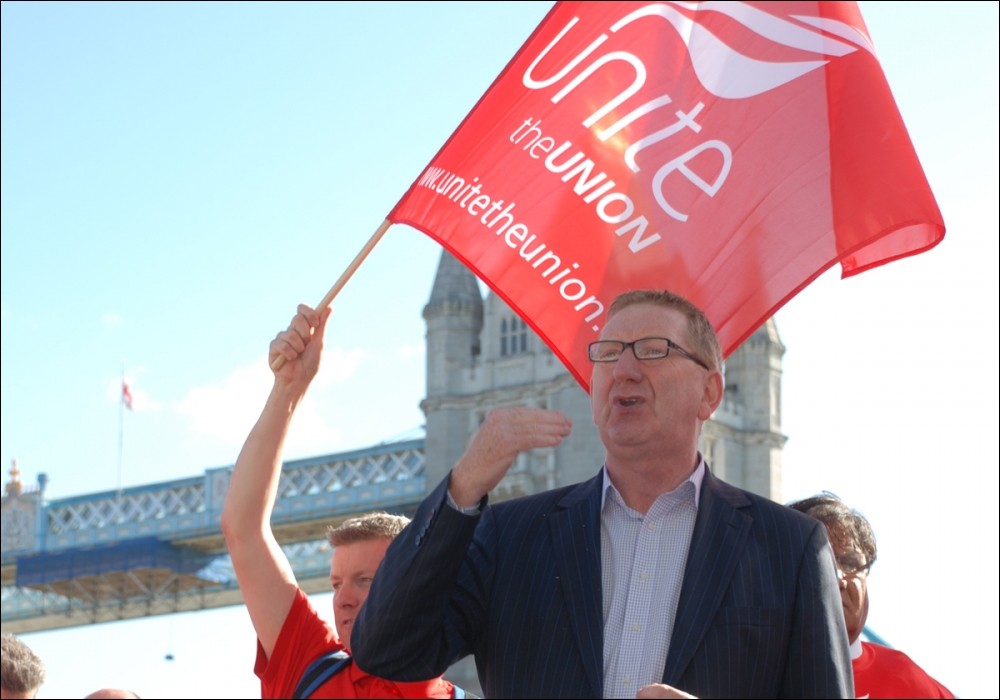
John McDonnell MP's verdict on Ed Miliband's conference speech


Since Ed Miliband became leader, the strategy of the left has been to make issues safe for him by building support within and outside the party issue by issue. Only when it's safe is he confident about moving on an issue. Today's speech demonstrated that we are setting the agenda but there's so much further to go. A major housebuilding programme is needed, but it needs to be public housing alongside rent controls to stop landlords profiteering from housing benefits.

Challenging the scapegoating of unemployed and disabled people needs to be made a reality by scrapping the rigged capability tests associated with Atos and abolishing workfare. Time limited price controls won't end the rip-offs. A clear commitment to end privatisation is needed, especially in the NHS, and to bring rail, water and energy back into public ownership plus, if it goes ahead, Royal Mail. 

To tackle low pay, we need to make the minimum wage a living wage by right, re-establish trade union rights and restore a commitment to full employment. People already suspect this is a recovery for the rich and ongoing recession for the rest. This is exactly the time when people want more radical action. Make today's speech a beginning.

Friday, 10 May 2013

The UK minimum wage - flying at half mast ...

As previously reported on this blog, the UK minimum wage is being cut in real terms this October, and would be 7% higher today if it had increased in line with inflation over the past 5 years.

The infographic below shows just how much the UK minimum wage needs to catch up not only with inflation, but with rates in many other comparable countries.

(We're reliably informed that if the national minimum wage (NMW) had increased at the rate of that for FTSE100 Chief Executives since 1998, it would today stand at more than £19 per hour - equivalent to a full-time salary of £39,000 a year!)


A recently published infographic by the PCS union* shows that the UK NMW lags behind comparative rates in many other nations (though the UK edges the US on 32%).

The graphic also mentions that if our minimum wage was equivalent to that in France, low paid UK workers would be earning an extra £1.95 per hour - equivalent to nearly £4,000 extra a year. (If it rose to New Zealand levels, our NMW would be £9.55 per hour - equivalent to nearly £19,000 a year for full-time work).

For the national minimum wage to reach the UK living wage of £7.45 per hour would mean the NMW being equivalent of 42% of average earnings - the same rate as in Portugal, and just below that in Australia.

It's a commonly made argument that raising the minimum wage would increase unemployment. Indeed that same argument was made the NMW was first introduced. Study after study (including this one from the US) shows that not to be the case - and there are even Tories calling for an increase in the minimum wage.


It's quite clear that the UK's low wage economy is having a drag on demand (one that loosening credit doesn't solve). Indeed, a PCS report published earlier this year - Britain needs a pay rise - showed that the real value of wages has fallen by 7%, there has been a real terms drop in consumer demand of 5% over the same period.

And the misery doesn't end there for low paid UK workers - who are also facing a real terms cut in a range of in-work benefits, including working tax credit and child tax credit - while child benefit is frozen for the third consecutive year.

If you want an economic recovery, you need more £s in people's pockets. If you want more £s in people's pockets, you have to either legislate for a higher minimum wage (as many other nations have done) or restore some trade union rights, so that workers have greater bargaining power to win better pay.

*PCS has a great series of infographics which you can see via the PCS Facebook page

Monday, 15 April 2013

The National Minimum Wage: when an increase is a cut

Today it was announced that the minimum wage would increase by 1.9% from £6.19 per hour to £6.31 from October 2013. However with the headline inflation rate at 3.2%, this is real terms cut in living standards. In reality, as our previous post shows, the personal inflation rate of the poorest households is likely to be higher than the headline rate.

Someone working full-time (37 hours per week) on the minimum wage will be receiving £11,909.56 per year. That will rise by £230 next year (or £4.40 a week) as a result of today's real terms cut.

So what would have happened if the minimum wage had simply kept pace with the rate of inflation (RPI)? This would of course mean no real terms increase in living standards for the poorest, no improvement, no raising of the baseline, just treading water.

The table below shows what would have happened if from October 2008 the minimum wage had increased in line with RPI inflation:

The table shows that minimum wage would be over 7% higher in October 2013 (and 6% higher today) if it had been increased by RPI inflation since 2008. If low paid workers were to receive £6.76 per hour from October they would instead be getting a £1,097 annual pay rise (or an extra £21.10 a week).

At a time when corporations and the super-rich have just received tax breaks, yet another real terms cut in the minimum wage is an insult to millions of low paid workers - who have lost thousands of pounds due to consecutive real terms cuts.

Friday, 8 April 2011

Minimum wage 'welcome' and 'an insult' say unions

For the fourth year in succession the national minimum wage will rise below the rate inflation, when it is uprated in October 2011.

LEAP has previously criticised the TUC for submitting below-inflation bids for the minimum wage, and then for welcoming an even lower rate.

This year with RPI at 5.5% and CPI at 4.4%, the national minimum wage rises only by 2.5% - up by 15p to £6.08. For younger people aged 18-20 it rises only by 1.2% and for 16-17 year olds by 1.1%.


Len McCluskey, the general secretary of Unite rightly condemned the rises
This small increase in the minimum wage is completely outstripped by the current rate of inflation. The rise will do little to help the lowest paid in our society keep up with the rising cost of food and fuel.

But he reserved his venom in defence of young workers:
The paltry increase in the minimum wage for the under twenties is an insult. There is no reason why younger workers should be paid less and have to struggle more to keep up with the cost of living - it's tantamount to exploitation. Workers should be paid the rate for the job regardless of age. This is yet another attack on young people by this Tory-led government.


Yet again though the TUC played its usual supine role, with Brendan Barber describing the real terms cut as "a welcome pay boost for around 840,000 low-paid workers in the UK."

Most outrageously though, Barber uses the bosses' arguments to defend below inflation rises:
"The LPC [Low Pay Commission] has taken great care to ensure that the new rates are set at a level that will not damage job creation in these uncertain economic times."

When corporate profitability is at an all-time high, the TUC is asking workers to accept declining pay in order to shore up corporate Britain's profit margins.

But while the TUC's general secretary was speaking for business not workers, this year's TUC President (and Unison general secretary) Dave Prentis set out the reality of what this means for low paid workers and put the economic case for a higher increase:
"This small increase is totally outstripped by the rising cost of essentials like food and fuel. The vast majority of a low paid worker’s pay is eaten up by basic living costs – so increases in inflation hit hard.

“We know that many low paid workers are already struggling with heavy debt. Others are cutting back on food, and what they spend on their children. Not only does this show that many families are really struggling – it’s also bad news for local shops and businesses.

“It’s wrong to suggest that a smaller rise in the young people’s rate is better for businesses. Hitting young people’s spending power is a direct hit on those businesses. We need strong demand in our economy to stimulate growth and recovery. Young people also need a helping hand – they are victims of a recession that they did nothing to cause.

“A bigger rise would have also helped restore the balance of fairness in our country – which is suffering hugely under the Tories. It seems incredible that MPs can claim expenses of £3.2 million in just two months, but young people are fobbed off with an extra 10 pence.”

These are welcome signs of unions shaking off the passivity of the TUC. Labour representation is an industrial issue, not just a political one.

Tuesday, 15 March 2011

Just what is fair pay?


The report of Will Hutton's Fair Pay Review was published today (download from HM Treasury website). To call it a 'damp squib' would be to oversell it. The long touted 20:1 ratio between high and low earners in public sector organisations was abandoned as "illogical". Instead the main proposal is that pay differentials are published and 10% of the earnings of top public sector chiefs be subject to performance-related targets.

Nevertheless the whole debate about pay does raise some interesting questions, about how much people earn, what is fair and how we can judge it.

The Prime Minister and Local Government Minister Eric Pickles have highlighted public sector chiefs, especially in local councils, earning more than the Prime Minister. Peter Wilby writing for Public Finance describes their "campaign against public sector pay" as "pernicious, small-minded and innumerate" pointing out that cuts in council bosses' pay would go nowhere in ameliorating the funding cuts.

Wilby also point out that a council chief executive on c.£200,000 per year compares well with the equivalent in the private sector. Indeed the PCS union highlights executive pay in the outsourcing companies that have taken advantage of privatisation:

Capita: Chief executive, Paul Pindar - £1,618,218
G4S: Chief executive, Nicholas Buckles - £1,656,251
Hewlett Packard: Chief executive, Mark Hurd - $23,863,744 (£14,842,760 at exchange rate on 14 March 2011)
Serco: Chief executive, Christopher Hyman - £1,578,662

These bosses were the subject of an excellent Dispatches programme on Channel 4 last night.

It's also worth pointing out that private sector bosses have one outcome to hit: profit. Public sector bosses have a whole range of outcomes against which their performance is measured with financial management just one among many. For NHS bosses there will be a range of health outcomes, community engagement, and equalities targets - to mention just a few.

But the questions about elite of high earners in the public sector distract from the very real problems of low pay in the sector. For example the average civil servant earns £22,850 per year, and there are thousands on little more than the national minimum wage.

The questions of comparison are also more stark. It's easy to justify a £200,000 council chiefs salary in comparison with a corporate chief exceuitive managing a similar budget on seven times as much pay. However in what way is that same council chief executive worth 19 cleaners on the national minimum wage (and many are) or 8 police officers or 10 nurses? Is a GP worth 3.5 nurses? Is a FTSE 100 CEO worth 16 GPs?

The reality is in a capitalist society there is no link between earnings and social value (even if we could define such a concept). We therefore should make two things necessary: 1) that no one is paid a wage that excludes them from the rest of society; and 2) that we have a redistributive tax system that compensates for the market failure in wages.

Of course this excludes discussion of the millions not in work (pensioners, the unemployed, students, the ill or disabled, children). Just consider, Jobseeker's Allowance pays £3,403.40 this year and the basic state pension £5,077.80.

Will Hutton has failed to address the limited remit he was given, but the wider issues his study raises must be the subject of ongoing campaigning against poverty pay and poverty benefits.

Wednesday, 7 July 2010

Low Pay and Inflation - why inequality is rising


Some new research this week showed that "In the last 10 years, inflation had risen by 23%, but key essentials cost 38% more".

This is concordant in with LEAP research on 'Essentials Inflation' last year, which showed the costs of essential goods had a higher inflation rate, which therefore disproportionately hits the poorest hardest. You can download the LEAP research on Essentials Inflation here.

This week's research into the cost of living was carried out by the Joseph Rowntree Foundation (download here). It found that a single person in the UK needs a gross income of at least £14,400 in 2010 to live to an acceptable standard. This equates to a full-time hourly wage of £7.38 - which is over 20% more than the current national minimum wage of £5.80.

The national minimum wage, as LEAP has pointed out, has increased below the rate of inflation in recent years, leaving many of the poorest workers worse off.

It is no surprise therefore that inequality is increasing in the UK and is already at levels not seen since the 1930s.

Thursday, 25 March 2010

National Minimum Wage disgrace

The uprating of the National Minimum Wage was announced today, with a meagre 2.2% . Regular readers of the LEAP blog, may want to refer back to our February post 'Inflation, the minimum wage and the TUC' and then have a look at this TUC press release.

Under-21s miss out on decent wage increase

Morning Star
by Lizzie Cocker

Below-inflation increases to the national minimum wage were branded "an insult" by equalities campaigners on Thursday.

The announcement of new minimum wage rates sparked outrage after failing to bring pay for under-21s up to the same level as their older counterparts.

But the introduction of a statutory minimum wage for apprentices was broadly welcomed despite being set at just £2.50 an hour.

The Low Pay Commission which recommend the changes announced on Thursday that the guarantee of a wage for apprentices for the first time "marks an important extension to minimum-wage protection across the UK."

British Youth Council vice-chairman Jack Rowley agreed that it was a step in the right direction but said: "At just £2.50 per hour, young apprentices will struggle to cover their basic living costs while trying to complete their apprenticeship and could earn nearly £40 more a week in a standard minimum-wage job."

From October the minimum hourly rate for over-21s will go up 2.2 per cent to £5.93, but younger workers will continue to lose out on equal pay as the rate for 18-20 year olds will rise to £4.92 and £3.63 for 16-17-year-olds.

Left Economics Advisory Panel co-ordinator Andrew Fisher slammed the changes saying: "With inflation at over 3 per cent, this derisory change to the minimum wage should be called what it is - a real-terms cut. This is an insult to people struggling on low wages.

"Inflation tends to hit the poorest harder than other groups (see the LEAP Inflation Report, September 2009). By failing to scrap the discriminatory lower rates for young workers, the Low Pay Commission has again failed to tackle low pay."

And Mr Rowley said that young people across Britain were "upset about this continued discrimination" as they face record levels of unemployment and rising living costs.

"Sixteen and 17-year-olds can get paid over £80 a week less with these rates for doing exactly the same 35-hour week as 21-year-olds," he said.

The GMB also condemned pay discrimination based on age but generally welcomed the increases.

However the union pledged to "continue to campaign for a much higher rate of at least £7 to move the figures closer to a living wage."

Wednesday, 17 February 2010

Inflation, the minimum wage and the TUC

Inflation figures out yesterday showed inflation had risen to 3.5% on the CPI measure and 3.7% on the RPI measure.

As LEAP research published in September 2009 showed, inflation tends to hit the poorest hardest.

All parties are threatening public sector pay freezes, and a freeze in the National Minimum Wage has been called for by the Association of Convenience Stores, British Chambers of Commerce, and by CIPD.

Let's be clear a freeze means a cut. In real terms, a freeze would be a 3.5% cut.

Thankfully, at the 2009 TUC, USDAW (not the most radical of trade unions) passed a motion calling on the Low Pay Commission (LPC) - of which the TUC is a part - to "significantly increase the National Minimum Wage". The motion also called for the full NMW to be payable from 18 (currently those aged 18-21 are paid a lower rate).

So when the TUC made its submission to the LPC what sort of significant increase did it call for? 20p. Yes the TUC - "the voice of Britain at work" - with clear Congress policy for a significant increase instead calls for the minimum wage to be increased by just 20p from £5.80 per hour to £6.00. The CBI, BCC and FSB must be laughing their arses off. We know they will call for a minimal increase and the LPC will settle somewhere in the middle.

20p by the way is 3.4% - around or slightly lower than many experts believe inflation will average this year. So the "significant increase" is a real terms freeze. And what of applying the NMW to all from 18? No, the TUC submission advocates all three age discriminating bands remain and all increase by 3.4% - so young workers won't even catch up.

Last Friday even New Labour was floating "a pledge to raise the minimum wage sharply" in the Independent. What incentive is there though for Brown to take a radical turn when even the TUC is not calling for a sharp increase?

On hearing the new inflation figures
, TUC General Secretary Brendan Barber said:

"The inflation message is don't panic. The rise today has more to do with what was happening a year ago than anything new in the economy, and is likely to fall back to its target range in due course."

"Don't panic" - wasn't that the refrain of the ineffective Corporal Jones in Dad's Army?

Extra: Watch Paul Mason's piece on inflation on BBC Newsnight. It's followed by a debate between Tory spokesperson on competition John Redwood MP and PCS General Secretary Mark Serwotka over public sector pay policy

Extra 2: Unison calls for reopening of pay settlement in local government - obviously they are panicked, despite Mr Barber's reassurances ...

Tuesday, 5 January 2010

CIPD unveils a business manifesto for the rich

From today's Morning Star
by Lizzie Cocker

A professional management body has come under fire for demanding a freeze on the youth minimum wage and public-sector pay.

The influential Chartered Institute for Personnel and Development (CIPD) unleashed a string of attacks on the lowest-paid in its pre-election manifesto, which was launched on Tuesday.

It also recommended a removal of the default age of retirement and an abandonment of the 2011 employers' National Insurance increase.

The CIPD claimed that these proposals would be essential in tackling youth unemployment, which spilled over the one million mark during this recession.

But Left Economics Advisory Panel (LEAP) co-ordinator Andrew Fisher said that the current youth national minimum wage of £3.57 "is already a national disgrace and is 3p per hour less then was deemed acceptable 12 years ago for other workers."

Public-sector union Unison warned that such changes would not help the "lost generation" but fuel it.

Unison general secretary Dave Prentis said: "This 'manifesto' will not lead to economic recovery, it will lead to the exploitation of hundreds of thousands of workers.

"It is disgraceful that young people are being targeted by the CIPD and singled out as being 'lucky enough to have jobs.'

"Vulnerable young people, who are struggling to get by on a startling rate of just £3.57 an hour, should not have to pay the price for greedy bankers' mistakes."

Mr Fisher said: "For the CIPD to come out with a manifesto focused on pay cuts for the young and public-sector workers while proposing tax cuts for business is laughable.

"It is advocating a redistribution of wealth from poor to rich.

"Its approach is economically inept. Any money saved on pay would simply go to profits for bosses and dividends to shareholders, rather than on new job creation. You can almost hear the snorting and grunting as this CIPD nonsense was written from the trough."

The government is currently carrying out a review of the default retirement age which stands at 65 and a Treasury spokesman confirmed that the CIPD's "views will be fed into that review."

Tuesday, 12 May 2009

Derisory increase in National Minimum Wage

Fresh from lambasting the Tories policy vacuum - and their backbench MPs' attempts to remove the national minimum wage in our previous blog, the Government has now showed what value it attaches to the minimum wage . . . as little as 4p.

The Government has announced the National Minimum Wage rates that will apply from October 2009. The adult minimum wage will go up by 7p, for 18-21s up by 6p and for under 18s just 4p.

John McDonnell rightly condemned this as "derisory". John, LEAP Chair, said:

"This is a derisory increase which will leave many in poverty and do nothing to address the grotesque inequalities in our society.

"Bankers are still walking off with massive bonuses and salaries, while low paid workers remain on the edge of poverty."

Bob Crow said, "We have seen today that while MPs and MEPs have been lining their pockets at the tax payers expense there has been a massive increase in unemployment and the minimum wage, under pressure from the bosses, has been increased by a pathetic 7 pence an hour. It's no wonder people are so angry with the political elite."

As Dave Prentis, Unison General Secretary, said: "It is hardly going to help low-paid workers pay the bills".

Indeed, based on a 37.5 hour week, the new NMW rates equate to just £11,310 (over 21); £9,418.50 (18-21); or a paltry £6,961.50. They are a disgrace.

By contrast, the London living wage introduced by Ken Livingstone and supported by Boris Johnson equates to £14,527.50.

Thu 14 May update: John McDonnell MP, and other Campaign Group MPs have tabled EDM 1482 'National Minimum Wage Uprating' calling for an end to age discrimination in the NMW and for future increases to be above inflation and average earnings increases.

Monday, 11 May 2009

And what of the Tories . . ?


With the opinion polls over the weekend showing that the Tories have now amassed a huge lead, it is only right that this blog starts looking at Tory economic policy

Or rather looking for Tory economic policy, as Prem Sikka writes in his open letter to David Cameron, posted on Comment is Free. The Tories seem quite content (and quite likely) to ride to power on the back of Labour unpopularity - but where are their policies?

The only sign we have of any emerging policy is from a backbench Tory private members bill, due for debate this Friday (but unlikely to be reached) to scrap the minimum wage. Imaginatively titled the Employment Opportunities Bill, Tory MP Christopher Chope's Bill proposes to enable employers to 'opt-out' of the National Minimum Wage. If you want to register your opposition there's a website been set up www.wageconcern.com.

Sunday, 29 June 2008

Child poverty increases for second year running

Last week it was announced that child poverty increased by 100,000 in the last year. In the past two years, according to the Government's own figures, child poverty has increased by 300,000. When Labour came to power it promised to "end child poverty within a generation" – by 2020 - and to halve it by 2010.

After 11 years of New Labour, there are still 3.9 million children living in poverty. The Government is still to succeed in making a one-quarter cut in child poverty, which it had aimed to do by 2005. Three years on and things are going into reverse.

The LEAP Red Papers of March 2008 contain a feature on child poverty (page 16) written in advance of the latest release of figures.

It shows how just by increasing child benefit by £14 per week for the eldest child, child poverty would be reduced by 400,000 - meeting the Government's one-quarter cut target immediately. This is the equivalent of raising corporation tax by just 3.5% - which would still be a lower rate than it was in 1997, since New Labour has cut corporation tax from 33% in 1997 to 28% this year.

Of course there are others way too - increasing the minimum wage by more than inflation being one. The other feature in the LEAP March 2008 Red Papers was on inflation and pay (page 12). It showed that this year's increase in the National Minimum Wage (to come into force in October 2008) was just 3.8% - when inflation is 4.3%.

The public sector pay cap - affecting many low paid workers in local government and the civil service - will also hinder future child poverty targets. And as we know, public sector pay has no effect on inflation - so it won't solve our economic problems either.

If New Labour wants to have any chance of saving itself, it should look to these two flagship policies from its first term: the national minimum wage and cutting child poverty. Re-concentrating on those policies might be a good idea for a party floundering at the moment.

Meanwhile, new London Mayor Boris Johnson has his first RMT industrial action on the London Underground as cleaners paid just over £5.50 per hour campaign the London living wage of £7.20 - which Ken promised to introduce as he brought contracts back when Metronet collapsed. Find out how you can support their campaign. Bear in mind that the minimum wage of £5.52 equates to just £10,764 per year full-time. Try living on that in London.