Trying to solve a global capitalist economic and financial crisis fuelled by credit and debt, which has driven consumers to the wall and left increasing numbers unemployed, with marginal (and temporary) tax cuts only shows how desperate the Brown government has become and is little more than PR exercise.
We are in the midst of the greatest destruction of capital since the 1930s, where the means of production are being wiped out on a vast scale in every country on every continent. There is a self-generated momentum to this process which waits for no one, including governments like New Labour. Yesterday Citibank announced another 50,000 job cuts and manufacturers like GKN have cut production by 20%.
As John Willman, business editor of the Financial Times acknowledges:
Nor is there much comfort in the hyperactivity of policymakers, recapitalising banks, bailing out insurers, cutting interest rates towards zero and turning on the public spending taps. This is pushing at a piece of string, with no certainty that enough will be moved at the far end to stem the decline. In the present mood of panic, much of any extra money pumped into the economy will be used to reduce debt or build up savings. A lot of the rest will be spent on imports that will benefit the economies of other countries, which may be less able to reciprocate.
The fact is that neither New Labour nor any other capitalist government has an answer to the first major world economic crisis for nearly 80 years. One of the reasons is that corporate-driven globalisation has created a beast that lives (and dies) beyond the reach of national states and governments. The transnational corporations and banks that are slashing jobs and production are not bound by borders or “national interest”. They form the interlocking aspects of a truly global economy that has supplanted the national-based economies that pre-dated the most recent period of capitalist globalisation.
Gone are the days when unemployment in Britain could be eased through better credit terms or higher wages. Decisions about jobs and production are, in most cases, being decided by global corporations like GlaxoSmithKline operating on a transnational scale with regard to only one thing – sustaining the bottom line and shareholder value on stock markets across the world through ruthless cost-cutting operations. The pharmaceutical conglomerate owes no allegiance whatsoever to the British state which, in turn, has no control over the corporation’s decisions.
Of course it’s possible to imagine some immediate decisions that could stem the jobs haemorrhage and keep people in their homes as a prelude to reorganising the economy on more rational lines. For example, it would make sense to take over the failing building developers and materials suppliers, along with available land, and use their resources to enable the 250,000 unemployed construction workers to return to work. They could build the new homes required to solve the housing crisis and these could be made available at a reasonable rent. Eliminating the needs of shareholders and the exorbitant price paid for land would mean that public investment would go a lot further than the same resources in private hands.
Empty offices and factories could be requisitioned and plans drawn up for the production of socially-useful services and products like solar panels or eco-friendly vehicles. Those without work could be paid the average wage to enable them to pay their bills and support their families until new jobs are available. Public transport (including the railways) could be made available at an affordable price so that no one is left isolated. Banks now wholly dependent on state finance could be taken into public ownership and run by boards of workers, consumers and elected officials as mutually-owned businesses.
Of course, the present capitalist state and proxy governments like New Labour have no intention of challenging the status quo in this way. Both the immediate and long-term answer to the present crisis lies, therefore, in creating a new political democracy that can act on behalf of the majority instead of the minority who have wrecked the economy and now threaten the futures of millions of people.
Paul Feldman
Communications editor
18 November 2008
Tuesday, 18 November 2008

Monday, 17 November 2008
New LEAP Red Papers: 'The Economic Crisis'

This new set of Red Papers looks at 'the Economic Crisis' - no longer a credit crunch in the financial sector, but a full blown economic crisis, with global recession looming.
Contributions in this pamphlet include: Jerry Jones on the origins of the crisis, Graham Turner looking at the effect on pensions; Gerry Gold and Graham Turner looking at the revival and invocation of Keynesianian economics; Richard Murphy, Gordon Nardell and Jerry Jones looking at how to change the banking system; while Prem Sikka and John McDonnell look at how to change the system in the interests of people.
You can download the new Red Papers for free.
Sunday, 16 November 2008
We need a new world economic order
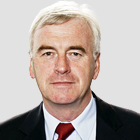
John McDonnell MP
(This article first appeared on Guardian Comment is Free on Friday)
Barack Obama has decided not to attend the G20 summit convened by George Bush and the lack of involvement by India, China and the developing world in the G7 means that the best we can hope for is that this Saturday's talks are a preparatory session for a more inclusive and wider ranging summit in the New Year.
The timing is just not right to secure anything more than limited agreement on coordinating measures to mitigate the recession – and to set an agenda for the post-inaugural economic summit it is hoped the new president will convene.
Brown and Sarkozy will vie with each other over the weekend for the title of saviour of the global economy, but the reality is that until Obama is installed in the White House and unless China and India are engaged, little will change.
In the meantime, millions of workers worldwide will lose their jobs and homes as the recession bites. Many more people in the developing world will be pushed over the edge of poverty into destitution, with starvation putting many lives at risk. The demand for change, which elected the first black president of the US, has the potential to grow into a demand for change in the system that produces such insecurity and suffering.
Civil society now has a part to play in this transitional period between the G20 meeting and what appears to be the inevitable emergence of a new global institutional settlement that reflects the new world economic order.
Since the post-war world's economic institutions (the World Bank, IMF and WTO) were captured by neo-liberals in the 1970s, they have proved themselves a major part of the problem, not the solution to global economic instability. The same policies that have brought individual national economies to their knees are the policies that these institutions have spread across the globe. They have produced the global crisis.
The globalisation of unrestrained free market, rapacious capitalism by this economic institutional structure has produced inequality and insecurity in the west, desperate poverty in the developing world and a sequence of brutal wars causing immense human suffering. The plundering for profit of the world's natural resources has threatened the very sustainability of the planet.
A new democratically accountable architecture of global economic co-operation is now needed – new institutions pursuing new policies.
Civil society organisations could help set this transformation agenda to focus the minds of the politicians in the same way the popular demand for change after the experience of the 1930s depression created the Bretton Woods settlement. In our own lifetime the Jubilee 2000 campaign forced third world debt onto the global agenda.
An agenda of basic demands from any new global civil society coalition could include:
• A new structure of global economic governance inclusive of China and India and a wider representation of the developing world.
• The establishment of a democratically elected global assembly to scrutinise the policies and operation of the new global economic institution.
• The tackling of destabilising market speculation, through the introduction of a Tobin tax on international currency speculation.
• An end to trade policies and the imposition of trade agreements which are tied to deregulation, liberalisation and the privatisation of public services.
• An end to the policy of global collusion in the operation of tax havens that allow rich individuals and transnational corporations to avoid fair taxation.
• A renewed commitment to achieving the Millennium Development Goals, recognising the productive stimulus this would give the world economy in recession.
• An agreement that every nation signs up to the International Labour Organisation (ILO) conventions on international labour standards so that workers have the basic protections needed as recession sweeps the globe.
With this type of programme we could wrest the process of globalisation from the control of the corporations. The risk of the individual country recessions slipping into a worldwide depression provides the stimulus and the opportunity to create a new world economic order.
Friday, 14 November 2008
Can we do it? Yes we must!
As the political leaders of 20 of the biggest economies gather in Washington to work out how to fix the global capitalist economy as, like a runaway train, it heads straight for the buffers, the range of "solutions" is piling up. None of them have a hope of taking off.
For outgoing US President George Bush, the oh-so-obvious answer is "sustained economic growth". He told a New York audience that "the answer is not to try to reinvent that system" but to "make the reforms we need, and move forward with the free-market principles that have delivered prosperity and hope to people around the world".
Others are into reinvention. Gordon Brown, who until recently thought globalised capitalism could not possibly be improved upon, is now for "creating a new global financial architecture" to replace the Bretton Woods monetary system (which actually collapsed 40 years ago!). The Germans want a "new balance between market and state" while the Canadian suggestion is that "dynamic new economic players ... must be full participants at the global table".
There’s another proposal aired by Bob Geldof. He is back banging the drum for Africa, which has been left out of the discussions. Bob wants to ensure that "900 million potential producers and consumers" are drawn into "the next round of globalisation". With the whole world diving into slump, Bob sees salvation for capitalism in Africa.
And on that he’s at one with Bush, who just yesterday received a major humanitarian award from Africare for his work in Africa. No really, it’s true.
According to Voice of America White House correspondent Paula Wolfson, Bush was honoured for his efforts throughout his administration to combat disease across the continent. Bush says America has an obligation to help the people of Africa. "It is in our national security interest that we defeat hopelessness. It is in our economic interest that we help economies grow."
The brutal truth is all these plans, pleas and proposals are non-starters. Why? Because they all look beyond the current disastrous disintegration of the global economy to a bright, newly refurbished, much more regulated, fairer, capitalist world. This is not how capitalist slumps work themselves out.
Fixing the real problem - an overhang of capacity as global production turns from recession to depression and slump - has only one solution as far as capitalism is concerned. In 1942 in the midst of the Second World War, economist Joseph Schumpeter, a critic of Keynes, but a big fan of credit-led investment, published his most famous work Capitalism, Socialism and Democracy. It was then, with the world at war, that he chose to develop his version of the concept of "creative destruction". That is already under way, with 10 million Americans already out of work and General Motors on the edge of bankruptcy.
Bush bemoaned the fact that critics were "equating the free enterprise system with greed, exploitation and failure" and objected to it. He is right to warn against the coming assault on the citadels of capitalism. There’ll be many demonstrations and protests against the G20 over the weekend and the election of Obama last week was itself a product of the anger millions of Americans who want action against bankers and corporations.
What is urgently needed is a concept of a society beyond the private ownership and control of capital, together with the leadership and organisation to make it a reality.
Can we do it? Yes we must!
Gerry Gold
Economics editor
A World to Win
http://www.aworldtowin.net
For outgoing US President George Bush, the oh-so-obvious answer is "sustained economic growth". He told a New York audience that "the answer is not to try to reinvent that system" but to "make the reforms we need, and move forward with the free-market principles that have delivered prosperity and hope to people around the world".
Others are into reinvention. Gordon Brown, who until recently thought globalised capitalism could not possibly be improved upon, is now for "creating a new global financial architecture" to replace the Bretton Woods monetary system (which actually collapsed 40 years ago!). The Germans want a "new balance between market and state" while the Canadian suggestion is that "dynamic new economic players ... must be full participants at the global table".
There’s another proposal aired by Bob Geldof. He is back banging the drum for Africa, which has been left out of the discussions. Bob wants to ensure that "900 million potential producers and consumers" are drawn into "the next round of globalisation". With the whole world diving into slump, Bob sees salvation for capitalism in Africa.
And on that he’s at one with Bush, who just yesterday received a major humanitarian award from Africare for his work in Africa. No really, it’s true.
According to Voice of America White House correspondent Paula Wolfson, Bush was honoured for his efforts throughout his administration to combat disease across the continent. Bush says America has an obligation to help the people of Africa. "It is in our national security interest that we defeat hopelessness. It is in our economic interest that we help economies grow."
The brutal truth is all these plans, pleas and proposals are non-starters. Why? Because they all look beyond the current disastrous disintegration of the global economy to a bright, newly refurbished, much more regulated, fairer, capitalist world. This is not how capitalist slumps work themselves out.
Fixing the real problem - an overhang of capacity as global production turns from recession to depression and slump - has only one solution as far as capitalism is concerned. In 1942 in the midst of the Second World War, economist Joseph Schumpeter, a critic of Keynes, but a big fan of credit-led investment, published his most famous work Capitalism, Socialism and Democracy. It was then, with the world at war, that he chose to develop his version of the concept of "creative destruction". That is already under way, with 10 million Americans already out of work and General Motors on the edge of bankruptcy.
Bush bemoaned the fact that critics were "equating the free enterprise system with greed, exploitation and failure" and objected to it. He is right to warn against the coming assault on the citadels of capitalism. There’ll be many demonstrations and protests against the G20 over the weekend and the election of Obama last week was itself a product of the anger millions of Americans who want action against bankers and corporations.
What is urgently needed is a concept of a society beyond the private ownership and control of capital, together with the leadership and organisation to make it a reality.
Can we do it? Yes we must!
Gerry Gold
Economics editor
A World to Win
http://www.aworldtowin.net
Tuesday, 11 November 2008
Ealing points the way
On Monday night John McDonnell and I spoke on behalf of LEAP at a packed meeting in Ealing on the financial crisis. The meeting 'The Real Issues of the World Financial Crash' was called by Ealing Trades Union Council and the Convention of the Left.
The meeting was everything that a good meeting should be: participatory, comradely, well-chaired, wide-ranging yet focused, and with the right balance between theoretical discussion and planning for action.
There was also a varied range of constructive contributions about what is happening in the crisis and what we can do about it. The discussion ranged from the paucity of the minimum wage (and Ed Balls' recent comments about the London living wage), through the effect of tumbling shares on pensions, the attacks on jobs (including the disgraceful actions of the Tory council in Hammersmith & Fulham), and how in Germany the privatisation of rail has been put off, while in Argentina pension funds have been nationalised.
One suggestion I particularly liked was to create spoof posters of the grotesque DWP campaign on 'benefit thieves'. What about 'tax thieves - we're closing in' with pictures of Branson, Green, et al?
Another concrete idea was to picket or occupy banks that were repossessing people's homes - or acting as human shields in people's homes against bailiffs. Such actions need to be replicated across the country - and it's no surprise that the Poll Tax campaign was invoked.
Another major task - discussion of which peppered the meeting - was how to get our unions to start fighting. There was agreement that this needed grassroots mobilisation to push the bureaucracies into action . . . or out.
If you would like a speaker from LEAP at your meeting, email leap@l-r-c.org.uk.
The meeting was everything that a good meeting should be: participatory, comradely, well-chaired, wide-ranging yet focused, and with the right balance between theoretical discussion and planning for action.
There was also a varied range of constructive contributions about what is happening in the crisis and what we can do about it. The discussion ranged from the paucity of the minimum wage (and Ed Balls' recent comments about the London living wage), through the effect of tumbling shares on pensions, the attacks on jobs (including the disgraceful actions of the Tory council in Hammersmith & Fulham), and how in Germany the privatisation of rail has been put off, while in Argentina pension funds have been nationalised.
One suggestion I particularly liked was to create spoof posters of the grotesque DWP campaign on 'benefit thieves'. What about 'tax thieves - we're closing in' with pictures of Branson, Green, et al?
Another concrete idea was to picket or occupy banks that were repossessing people's homes - or acting as human shields in people's homes against bailiffs. Such actions need to be replicated across the country - and it's no surprise that the Poll Tax campaign was invoked.
Another major task - discussion of which peppered the meeting - was how to get our unions to start fighting. There was agreement that this needed grassroots mobilisation to push the bureaucracies into action . . . or out.
If you would like a speaker from LEAP at your meeting, email leap@l-r-c.org.uk.
Wednesday, 5 November 2008
Events and Opportunities

Last night was a night of events and opportunities. LEAP hosted a meeting in the House of Commons, based around our publication Building the New Common Sense - social ownership for the 21st century. Speakers at the meeting 'The Economic Crisis - what role for social ownership?' included many of the contributors to the pamphlet: Gerry Gold, Rosamund Stock, Maria Exall and Professor Gregor Gall.
There was an excellent debate about the role of social ownership in the crisis - and a poignant warning from Gregor Gall, "an opportunity is only an opportunity if we have the resources to act. Otherwise it is just an event". While the crisis brings capitalism into sharp relief, and gives us the opportunity to explain its inherent weaknesses, the opportunity to change things relies on us mobilising around these issues and that requires resources.
One contributor to the pamphlet who could not make the meeting was LEAP Chair John McDonnell MP. John was locked in the House of Commons chamber attempting to convince a Labour government to repeal a few technical measures of Thatcher's anti-trade union laws. The amendments to the Employment Bill were derived from the Trade Union Freedom Bill which was passed as both TUC and Labour Party conference policy in 2005.

John forced the largest rebellion - 45 Labour MPs - since Gordon Brown became Prime Minister, but it also showed that even with every union in support and most actively campaigning in favour only 45 MPs from the party of Labour support strengthening trade union rights.
Over the pond, and the US was electing a Democrat President to great fanfare. This was an event - with great opportunities. However, it remains to be seen whether reality will match expectations.

LEAP's own Graham Turner said: "'Change We Need' was the popular slogan of the Obama campaign, and while it would be churlish to ignore the wider political significance of yesterday's election, there is a harsh reality. Unless the Democrats execute a major policy U-turn, there will be no change. A more expansionary fiscal policy, courtesy of a stronger grip on Congress, will not solve the crisis. It may make it worse. Paul Volcker is tipped by some to be the new Treasury Secretary, but that too provides real cause for concern. It is more of the same, ensuring that the US will slide towards a debt trap. Other candidates in the frame, including Lawrence Summers, offer little encouragement. Democrat policies to date have been contributing to the rise in mortgage rates, which has culminated in a plunge in mortgage demand. The point was underlined this morning by the steep decline in the MBA's purchase index to just 260.9, its lowest level since early January 2001. There is no chance of stabilising the housing market in 2009. Unemployment will soar. Choosing Volcker or Summers as the new Treasury Secretary will be a mistake. In the absence of a radical shift in monetary policy, Obama will not be the next Roosevelt."
Monday, 3 November 2008
Public meeting on Tuesday
The Economic Crisis – what role for social ownership?
Tuesday 4th November
7pm
Committee Room 5, House of Commons, London
Tuesday 4th November
7pm
Committee Room 5, House of Commons, London
Following the publication of the LEAP pamphlet Building the New Common Sense - social ownership for 21st century, LEAP leads a debate on what role for social ownership in the economic crisis.
Speakers include: Andrew Fisher (Chair), Gregor Gall, Gerry Gold, John McDonnell MP, Rosamund Stock
Also, you can download A Market Economy based on Common Ownership by Jerry Jones and download a copy of the presentation on social ownership Andrew Fisher gave to a meeting of the Commune. It is a much extended version of the preface to the new LEAP pamphlet, Building the new Common Sense - social ownership for the 21st century.
See you tomorrow – entry is free and everybody is welcome!
Subscribe to:
Posts (Atom)