Showing posts with label Budget 2012. Show all posts

Monday, 4 March 2013

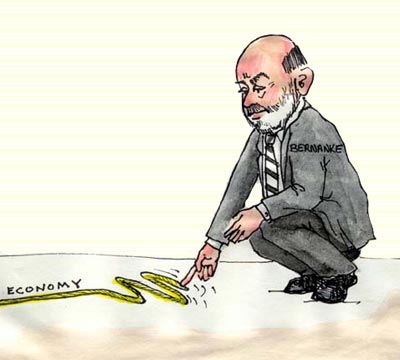
Pushing on a piece of string

The Funding for Lending Scheme (FLS) published its quarterly results yesterday. Announced at the 2012 Budget and established in August, the scheme aimed to boost lending by effectively subsidising it - £14 billion has so far been given to the banks.

In total £70bn is being made available to banks at reduced interest rates to lend on to small and medium-sized businesses, as well as individuals.

However, results announced yesterday for the last three months of 2012 show that bank lending fell by £2.4 billion. So despite giving cheap money to the banks, lending fell why?

The answer is simple: demand. With the average wage growing by just 1.3% in the last year - and inflation at 3.3% - people's living standards are falling, and have been for over four years now. You can supply as much cheap credit as you like, but if there's not sufficient demand then it's just pushing on a piece of string.

As I told the Morning Star:
"When people's incomes are being constrained and job insecurity remains there is no confidence to borrow money, even at marginally reduced rates.

"Likewise businesses know that consumers are spending less and are not borrowing to invest in expanding their operations,"
Consumer spending in the retail sector fell 0.6% in January from December which itself saw a 0.3% fall in sales. The January 2013 figure is also down 0.6% from January 2012. With wages lagging inflation a sustained upturn is highly unlikely to materialise.

That's why it's encouraging that members of the PCS union have voted to strike - primarily over pay - but this needs to be widespread and result in inflation-busting pay awards to boost demand.

Even some Tories are reaching the conclusion that the supply-side is not the problem. Step forward the Mayor of London's new economics adviser Dr Gerard Lyons, writing in the Telegraph today:
"The economy is suffering from a lack of demand. There needs to be more spending by the Government on both infrastructure and construction and people and firms with the ability to spend need to be given the confidence to do so"

On the business side, some have pointed to statistics showing that the number of small business loans rejected by the banks has quadrupled since the crisis - they say this is evidence of unmet demand. That may be true to a limited extent, but it ignores three salient factors:
  1. Businesses are now making more loan applications to cover (what they hope are temporary) shortfalls, rather than to invest
  2. Banks, whose reckless lending practices played a major role in causing the crisis, are now more rightly more cautious
  3. The same business plan in 2006/07 at a time of high employment and rising real wages was a lot more attractive to invest in than it is in 2012/13

I expect that lending via the scheme will pick up marginally in 2013, as from the low base borrowing at reduced interest rates will be more attractive to some businesses and to some people. However, increases in FLS lending are not likely to be enduring until something happens to increase demand.

Thursday, 26 April 2012

Redistributing ... to the rich

Andrew Fisher, LEAP co-ordinator looks beyond the fluff to discover the real issues in the Budget. (This article first appears in the May 2012 edition of Labour Briefing)

Pasty tax, charity tax, granny tax and even caravan tax – if you live too much of your life on planet Twitter then you’d be forgiven for thinking these were the main issues in the Budget.

I admit, as someone who doesn’t tan I was initially perturbed about #pastytax until I realised it referred to Cornish pastries rather than a lack of cutaneous pigmentation.

But the real stories of the Budget – involving the big billions – were about the more commonly known income and corporation taxes. Osborne gave corporate Britain another cash giveaway: taking corporation tax down from 26% to 24%, and committing in his statement to reduce it further to 22%, with the aspiration of reducing corporation tax even further.

"So that by 2014, Britain will have a 22% rate of corporation tax ... And a rate that puts our country within sight of a 20% rate of business tax that would align basic rate income tax, the small companies rate and the corporation tax rate."

This largesse to big business will cost the Exchequer an extra £3.76bn in the period covered by the spending review. This is on top of the £25bn in tax breaks for business announced in 2010 which included Osborne's commitment to cut corporation tax from 28% to 24% over four years.

Now Osborne will cut taxes for big business to 22% over the same period. It is not as if the previous government had been loading the tax burden on business either. Under the New Labour, corporation tax fell from 33% to 28% – which LEAP estimated cost the exchequer £50bn over 13 years.

So how does Osborne's new corporation tax rate compare with other countries? He was kind enough to tell us in the Budget:

"A headline rate that is not just lower than our competitors, but dramatically lower. 18% lower than the US. 16% lower than Japan. 12% below France and 8% below Germany. An advertisement for investment and jobs in Britain."

 So more like ... Ireland? And by coincidence that is a country that Osborne deeply admires. It was Osborne who said in 2006, "Ireland stands as a shining example of the art of the possible in long-term economic policymaking". The problem isn’t that Osborne said that in 2006, but that he still believes it now!

Ireland has been through an even more adverse austerity shock doctrine than Britain, and has slipped back into recession this year. Slashing corporation tax simply undercuts the tax base and hinders recovery.

But it does something else – it redistributes wealth. Lower corporation tax means larger net profits, so instead these larger profits go to large shareholders in dividends and directors in bonuses.

Those same directors will be laughing all the way home from their banks thanks to Osborne slashing the top rate of tax from 50 to 45 per cent. That will cost £3bn per year, which will stay in the pockets of the richest 1% in the country.

This was the issue that Ed Miliband led on when he rose in the House of Commons to challenge the Chancellor’s Budget. It was an uncharacteristically forceful performance, coruscating Osborne for cutting taxes for his Cabinet mates and their chums, while doling out austerity for the 99%.

Of course, Ed Miliband went from that to photo opps in Greggs, and jumped on every bandwagon (or should that be caravan?) going. Now he leads the charge against cutting tax reliefs for wealthy philanthropists – from class warrior to woolly liberal in two weeks. It is a snapshot of his leadership – vacillating, inconsistent and ultimately inconsequential.

So back to the Budget. The lost corporation and income tax revenue requires other taxes to rise to make up the void and/or public spending is cut.

In a throwaway remark, Osborne casually added that to balance the books “we would need to make savings in welfare of £10 billion by 2016”. This is on top of the £20 billion in welfare cuts already set out and being implemented with much misery and resistance.

What was unique about this comment, was that when you delved into the Budget Red Book (the lengthy tome that accompanies that parliamentary pantomime) there was no detail. In fact all you could find is that the precise figure is £10.5bn and neither Treasury nor social security ministers could say where a penny of these new cuts would fall.

The Budget highlighted that we have an incompetent government waging class war let off the hook by a pallid (some might say pasty) opposition.

Follow LEAP on Twitter
Follow Andrew Fisher on Twitter

Monday, 26 March 2012

PRESS RELEASE: Questions to answer over Osborne’s dodgy dossier

This press release was issued today, following our post yesterday on the HMRC's publication on the 50p tax rate.

PRESS NOTICE:

FOR IMMEDIATE RELEASE:

Questions need to be answered over Osborne’s Budget Day dodgy dossier

LEAP has raised several serious questions about the dossier used by Chancellor George Osborne to justify cutting the 50% tax rate at the Budget last week. The dossier, published by HM Revenue & Customs (HMRC) ‘The Exchequer effect of the 50 per cent additional rate of income tax’ was published on Budget Day, and makes the case for the 50% tax rate to be scrapped and replaced with the 45% rate.

Today (26 March) is the last day of the post-Budget debate, culminating in a vote on the Budget. LEAP Chair John McDonnell will be raising this issue in Parliament, which has led to a tax cut for the highest 1% of earners at a time of austerity.

LEAP’s analysis raises questions about a numbers of issues, including: political interference in drafting the dossier; the efforts made by HMRC in maximising compliance with the 50% rate; and why HMRC based its assumptions on different Taxable Income Elasticity measures in 2009 when the tax was announced.

John McDonnell MP, LEAP Chair, said:
"There are serious questions to be answered by George Osborne about the political impartiality of this document, in light of the analysis by LEAP – which raises massive doubts about the conclusion that the 50% rate will raise only an additional £100m.

"I will be raising this issue in Parliament because it is of deep significance to the both the justice of our taxation system, and to the integrity of the civil service."
Andrew Fisher, LEAP Director, said:
"This dodgy dossier is deeply flawed in its analysis of the tax avoidance associated with the 50p rate. Its politically convenient and economically dubious conclusions seem more like the work of political placemen than politically neutral civil servants. There are several questions that need to be answered if taxpayers are to have any faith in the tax system.

"Osborne claimed that the 50% tax was bad for Britain’s competitiveness, yet in the Budget debate he justified cutting it by claiming other measures would raise five times as much from the same group. The Chancellor is spinning both ways, but we need to get to the truth."
-Ends-

The LEAP analysis can be read in below on the blog

Sunday, 25 March 2012

The coalition's dodgy dossier - Questions that need to be answered

Waking up this morning, Cameron's government has more immediate concerns than the fall-out from the Budget. Cash for access is nothing new (Greg Palast exposed LLM and New Labour ministers in 1998), but it will further batter Tory poll ratings ahead of the May elections.

However, I think there's another scandal about to emerge, which also has echoes of another New Labour previous: a dodgy dossier.


The document is the publication by HM Revenue & Customs (HMRC) used to underpin Osborne's case for reducing the 50% tax rate to 45% in the Budget. (Richard Murphy has also raised questions about the dossier and its conclusions)

Now we know the HMRC has form (e.g. tax deals with Vodafone, Goldman Sachs, and numerous other multinationals and wealthy individuals). But it is still an executive agency of HM Treasury and staffed by politically neutral civil servants.

There are echoes again of HMRC's lax attitude to tax avoidance in this statement, which bears deeper analysis:
"there was a considerable behavioural response to the rate change, including a substantial amount of forestalling: between £16 billion and £18 billion of income is estimated to have been brought forward to 2009-10 to avoid the additional rate of tax. This behavioural response is entirely legitimate, and difficult to prevent using anti-avoidance legislation."
The first issue with this statement is the value judgement that avoidance activity is "entirely legitimate". It's true to say that New Labour was stupid in signposting with a year's notice a tax rise to the super-rich, but what does it tell us about the culture of HMRC at the highest levels, that they believe rich people avoiding tax is "entirely legitimate"?

The second issue with this statement is what it - and the dossier throughout largely - doesn't say: that this was a single year effect. It is obvious that high earners would bring forward bonuses, dividends etc by a year to avoid paying so much the following year when the 50% tax rate came in. But that cannot be repeated, so the £16-18bn in years two and subsequent would give us an extra £1.6-£1.8bn in revenue.

Although the document is largely carefully couched and liberally littered with pharses like "the estimates above are subject to a wide range of uncertainty" that is not reflected in either a) what Osborne said the Budget; and b) it's own ridiculous conclusion.

Cunningly, the dossier's conclusion is not to be found in Chapter 6: Conclusions. Instead, the real conclusion is to be found in the extra-dodgy Annex A - Table A2 of which contains Osborne's highly dubious claim that reducing the rate to 45% will only cost the Exchequer £100m (allowing him to claim his stamp duty changes will raise five times as much).

Much of the document is based on an academic concept: Taxable Income Elasticity (TIE) which in simple terms looks at the responsiveness of taxable incomes and tax revenues to different tax rates. Again in simple terms, the lower the TIE score the lower the opportunities for avoidance.

For the purposes of the document, HMRC uses a TIE of 0.48 (see Chapter 5), yet the calculations used in 2009 (when the 50% rate was announced) were based on a TIE of 0.35.

But HMRC is not a neutral academic observer of TIE. Its role - surely (at least in theory) - is to maximise tax revenues, a large part of which is to mitigate against tax avoidance. Even Osborne in his Budget statement said "I regard tax evasion and – indeed – aggressive tax avoidance – as morally repugnant".

So if HMRC identifies a higher TIE, it should not be simply reporting it, or worse suggesting tax rates should fall in response, but producing a practical strategy to minimise avoidance.

So the questions that need to be asked are these:
  1. Was there an earlier draft (or drafts) that was less conclusive?
  2. What input was there from ministers or their special advisers?
  3. Who signed off the final document?
  4. Why was the HMRC commissioned to do this analysis and not the 'independent' OBR?
  5. Why was a TIE of 0.35 used (presumably by HMRC) in 2009, but a TIE of 0.48 used in 2012?
  6. Why did HMRC not suggest practical steps for reducing this avoidance?
  7. Will HMRC and HM Treasury publish all correspondence relating to the commissioning and drafting of this dossier?
  8. What behavioural analysis has HMRC or HM Treasury completed or commissioned on the effects of the new changes to stamp duty?

Friday, 23 March 2012

Another Budget for the benefit of the Landed against the Landless

PRESS RELEASE FROM THE LABOUR LAND CAMPAIGN


According to George Osborne his budget will ensure the richest will pay five times more tax through a cap on reliefs, taxes on high end property transactions and presumed better behaviour.

All of these revenues are highly variable year to year, unlike the minimum annual sum £10,000 Osborne has gifted to the highest earners by cutting the 50p rate. This is unlikely to be fiscally neutral as he claims.

But in any case, the half a billion Osborne thinks these measures would raise is derisory, and as such, a sign of his clear approval of those economy-wrecking Masters of the Universe in the world of financial services who are mostly keeping their telephone number salaries and pensions, unlike those who serve us in the public sector.

The ONS shows gross property wealth in 2010 amounted to 4.35 trillion. Much of this value is actually land - or location - value. Yet Stamp Duty, Business Rates and Council tax barely touch this and these charges fall disproportionately on the least well off. Properties in the highest banding for Council Tax for example, are charged only three times more those in the lowest.

Property owners and property speculators will always say a silent thank you to taxpayers for the underlying and uplift in the value of the land they own when projects such as Crossrail are announced and then created. Property prices in London and parts of the South can be as much as two thirds land value or even more, as a result.

Eleanor Firman, Chair of the Labour Land Campaign says:
"It is unfair that workers wages are taxed, pensions are taxed, business is taxed, goods and services are taxed but land wealth is not taxed.

"By reforming property taxes and shifting taxes from wages and production onto land and other natural resources (including oil, airwaves and airport landing slots) we could reverse the current economic decline and relieve those unfairly bearing the brunt of austerity.

"The wealth that arises from our collective use of these resources should be reclaimed for investment in our public services. This is far fairer than the current system that lets this unearned income to accrue to those who didn’t create it.

"Applying an Annual Land Value Tax on land and other natural resources, will allow new businesses to be able to afford to set up all over the UK as marginal costs to businesses will be reduced and workers are left with more to spend."

Thursday, 22 March 2012

The consequences of ever vanishing corporation tax revenues

In his Budget statement, Osborne gave corporate Britain another cash giveaway: taking corporation tax down from 26% to 24% from next month, and committing in his statement to reduce it further to 22%, with the aspiration of reducing corporation tax to 20%.
"So that by 2014, Britain will have a 22% rate of corporation tax ... And a rate that puts our country within sight of a 20% rate of business tax that would align basic rate income tax, the small companies rate and the corporation tax rate."
This largesse to big business will cost the Exchequer an extra £3.76bn in the period covered by the spending review. This is on top of the £25bn in tax breaks for business announced in 2010 which included Osborne's commitment to cut corporation tax from 28% to 24% over four years.

Now Osborne will cut taxes for big business from 28% to 22% over the same period. It is not as if the previous government had been loading the tax burden on business either. Under the New Labour government, corporation tax fell from 33% to 28% - costing the Exchequer £50bn in foregone revenues over 13 years (as LEAP previously estimated).

So how does Osborne's new coporation tax rate compare with other countries? He was kind enough to tell us in the Budget:
"A headline rate that is not just lower than our competitors, but dramatically lower.
18% lower than the US.
16% lower than Japan.
12% below France and 8% below Germany.
An advertisement for investment and jobs in Britain."

So more like ... Ireland? (well, yes as the table above shows, via OECD in 2011) And by coincidence that is a country that Osborne deeply admires. It was Osborne who said in 2006, "Ireland stands as a shining example of the art of the possible in long-term economic policymaking".

Ireland has been through an even more adverse austerity shock doctrine than Britain, and today slipped back into recession. Slashing corporation tax - Osborne's Irish solution - simply undercuts the tax base and hinders recovery.

But it does something else - it redistributes wealth. Lower corporation tax means larger net profits, so instead these larger profits go to large shareholders in dividends and directors in bonuses.

And instead of corporation tax, other taxes have to make up the void and/or public spending is cut. On the latter that has - as the IFS has shown (slide 4 here) - disproportionately hit the poorest: cutting benefits and tax credits.

The other part of this equation is the effect on the tax base (details can be found in OBR data published yesterday).

My analysis of this data shows that the OBR forecast the following increases between 2010/11-2016/17 in tax receipts from each of the four 'big ticket' taxes:

Income Tax
up 33.9%
National Insurance
up 36.1%
VAT
up 40.7%
Corporation Tax
up 14.9%

So while taxes from earnings rise sharply (and the regressive NI more sharply) and rise steeply for consumption (regressive VAT), taxation on profits falls as a proportion of the tax base, and relative to other taxation.

So whereas in 2010/11 corporation tax accounted for 8.13% of total tax take, by 2016/17 that figure will have fallen to just 7.02%. By contrast VAT will have risen from 16.32% in 2010/11 to 17.25% in 2016/17.

Wednesday, 21 March 2012

The most dishonest Budget ever?


The Budget speech is pure parliamentary pantomime, but even that was undermined this year by the numerous (and mostly accurate) leaks beforehand.

One surprise came before the budget, when February borrowing figures were published and shown to be far higher than expected at £15.2bn. This meant that there would be no net giveaways in the Budget, and reinforces what we have said throughout: if you really want to tackle the deficit you need to get people working (off benefits, paying tax) and spending (VAT revenues) + deficit closes. Even John Cridland, CBI chief, was on Radio 4 this morning conceding the real problem in the UK economy is lack of demand.

But back to the Budget, and to the theme promised in this blogpost's title: dishonesty. Here's a quick rundown of some fairly serious obfuscation or outright lies:

1) A further £10.5bn of welfare cuts
Osborne was rather opaque in his Budget statement, saying:
"I am today publishing analysis that shows that if in the next Spending Review we maintain the same rate of reductions in departmental spending as we have done in this review, we would need to make savings in welfare of £10 billion by 2016"

In the Budget red book (pp.87-88) the figure of £10.5bn is given by 2016-17 and £6.6n by 2015-16, but there is no specification at all as to which bits of the welfare budget might be targeted. All the red book states is:
"The Government will be examining the cost drivers for all areas of public spending, and identifying the further reforms needed to deliver a sustainable welfare system and public services within the resources available."

Of course the major reform that Osborne could pursue would be to create jobs. The OBR projections show even by 2016 unemployment will still be above 2 million. But what this unspecified £10.5bn shows is that Osborne's economic policies are failing, and - although his sums don't add up - he has already decided those with least should pay for it.

2) The higher rate tax stats
If the 'dodgy dossier' of the Blair government was Alistair Campbell's sexed-up Iraq work of fiction, then this government's own will be this gem from HMRC. All the same questions need to be asked because it looks less like the work of an impartial civil servant and more the work of a Tory researcher, without much in the way of analytical skill or economic nous.

It's major crime is to say it hasn't raised much (and less than predicted), only £1bn. A figure Vince Cable dismissed as not much. Of course that was hindered by £16bn of income shifting - highly paid people bringing forward their pay, bonuses, etc to avoid getting hit for 50% when it came in. In future years, such income shifting is impossible, and the amounts raised would be much higher - the Treasury document seems to think over £3bn per year.

The dodgy dossier talks long and gibberishly about the laffer curve (see our take here) and makes some very spurious conclusions that people avoid a 50% rate at £150,000, but not a 45% rate. Go figure!?

Finally of course is the brass neck with which Osborne, Cameron et al claim their stamp duty reforms will raise five times as much from the rich. Of course there'll be neither avoidance on any of that nor any behavioural changes as a result of these new taxes on selling homes worth £2m or more.

But what is most dishonest in some ways is the contradiction between Osborne's bluster against tax evasion and avoidance - "I regard tax evasion and – indeed – aggressive tax avoidance – as morally repugnant" - and the fact that in the face of large scale (though largely temporary) avoidance of the 50p rate, he has decided to reduce it.

Thankfully though, HMRC tells us, it will only cost us £100m per year. Of course if they have got that wrong (and they have) then we can expect more cuts or more borrowing.

3) The 'Granny tax'
I use the twitter-defined name as a shorthand, but Osborne has done is to freeze age-related allowances - the amount of income over-65s can earn tax-free - for existing pensioners, and scrap the relief for those retiring after April 2013.

This will cost millions of mid-income pensioners about £250-300 per year. It is a stealth tax on pensioners, and come May will probably prove as electorally misguided as Gordon Brown's 75p increase in the basic state pension over a decade ago.

The extra dishonesty factor about this is two-fold: 1) it was the only major item in the Budget not trailed in advance; and 2) Osborne announced it in his statement by saying "we will simplify the tax system for pensioners by doing away with the complexity of the additional age-related allowances".

4) The distributional analysis
Alongside the Budget, Osborne published the 'distributional analysis' to show the effects of the changes he has made on people's incomes (Annex B of the Budget red book).

What it does not include is the cutting of the 50p top tax rate to 45p - which would save someone like Bob Diamond at Barclays over £300,000 per year - as apparently "presenting a static analysis would not be representative of likely actual impacts".

What is also necessarily excluded from this analysis is the yet-to-be-specified but committed to £10.5bn extra welfare cuts which will disproportionately hit the lowest income deciles.

So what we see is an analysis that omits both the big tax break for the rich, and the future hammering of the poor. Convenient.


There are other things in the Budget too that will become clearer in time:
  • Osborne promised "growth-friendly planning and employment laws" - which is short-hand for 'the environment and workers' rights be damned'
  • The pension age will rise beyond 68: "I can confirm today that there will be an automatic review of the state pension age to ensure it keeps pace with increases in longevity". The problem with this is that increasing longevity is highly unequal, i.e. the richer are increasing their life expectancy at a quicker rate than the poorest. This is doubly bad news since poorer people also cannot afford to retire early, so their retirement gets squeezed, while the rich live for longer in retirement.