Showing posts with label Tobin Tax. Show all posts

Wednesday, 7 December 2011

Is a Robin Hood tax all it seems?

Jerry Jones

It seems a nice idea. Tax the financial speculators enriching themselves at our expense and use the proceeds to raise people out of poverty.
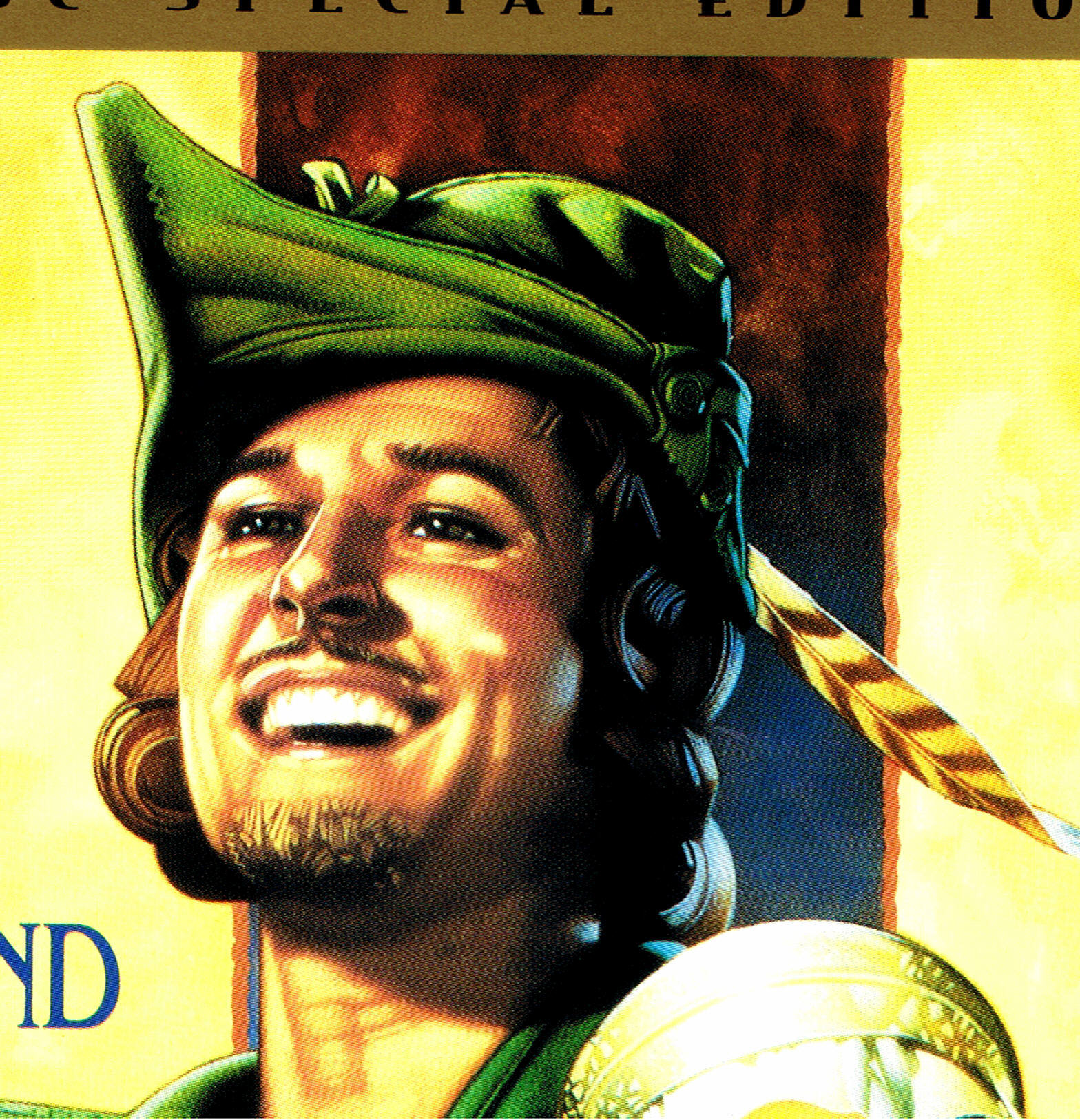
The Robin Hood tax campaign, which is sponsored by some 50 charities and other non-government organisations and supported by such luminaries as Comic Relief founder Richard Curtis and Archbishop of Canterbury Rowan Williams, is pushing this course of action.

According to the campaign, a package of financial transaction taxes on the purchase and sale of foreign exchange, shares, bonds and various derivatives, could raise over $400 billion (£250bn) worldwide.

That is more than enough to achieve the Millenium Development Goals, which range from halving extreme poverty to halting the spread of HIV/Aids and providing universal primary education by 2015, or even more ambitious goals.

But aren't these campaigners being a little starry-eyed? Assuming this amount could be raised by such means, can we trust governments to spend it for that purpose?

Already, the German and French governments want to hijack such taxes to fund the EU, whose accounts are notoriously opaque and corrupt.

Moreover, if Western governments were serious about ending poverty and so on, surely they would have long since put up the funds for that purpose?

If a Robin Hood tax could raise such funds, it would be up to the rest of us to campaign for it to be used in that way.

At the moment, the likelihood of a Robin Hood tax being introduced in Britain is nil, given the vehement opposition of the City, the Con-Dem government and right-wing lobby groups.

But just because the City and rightwingers are opposed to it, does that mean we should be for it?

Say a change of government did introduce such a tax and that we could prevent the EU grabbing it. Would the tax be capable of raising the kind of money suggested?

The trouble is that the calculations assume that the buying and selling of those various financial assets would carry on more or less as before.

Consider a transaction tax just on foreign exchange dealings, which is what the Robin Hood tax originally referred to when it was first coined by the campaigning group War on Want in the late 1990s - up to then it was known as the Tobin tax, after the Sveriges Riksbank (aka "Nobel") prize-winning economist James Tobin.

Tobin's original intention when he proposed the tax in 1972 had been not so much to raise funds but to make speculation less attractive. This would make exchange rates less volatile following the 1969 collapse of the Bretton Woods agreement, which had done that job the previous 25 years. But the Tobin tax was never implemented.

Today currency trading amounts to some £400 trillion a year. This is 50 times the total value of goods and services traded globally each year. The difference, it is assumed, is due to the large sums used for speculation.

Campaigners latch onto these figures, suggesting that a transaction tax of just 0.05 per cent could yield some £200bn just on foreign exchange dealings.

However, if the tax was doing its job according to Tobin, the amount of foreign exchange traded would slump to around that required for the purposes of real trade.

That is because it would no longer be worthwhile to speculate, which depends on very thin margins, and trading very large sums. It is likely therefore that nothing like that amount could be raised.

In 1984 Sweden introduced a 0.5 per cent transaction tax on the buying and selling of shares - that is, 1 per cent on a round trip.

Two years later it was doubled, and in addition, a 0.002 per cent transaction tax on bonds and other financial assets was introduced.

However trading volumes fell dramatically - to zero in some cases - and the revenues turned out to be barely 5 per cent of what had been anticipated. The policy was abandoned in 1990.

Britain has had a transaction tax on the purchase of shares - now known as the stamp duty reserve tax - for over two centuries.

The rate of tax has varied between 2 per cent and 0.5 per cent, the current rate.

Studies have found that trading volumes fell considerably when the rate was higher, and vice-versa. These days all financial intermediaries, which account for over 70 per cent of share dealings, are exempt, so its effect on trading volumes is minimal.

This is the dilemma for all transaction taxes. Are they to modify behaviour or to raise revenue?

If the former, they will not raise much revenue. If the latter, if the rate of tax is higher, trading volumes will reduce, so there is less to tax, and if low enough not to affect behaviour, they are likely to be hardly worth collecting.

Moreover, the financial sector is very adept at coming up with devices to get round regulations and avoid tax, making use of offshore tax havens to protect its privileges.

In effect, transaction taxes are an attempt to do things by proxy. Why not campaign for governments to address these issues directly and openly?

First there are more effective ways of raising revenue and to address poverty, and stimulate investment in real productive activities upon which that depends.

For a start, governments could make dealings with offshore tax havens illegal, so that the giant transnational corporations and the rich pay their fair share of taxes.

For Britain, this would of course affect the City, the world's second-biggest tax haven after Switzerland, as well as various enclaves still under British jurisdiction such as the Cayman Islands.

But this would be offset by the extra revenue made possible by eliminating tax evasion, especially if tax rates on profits and high incomes were raised to what they were in previous times.

Furthermore the diminished role of the City would make investment in other parts of the economy more attractive, which is sorely needed.

Meanwhile, genuine traders want stable exchange rates. At present they have to set up complex and expensive hedging arrangements to offset volatility, which in fact is what a large share of the supposed speculation in currencies is about.

This is what the Tobin tax was meant to address, though more recent research suggests that its effect could be to make currencies even more volatile.

It would be far better for all international trade to be conducted in a single global currency not connected with any particular country, with all national currencies adjusted to it, say, every quarter, on the basis of purchasing power parity.

Countries with failing economic polices might suffer, but this would not affect other countries.

Had the euro been introduced on that basis the eurozone now would not be in such difficulties.

For such a policy to work, capital controls would also be needed, but these are needed anyway, not only to cut out speculation but also to stop the surplus labour or profit generated by a country's people ending up somewhere else and therefore not available for investing in that country's economic development - which is what is needed to eliminate poverty.

In short, the campaign for a Robin Hood tax in the form of financial transaction taxes is largely a diversion from the real issues that need to be addressed

Tuesday, 14 June 2011

Expert joins calls for tax on bankers


Economic experts have unearthed “hard evidence” supporting TUC claims that a tax on bank transactions would raise billions of pounds currently being hived off Britain’s public services.

Institute of Development Studies published its latest findings yesterday, which argued that a financial transaction tax (FTT) could be viably implemented across Europe. The research sparked fresh calls for the government to introduce a Robin Hood tax in Britain.

The institute will tell a gathering of economists, policy makers and academics in Brussels today that an FTT on bankers making foreign exchange transactions would raise as much as £15 billion worldwide.

The charity will add that in Britain alone it could raise £7.5bn — roughly the same as the country’s entire aid budget.

TUC general secretary Brendan Barber argued that the findings confirmed that a Robin Hood tax is completely viable and could play a key role in reducing deficits and supporting economic growth.

He said: “As more European governments sign up to a Robin Hood tax, it’s time for the British government to admit that banks are not contributing their fair share towards repairing the mess they’ve created and publicly commit to a stronger tax on banks and major financial institutions.”

John Christensen of Tax Justice Network, an independent organisation analysing the harmful aspects of tax evasion, tax avoidance, tax competition and tax havens, argued that an FTT would not only reduce opportunities for making profits on ultra-low margin trades, it would also potentially raise billions of additional revenue to offset the ongoing damage caused by the financial crisis.

He said: “Bankers may well howl in protest but very few, if any, will act on their threats to leave the country.”

The findings by the institute were laid out in the first comprehensive review of the feasibility of FTTs, dubbed The Tobin Tax: A Review of the Evidence.

Report author Dr Neil McCulloch stressed that the evidence of a significant source of currently untapped revenue cannot be ignored when most of the world’s financial centres are driving through large spending cuts.

“There has never been any compelling economic case against what is a very modest tax on activity by banks and other financial institutions,” said Roger Seifert, professor of industrial relations and human resources at Wolverhampton Business School.

But he added that the main problem has always been and remains the lack of political will by those running the economy for the benefit of the rich and powerful.

Left Economics Advisory Panel co-ordinator Andrew Fisher said: “It is not markets that need to be stabilised, but the people whose lives are derailed by market speculation. The revenue raised from FTT could secure real investment in jobs and support those ravaged by rising fuel and food costs — increasingly caused by speculative trading.”

"Speculative trading is exacerbating crises around the world. A financial transaction tax (FTT) should, like green taxes, have a deterrent as well as a revenue raising effect. This report highlights both how feasible and beneficial a FTT would be."

This article first appeared in the Morning Star on Tue 14 June


Download the IDS report in full

Tuesday, 16 February 2010

Robin Hood Tax - a critical perspective

From Raphie de Santos of the SSP, reproduced from Facebook:

"I think the tax has a lot of problems at a lot of levels. First, it needs international agreement – most of these transactions are also off market – on unofficial over the counter (OTC) markets which are currently unsupervised. Far from curtailing banks from speculation it would push banks from a low margin execution business for pension and insurance funds where the margins are thin (we would end up paying through increased fees on running our pension/insurance funds) to trading for the Bank’s own account (speculative proprietary trading with high returns).

Brown and co know all this and that it will never be implemented. He is using it as a bit of Bank bashing ahead of the election. The real way would be to tax the banks investment banking profits and hit the high earners with a 100% tax above £100,000.

Of course really taking over the banks and using their tens of thousands of billions of pounds of assets for social use and closing down all their speculative businesses and turning their lending into social rents is the real way ahead. The Robin Hood Tax campaign is becoming a substitute for real action and something Brown and co can hide behind."

For those who haven't seen it here's the launch video, more details on the Robin Hood Tax campaign website.


Wednesday, 11 November 2009

The apostles of growth have had their day

following on from Andrew's post on the Tobin Tax.................

Gordon Brown is in big trouble. The financial system he piloted to prominence during his years as Chancellor is in ruins. Rupert Murdoch has turned The Sun against him. The majority of the UK population is in favour of a withdrawal from Afghanistan, and his letter-writing skills have slipped, angering army wives and mothers.

Brown’s plight is a pale reflection of the political crisis engulfing capitalist governments throughout the world as disaffection grips the masses whose lives are being destroyed by attempts to prevent a slump unparalleled in history. Despite trillions of stimulus dollars, pounds, euros, and the lowest interest rates ever set by central banks, unemployment is soaring worldwide.

In an attempt to repair the damage to his reputation as warm-hearted saviour of the global economy, Brown is trying a populist appeal to the massed ranks of the Trades Union Congress (TUC) and the many other well-meaning members of the Stamp Out Poverty Coalition.

At the weekend G20 meeting of finance ministers and central bankers in Scotland, Brown took up Brendan Barber of the TUC’s call for a tax on financial transactions within the UK – something within the powers of the national government, at least in theory. Having resisted the 30 plus year-old Tobin-tax campaign till now, the UK’s prime minister upped the stakes on the TUC, declaring his support for a tax on global financial transactions.

The chorus of disapproval was almost deafening.

The response from Barack Obama’s Treasury Secretary Timothy Geithner gave a clear and succinct voice to the objective force that is capital. Geithner said there was broad agreement that "growth remains the dominant policy imperative across our economies". US unemployment, which hit a 26-year-high at 10.2% in October, highlighted a "very tough economic environment" that will take a period of sustained growth to correct.

"Government policy has to provide a bridge to growth led by the private sector," he said. "We're now in the middle span of that bridge." In an interview with Sky News, Geithner added: “A day-by-day financial transaction tax is not something we are prepared to support."

Geithner, late of Goldman Sachs, insisted that government had to stay cautious (apart from giving bankers untold billions) and warned: “If we put the brakes on too quickly we will weaken the economy and the financial system, unemployment will rise, more businesses will fail, budget deficits will rise, and the ultimate cost of the crisis will be greater." In other words, business as usual is the goal.

Canadian finance minister Jim Flaherty and Dominique Strauss-Kahn, the head of the IMF joined the opposition to a transactions tax. Flaherty said Canada was working out how to reduce taxes, while Strauss-Kahn opted for a politer more diplomatic response – it’s just too difficult to measure international transactions. Unsurprisingly the banks including Barclays and HSBC aren’t in favour either.

All of the voices in this song-fest are united in their blind subservience to the status quo. The chorus against a tax on financial transactions shows two things. Firstly, reform of the global capitalist financial system is out of the question. Secondly the dependent relationship that links the state to the productive and financial components of the capitalist economy has to be shattered before we can move forward.

The world is now ready for a society that places the satisfaction of needs as its primary goal. Rather than attempting to tax the proceeds of gambling in the global casino, the casino should be shut down and the capitalist state deconstructed. Geithner, Brown and the other apostles of capitalist growth have had their day.

Gerry Gold
Economics editor
www.aworldtowin.net

Sunday, 8 November 2009

Tobin Tax conversion by Brown?

At the G20 Summit, Gordon Brown has suggested a Tobin Tax (a tax on financial transactions) to pay for the global bank bailouts and deficits. This came as a massive shock not only to other global leaders, but to all those who have been campaigning for such a tax for several years.

At Prime Minister's questions less than a year ago, Alan Simpson MP suggested a Tobin Tax to "deter speculators from playing the terribly destructive role that they have played in throwing us into the current recession". Brown's response was that a Tobin Tax "has been found by many people who have looked at it not to be implementable".

Just a month before that another Campaign Group MP - Neil Gerrard - was dismissed by Treasury Minister Stephen Timms who said, "The Government have previously studied the technical implications of a proposed tax on sterling currency transactions and reached the view that there would be economic distortions across a range of activities beyond just the foreign exchange markets, the cost of which would be likely to far outweigh the relative costs of raising finance via other mechanisms that Governments use".

No one has yet explained Brown's Damascene conversion. Nevertheless, the severity of the UK's deficit caused the ongoing bank bailouts means that the time is exactly right to consider a tax that could raise billions from the finance sector. Surely logic hasn't reached Brown's thinking?

Sunday, 25 October 2009

Tories fail the tax test


Prem Sikka

What is the Conservatives’ big idea on job creation? Make public sector workers redundant and reduce people’s welfare rights through cuts. However, they have captured press headlines. Shadow Chancellor George Osborne told the Conservative Party conference that, if elected, the Tories would offer tax breaks to new businesses for the first two years of their life by waiving National Insurance contributions on the first 10 people employed in any new business and create 60,000 new jobs. Conservative leader David Cameron has described the policy as the “biggest, boldest programme to get people working”. Predictably, the Confederation of British Industry agrees.

Does the policy make any sense? The Conservatives have not explained what exactly a “new business” is. Without details, tax policies cannot achieve their assumed goals.

We have all heard of fly-by-night operators who close one shady business and start another. The Conservative Party’s announcement must be music to their ears. They can all close one business and start another the next day to claim exemptions from employer National Insurance contributions regardless of their profits. Perfectly respectable businesses can also indulge in the same creativity by hiving off marketing, public relations and other activities to new subsidiaries – all to claim exemptions from national insurance contributions. Hairdressers, greengrocers, estate agents and corner shops can all do the same, too – without creating a single new job. The only people making any money will be accountants showing them how to lay the old business to rest and start the new one.

Every time any government or political party announces any special tax concessions to one section of business, they set off the avoidance industry in motion. In trade, these are called loopholes and are exploited by accountants and lawyers. The Tory proposal will do the same. They seem to have learnt nothing from past mistakes. Small businesses cannot create jobs on the back of a National Insurance holiday. Businesses need sustainable revenues and no one is going to take on an employee if trade is depressed. The idea that the Conservative plans will result in the creation of some 60,000 jobs is pie-in-the sky and simply unachievable. The Conservative Party has failed the first test of tax policy – that is, to design a policy that cannot easily be abused. They are planning to create another loophole.

Governments should stimulate the economy through more efficient and sustainable means. They can reduce business rates for small businesses. They can extend 100 per cent first year capital allowances, depreciation allowed for tax purposes, to all qualifying investment in plant and machinery. Currently, 100 per cent relief is available on capital expenditure on all plant and machinery (apart from cars) up to £50,000 a year only. The cost of extending the 100 per cent allowances for 2009-2010 would be around £5 billion. Her Majesty’s Revenue and Customs already has a well-established way of policing it. So there will be no new bureaucracy. The proposal would help to retool businesses and create jobs. It can result in orders for the dwindling manufacturing sector and build capacity.

The public sector is targeted by both Labour and Conservatives, but the private sector has singularly failed to create new jobs. Sacking people neither creates jobs nor provides the spending stimulus which our high streets need. Most of the additional jobs since 1997, nearly one million, have been created in the public sector and 75 per cent of these are held by women, mainly outside London. So any cull in the public sector will hurt women disproportionately and also blight the regions. Hardly any questions have been asked about the failure of the private sector to create jobs, even though it depends on the public sector for contracts in healthcare, education and many other areas

A key requirement for sustainable jobs is that people have spending power and that can only be achieved through progressive taxation that redistributes wealth. Ordinary people spend the largest part of their money on food, clothes, shoes and travel in British shops. This has a greater multiplier effect than billions thrown at rich bankers and others. Their speculation on the stock market and housing creates bubbles. At best, they might create some extra business activity for estate agents, accountants and lawyers, but the multiplier effect of their wealth is minimal.

Instead of public expenditure cuts that penalise teachers, nurses, cooks, care workers and security staff who have not caused the economic crisis or gained very much from the boom years, the Government should look at reforming the tax system. In 2007/8, pension contributions relief added up to £37.6 billion. 60 per cent of it went to those on higher rates of income tax and £10 billion went to just 1 per cent of the taxpayers earning more than £150,000 a year. By confining pension contributions tax relief to the basic rate of income tax, the government can release up to £22 billion a year.

Removing the artificial upper ceiling on National Insurance contributions can raise £5 billion. Currently, no National Insurance is paid on incomes above £844 a week.

Even the Conservatives know that speculators cause harm. Yet neither they nor Labour have enacted a Tobin tax on currency transactions. A modest Tobin tax at 0.005 per cent could yield up to $33 billion (more than £20.60 billion). To prevent leakage, this could be co-ordinated within the European Union and raise nearly $17 billion (in excess of £10.6 billion) or more, if higher rates are levied.

Derivatives, the complex financial bets on the movement of interest rates, commodity prices and exchange rates turned out to be the weapons of mass destruction. The global GDP is around $55 trillion, but the face value of derivatives at December 2007 was $1,148 trillion. A simple 1 per cent tax on these could raise more than $11 trillion and a significant proportion of that would accrue to Britain, Tobacco, alcohol and gambling are taxed because they are considered to be harmful. The same principle should apply to financial instruments, as there is now plenty of evidence that this form of reckless gambling has caused havoc.

These are just some of the ways in which revenue could be raised to reflate the economy and especially help the less well-off. A 10 per cent increase in income tax personal allowances would cost about £4.5 billion. A 10 per cent increase in the state pension may be another £10 billion. Money would be available to waive university fees, prescription and dental charges.

Resources could also be used to build a greener economy and a more balanced and diversified economy that favours manufacturing, science, technology and lifelong learning. But instead we now have the obsession with cuts and gimmicks such creating jobs through National Insurance contribution holidays.

*Prem Sikka is professor of accounting at Essex University. This article first appeared in Tribune