The general strike that got under way in Greece today, bringing the country to a standstill, is a foretaste of the struggles to come throughout the capitalist world as the global financial crisis moves from the banking system to debt-ridden sovereign states.
Stock on markets around the world from Europe to Brazil, to the US and Canada fell as the horrible truth dawned on the hedge fund managers that gamble with peoples’ lives. And the truth? It’s a two-headed monster.
Head 1: Greek workers aren’t prepared to accept the pain for a crisis not of their making, including savage wage and pension cuts and tax increases.
Head 2: Greece is just one of the many countries caught up in the consequences of the worsening global crisis and the only “solutions” available will trigger revolt throughout the world.
Spain is reported to be talking to the International Monetary Fund (IMF) about its own bail-out. Iceland remains paralysed after a referendum showed its population were overwhelmingly opposed to the terms of the rescue of its banks. None of the major parties contending for votes in Britain’s fraudulent election tomorrow can admit the scale of the assault on the electorate that will follow immediately a government is cobbled together.
According to the Financial Times columnist Wolfgang Munchau, the bailout funds needed for Greece, Portugal, Spain, Ireland and possibly Italy could add up to “somewhere between €500bn ($665bn, £435bn) and €1,000bn”. The demand for new credit from all those countries will drive up interest rates “at a time when they are either in recession or just limping out of one”.
His conclusion? “The private sector in some of those countries is simply not viable at those higher rates.” It’s a prescient conclusion. In other words it means capitalist production is no longer sustainable. But that doesn’t stop them trying to fix it.
The turmoil in Greece began when the Greek government, led by the “socialist” PASOK party, found it impossible to pay the interest on loans made to cover the country’s soaring budget deficit. But even the three-year bail out package totalling nearly £100 billion, funded by the Eurozone countries and the IMF, may be inadequate for the purpose, such is the level of indebtedness.
Finance Minister George Papaconstantinou, looking both ways, said Greece had been called on to make a "basic choice between collapse or salvation". He said: "It is not going to be easy on Greek citizens, despite the efforts that have been made and will continue to be made to protect the weakest in society." But he then acknowledged the real intent – to win back the trust of the lenders: “The whole idea of the programme is … return to markets as soon as possible, so we’re hoping that next year we’ll be doing that.”
New emergency legislation authorising the cuts and tax rises is now being drafted and is due to be put before parliament for approval by the end of the week in time for the IMF’s Board meeting on Sunday to consider Greece’s application for help. It’s there and in the boardrooms of the capitalist corporations and financial markets that the key decisions are made affecting the lives of ordinary people in every country.
No one anywhere in the world voted for the bail-out of the global banking system funded by colossal sums of government debt. The “choice” in the British general election is non-existent. Only pain, pain and more pain is on the ballot form, in the form of the three major capitalist parties. Greek workers have lit the fuse of resistance which will spread like wildfire over the coming months. It’s time for a new kind of democracy. Join us on the revolutionary road. Sign up for our conference on 22 May.
Gerry Gold
Economics editor, A World to Win, www.aworldtowin.net
5 May 2010
Wednesday, 5 May 2010

Tuesday, 4 May 2010
More rail cuts ahead
In January 2009 LEAP published RMT-commissioned research on the UK rail system.

We said that our findings raised "serious questions about the viability of the Department for Transport's (DfT) franchise model in a period of recession."
We elaborated that, we expected rail companies to attempt "to renegotiate franchise agreements, which could include ... cutting services on less profitable routes".
Today, the Daily Telegraph reports that proposals to give rail operators an incentive to cut unprofitable routes was drawn up not by rail operators, but by the DfT in January.
Of course the ludicrous franchising system means that operators receive subsidies to operate these routes, and with no party guaranteeing transport funding it is of course the DfT who would initially benefit by not having to pay the subsidies. However, the rail companies would also benefit, since they could lease less rolling stock and roster fewer staff as they would be running fewer services.
But what about the government's other policies (i.e. apart from cutting the deficit)?

In our January 2009 report, we identified the following government policies that would be threatened by rail cuts:
1. Modal shift from road to rail to reduce carbon emissions;
2. Social exclusion – increased rail fares will drive poorer farepayers with no alternative private transport options from the railways;
3. Increasing employment towards a target of 80%;
4. Improving passenger safety at rail stations and reducing staff assaults
All of which will be sacrificed if DfT plans go ahead it seems.

We said that our findings raised "serious questions about the viability of the Department for Transport's (DfT) franchise model in a period of recession."
We elaborated that, we expected rail companies to attempt "to renegotiate franchise agreements, which could include ... cutting services on less profitable routes".
Today, the Daily Telegraph reports that proposals to give rail operators an incentive to cut unprofitable routes was drawn up not by rail operators, but by the DfT in January.
Of course the ludicrous franchising system means that operators receive subsidies to operate these routes, and with no party guaranteeing transport funding it is of course the DfT who would initially benefit by not having to pay the subsidies. However, the rail companies would also benefit, since they could lease less rolling stock and roster fewer staff as they would be running fewer services.
But what about the government's other policies (i.e. apart from cutting the deficit)?

In our January 2009 report, we identified the following government policies that would be threatened by rail cuts:
1. Modal shift from road to rail to reduce carbon emissions;
2. Social exclusion – increased rail fares will drive poorer farepayers with no alternative private transport options from the railways;
3. Increasing employment towards a target of 80%;
4. Improving passenger safety at rail stations and reducing staff assaults
All of which will be sacrificed if DfT plans go ahead it seems.
Thursday, 29 April 2010
The credit rating agencies
Greek debt was downgraded to 'junk' status by the credit rating agencies earlier this week, and yesterday Spain was taken down a notch from AA+ to AA - but who are these credit rating agencies, and are they right?
One of the major credit rating agencies, Standard & Poors, describes itself as "a leader of financial-market intelligence", while another, Moody's, modestly says its "commitment and expertise contribute to stable, transparent and integrated financial markets, protecting the integrity of credit".
Cast your mind back however to the beginning of this crisis - when the 'credit crunch' euphemism was still being used. What happened? A large number of structured investment vehicles, special purpose vehicles and collateralised debt obligations were found to be worthless - bundled up packages of unrepayable sub-prime mortgages and the like.
Now why would banks have traded these disastrous investments? The answer lies in the credit rating agencies which rated these truly junk investments as AAA in many cases. And who pays credit rating agencies to give a rating? The selling bank. So if you're client comes to you, and pays you lots of money to give something it is trying to sell a rating, do you (a) please your client; or (b) give an honest assessment? The credit crunch answered that question, yet still the credit rating agencies deem themselves fit to tell the world what is a good investment or not.
Is the Greek economy really more risky than a bundle of sub-prime mortgages? No - though there are problems. And what about Spain, Portugal, Italy and the UK, all highly indebted? Let's look at the effect of downgrades or the threat of downgrades:
1) It makes the interest rate on loans higher
2) It deters investors from buying debt / making further loans
3) This forces further austerity measures
The immediate effect on Greece has been further calls from creditors for more 'reform' and 'austerity measures'. This means the market taking more control through privatisation and the Greek people paying with cuts to their services, pensions and benefits. Fearing it could be downgraded to 'junk' next, Portugal announced tougher austerity measures yetserday - held at gunpoint to pay for the crisis by the very people who caused the crisis.

This is the problem of the credit markets being almost entirely unregulated and totally in private hands. Gangster capitalism is thriving
One of the major credit rating agencies, Standard & Poors, describes itself as "a leader of financial-market intelligence", while another, Moody's, modestly says its "commitment and expertise contribute to stable, transparent and integrated financial markets, protecting the integrity of credit".
Cast your mind back however to the beginning of this crisis - when the 'credit crunch' euphemism was still being used. What happened? A large number of structured investment vehicles, special purpose vehicles and collateralised debt obligations were found to be worthless - bundled up packages of unrepayable sub-prime mortgages and the like.
Now why would banks have traded these disastrous investments? The answer lies in the credit rating agencies which rated these truly junk investments as AAA in many cases. And who pays credit rating agencies to give a rating? The selling bank. So if you're client comes to you, and pays you lots of money to give something it is trying to sell a rating, do you (a) please your client; or (b) give an honest assessment? The credit crunch answered that question, yet still the credit rating agencies deem themselves fit to tell the world what is a good investment or not.
Is the Greek economy really more risky than a bundle of sub-prime mortgages? No - though there are problems. And what about Spain, Portugal, Italy and the UK, all highly indebted? Let's look at the effect of downgrades or the threat of downgrades:
1) It makes the interest rate on loans higher
2) It deters investors from buying debt / making further loans
3) This forces further austerity measures
The immediate effect on Greece has been further calls from creditors for more 'reform' and 'austerity measures'. This means the market taking more control through privatisation and the Greek people paying with cuts to their services, pensions and benefits. Fearing it could be downgraded to 'junk' next, Portugal announced tougher austerity measures yetserday - held at gunpoint to pay for the crisis by the very people who caused the crisis.
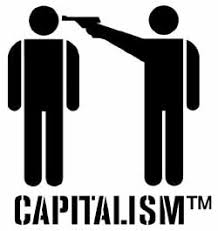
This is the problem of the credit markets being almost entirely unregulated and totally in private hands. Gangster capitalism is thriving
Wednesday, 28 April 2010
Tuesday, 27 April 2010
Lloyds announces returns to profit
by Louise Nousratpour
Morning Star
Part-nationalised Lloyds Banking Group has announced that it was back in profit, with the government's shares now reported to be worth £2 billion more than the Treasury paid for them.
Lloyds, which is 41 per cent owned by the taxpayer, said "positive trends" in its business and wider economy helped it return to profit in the first quarter.
The group did not provide a profit figure, but news that it clawed out of the red marks a significant turnaround on the £6.3 billion losses reported for 2009 after the HBOS takeover and credit crunch left Lloyds with £24bn in bad debts.
The Guardian claimed that the taxpayer stood to gain a total paper profit of £10bn following surprise increases in share prices at Lloyds and the Royal Bank of Scotland, which is 84 per cent state-owned.
Left Economics Advisory Panel co-ordinator Andrew Fisher said that Lloyd's profit announcement had made the case for nationalising the lucrative banking system and using the gains to plug the massive deficit rather than slashing public services.
Speaking while on the campaign trail for west London Labour MP John McDonnell, he said: "If we had properly nationalised these bailed-out banks in the first place, any profits would have gone straight into the Exchequer rather than remain as paper profit."
Lloyds has come under fire for offering huge bonuses to chief executive Eric Daniels.
He stands to reap a potential £6.2 million in salary and options for 2010 if the bank meets a series of targets.
Morning Star
Part-nationalised Lloyds Banking Group has announced that it was back in profit, with the government's shares now reported to be worth £2 billion more than the Treasury paid for them.
Lloyds, which is 41 per cent owned by the taxpayer, said "positive trends" in its business and wider economy helped it return to profit in the first quarter.
The group did not provide a profit figure, but news that it clawed out of the red marks a significant turnaround on the £6.3 billion losses reported for 2009 after the HBOS takeover and credit crunch left Lloyds with £24bn in bad debts.
The Guardian claimed that the taxpayer stood to gain a total paper profit of £10bn following surprise increases in share prices at Lloyds and the Royal Bank of Scotland, which is 84 per cent state-owned.
Left Economics Advisory Panel co-ordinator Andrew Fisher said that Lloyd's profit announcement had made the case for nationalising the lucrative banking system and using the gains to plug the massive deficit rather than slashing public services.
Speaking while on the campaign trail for west London Labour MP John McDonnell, he said: "If we had properly nationalised these bailed-out banks in the first place, any profits would have gone straight into the Exchequer rather than remain as paper profit."
Lloyds has come under fire for offering huge bonuses to chief executive Eric Daniels.
He stands to reap a potential £6.2 million in salary and options for 2010 if the bank meets a series of targets.
Saturday, 17 April 2010
Tobacco retailers hit with £225 million fine
Morning Star
by Louise Nousratpour
The competition watchdog has fined 10 retailers and two tobacco manufacturers £225 million for "unlawful practices" in pricing of cigarettes, cigars and rolling tobacco.
The fine - the largest total ever imposed by the Office of Fair Trading (OFT) - came after Imperial Tobacco and Gallaher struck "price-matching" arrangements with retailers in which the prices of their tobacco products were linked to those made by rivals.
The watchdog said that the agreements over price fixing between rival brands were "unlawful" because "they can lead to reduced competition and ultimately disadvantage consumers."
Left Economic Advisory Panel co-ordinator Andrew Fisher welcomed the OFT fines, which he said exposed "the lies in the rhetoric of big business. Far from the mythical free-market economy, big business seeks a monopolised stranglehold over consumers."
Mr Fisher added: "The value of the OFT has also been highlighted and it's no surprise that the favourite party of big business - the Tories - is calling for a 'bonfire of the quangos.' Both consumers and government revenues would be worse off without the OFT."
The retailers caught up in the case were Asda, the Co-operative Group, First Quench, Morrisons, One Stop Stores (formerly T&S Stores), Safeway, Sainsbury's, Shell, Somerfield and TM Retail - the owner of the McColls and Martins chains.
Safeway has since been bought by Morrisons, the Co-operative has acquired Somerfield and First Quench, which owned off-licence Threshers, went into administration last year.
Imperial Tobacco, whose tobacco brands include Lambert & Butler, received the biggest fine - £112.3m - but denied "categorically" that its pricing practices were anti-competitive or affected consumers.
The group plans to appeal.
by Louise Nousratpour
The competition watchdog has fined 10 retailers and two tobacco manufacturers £225 million for "unlawful practices" in pricing of cigarettes, cigars and rolling tobacco.
The fine - the largest total ever imposed by the Office of Fair Trading (OFT) - came after Imperial Tobacco and Gallaher struck "price-matching" arrangements with retailers in which the prices of their tobacco products were linked to those made by rivals.
The watchdog said that the agreements over price fixing between rival brands were "unlawful" because "they can lead to reduced competition and ultimately disadvantage consumers."
Left Economic Advisory Panel co-ordinator Andrew Fisher welcomed the OFT fines, which he said exposed "the lies in the rhetoric of big business. Far from the mythical free-market economy, big business seeks a monopolised stranglehold over consumers."
Mr Fisher added: "The value of the OFT has also been highlighted and it's no surprise that the favourite party of big business - the Tories - is calling for a 'bonfire of the quangos.' Both consumers and government revenues would be worse off without the OFT."
The retailers caught up in the case were Asda, the Co-operative Group, First Quench, Morrisons, One Stop Stores (formerly T&S Stores), Safeway, Sainsbury's, Shell, Somerfield and TM Retail - the owner of the McColls and Martins chains.
Safeway has since been bought by Morrisons, the Co-operative has acquired Somerfield and First Quench, which owned off-licence Threshers, went into administration last year.
Imperial Tobacco, whose tobacco brands include Lambert & Butler, received the biggest fine - £112.3m - but denied "categorically" that its pricing practices were anti-competitive or affected consumers.
The group plans to appeal.
Thursday, 15 April 2010
Unions should shape election agendas

Unions had the power to reject neoliberalism and change party agendas. Instead, they support Labour as the least worst option
Gregor Gall
With around 7 million members, the biggest membership of any voluntary organisations, the trade unions could and should be making a much better fist of influencing the election's overall political agenda.
The need to protect members' interests is paramount after the deepest recession in living memory, the huge national debt to bail out the banks and businesses, and the clear intent of all three major parties to cut public services to pay off this debt.
And the unions have the resources to put action behind their words. Nearly all have funds to spend on political campaigning and they have hundreds of thousands of activists to knock on doors and make phone calls. But when it comes to where they line up on the big issues of the day, the vast majority miss the trick.
Fifteen unions are affiliated to Labour, representing 4.45 million workers (or 64% of all members). Of these, Unite, Unison and the GMB are by far the biggest.
These unions call for a vote for Labour to stop the Tories, with little in the way of positive enthusiasm for Labour. Of these, Unite is the most stridently and unambiguously pro-Labour while Unison is more guarded.
But rather than take the attitude of "better the devil you know", or supporting the party whose cuts will be least, the unions together could have influenced the entire political agenda by moving its centre of gravity far away from neoliberalism, the proverbial elephant in the room of this election.
Together, they could have said: "We reject 'the market knows best' where profits come before people", mobilised their members around this, and done so before now. If they had done this, the idea that markets can be regulated to protect the common good would already be part of the popular common sense. And, all the parties would have had to accommodate this. Only the PCS union with its "Make your vote count" campaign and the RMT through its support for No2EU and the Trade Unionists and Socialist Coalition have made any attempt to do this.
Instead most – one way or another – end up endorsing Labour as the least worst option. They think it has the better plans for growth (even though this is essentially from trickledown economics). Their bottom line is pretty much jobs at any price and forget about the type of jobs they are. This is the inevitable result when you give up trying to regulate the market – instead, you become beholden to it.
The tragedy is that Labour is still intent upon further privatisation and marketisation, behind all the guff about "a future fair for all". It is still far more business than worker-friendly. And that is truly self-defeating for the unions.
Subscribe to:
Posts (Atom)