Wednesday, 13 April 2011

An epitaph for Bretton Woods

More than 300 economists, policymakers and academics, and a smattering of the politicians who presided over the events leading to the great crash of 2007-8, met up over the weekend at an historic location.

The conference was sponsored by the Institute for New Economic Thinking, which was set up in 2009, by George Soros one of the world’s most notorious speculators.

In 1944, at the same Mount Washington Resort in Bretton Woods, the world’s financial leaders thrashed out the architecture of a new order for the world economy to replace the one shattered by the Great Depression and World War II.

They succeeded in creating monetary agreements between nations and organisational arrangements to handle emergency funding that would enable capitalism to set out on the growth path once again.

Last weekend’s aim was to consider whether the international order remained fit for purpose ahead of the annual spring meetings of the International Monetary Fund (IMF) – one of the world level agencies set up following the 1944 gathering.

In summing up the results, Prof Justin O’Brien, director of the Centre for Law, Markets and Regulation at the University of New South Wales, asked the key question, and answered it:

Following the catastrophic losses associated with the global financial crisis, do policymakers have either the vision or the tools to manage the politics of austerity? The unambiguous answer was no.
The problem is that in those 67 years since Bretton Woods, capitalist corporations and a global web of financial institutions have outgrown the system of nation-states that came into existence as the result of earlier phases of social, economic and political evolution.

In O’Brien’s wordy assessment:

The crisis, speaker after speaker confirmed, was the outworking of hubris, delusion, commitment to flawed ideological constructs and inattention to history. Moreover, the policy response has legitimated socialised losses on a scale unimagined by the architects of the Bretton Woods system. It has amplified the moral hazard associated with protecting a banking industry addicted to unsustainable and undesirable leverage.

Deemed too big, too interconnected and too complex to unravel without causing systemic failure, banking has emerged as the sole winner from a crisis its funding model helped to cause. Somewhat paradoxically the banking sector has become even more concentrated, making it all but impossible for regulators to control. More perniciously, the sector has a vested interest in curtailing the co-ordination necessary to engineer meaningful change, particularly in the United States but also in Europe, now the epicentre of the financial crisis.

The complexity of the deeply integrated European and North American banks demonstrates the failure of regional and global institutions of power, flawed harmonisation agendas and weaknesses of national regulation. Wariness in advocating radical restructuring risks privileging the symbolic over the substantive. As Andrew Sheng, a senior adviser to the China Banking Regulatory Commission put it, advocating piecemeal ad hoc reform overseen by a fragmented system of national regulators is ‘like asking pygmies to hold down giants’
.
Gordon Brown, who, as British chancellor was amongst the greatest enthusiasts for the financiers’ rise to power, claims that "we didn't understand just how entangled things were". This is nonsense. Many warned about the consequences of creating a financial system driven by investment banks and exotic 'products'. New Labour was just happy to rake in the tax proceeds to finance its social programmes.

Like fish in the sea, unaware of the water they live in, these academics and policy-makers breathe the air of capitalism. They have had their day. The 2011 version of Bretton Woods was effectively an epitaph for a global capitalist system founded on debt. It falls to the mass of people to create a new 'architecture' in the shape of an economic system based on need and not profit.

Gerry Gold
Economics editor
www.aworldtowin.net

Friday, 8 April 2011

"There is an overpowering logic in putting people back to work"


Letter in today's Independent from Kelvin Hopkins MP

Stephen King's "Economic Outlook" (4 April) did at least cast doubt on Osborne's pipedream that savage cuts in public spending will usher in a private-sector supply-side economic recovery.

Price Waterhouse Coopers estimate that every job lost in the public sector will mean another job lost in the private sector, so if 450,000 jobs in the public sector are lost, we could be looking at close on a million extra unemployed some three years hence. It could actually be worse than that with powerful downward multiplier effects kicking in.

King goes on to reject the Keynesian alternative, too, suggesting that whatever governments do, we're all doomed. He should be reminded that in 1945, with gross government debt four times larger than now, Labour and subsequent Conservative governments spent their way out of debt by maintaining high levels of employment, thus maximising tax receipts and minimising the bill for benefits. The National Health Service was created, living standards rapidly rose, and inequality was reduced. More of the same now would have the same effect, so why not just do it?

The alternative is to leave millions of ordinary people wishing to consume goods and services but without the income to do so, and millions of people willing to produce those goods and services but unable to do so because they are unemployed.

There is an overpowering logic in putting those people back to work. That cannot happen unless the government takes action to create jobs, raising spending in the most labour-intensive areas such as construction and the public services. Annual deficits and Britain's gross debt would then start to fall just as they did in the quarter century after 1945.

Kelvin Hopkins MP (Lab, Luton North), House of Commons, London SW1

Minimum wage 'welcome' and 'an insult' say unions

For the fourth year in succession the national minimum wage will rise below the rate inflation, when it is uprated in October 2011.

LEAP has previously criticised the TUC for submitting below-inflation bids for the minimum wage, and then for welcoming an even lower rate.

This year with RPI at 5.5% and CPI at 4.4%, the national minimum wage rises only by 2.5% - up by 15p to £6.08. For younger people aged 18-20 it rises only by 1.2% and for 16-17 year olds by 1.1%.


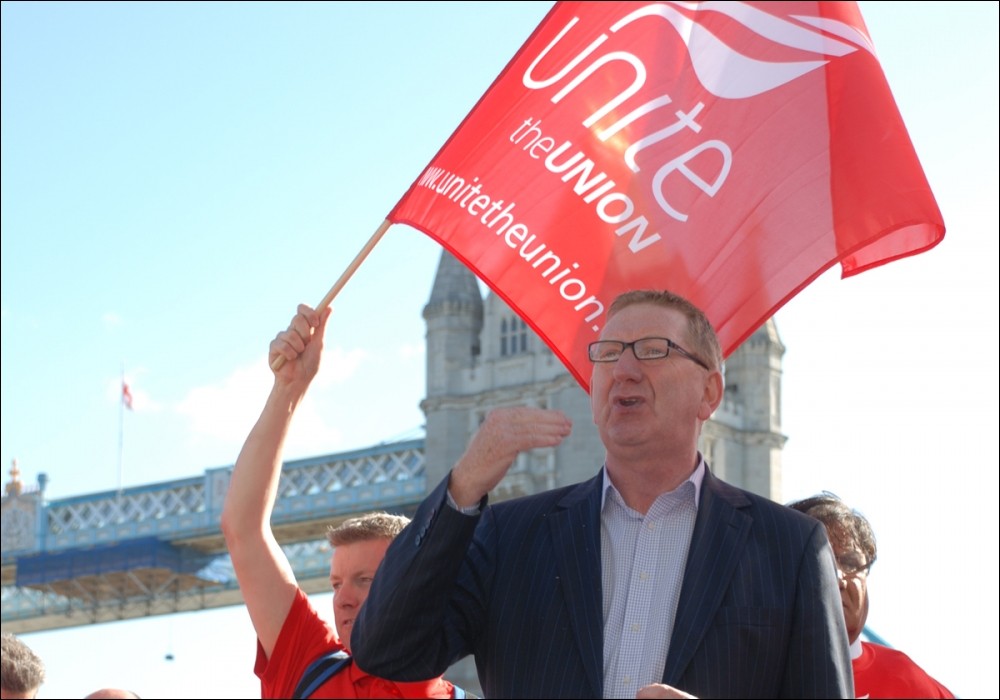
Len McCluskey, the general secretary of Unite rightly condemned the rises
This small increase in the minimum wage is completely outstripped by the current rate of inflation. The rise will do little to help the lowest paid in our society keep up with the rising cost of food and fuel.

But he reserved his venom in defence of young workers:
The paltry increase in the minimum wage for the under twenties is an insult. There is no reason why younger workers should be paid less and have to struggle more to keep up with the cost of living - it's tantamount to exploitation. Workers should be paid the rate for the job regardless of age. This is yet another attack on young people by this Tory-led government.


Yet again though the TUC played its usual supine role, with Brendan Barber describing the real terms cut as "a welcome pay boost for around 840,000 low-paid workers in the UK."

Most outrageously though, Barber uses the bosses' arguments to defend below inflation rises:
"The LPC [Low Pay Commission] has taken great care to ensure that the new rates are set at a level that will not damage job creation in these uncertain economic times."

When corporate profitability is at an all-time high, the TUC is asking workers to accept declining pay in order to shore up corporate Britain's profit margins.

But while the TUC's general secretary was speaking for business not workers, this year's TUC President (and Unison general secretary) Dave Prentis set out the reality of what this means for low paid workers and put the economic case for a higher increase:
"This small increase is totally outstripped by the rising cost of essentials like food and fuel. The vast majority of a low paid worker’s pay is eaten up by basic living costs – so increases in inflation hit hard.

“We know that many low paid workers are already struggling with heavy debt. Others are cutting back on food, and what they spend on their children. Not only does this show that many families are really struggling – it’s also bad news for local shops and businesses.

“It’s wrong to suggest that a smaller rise in the young people’s rate is better for businesses. Hitting young people’s spending power is a direct hit on those businesses. We need strong demand in our economy to stimulate growth and recovery. Young people also need a helping hand – they are victims of a recession that they did nothing to cause.

“A bigger rise would have also helped restore the balance of fairness in our country – which is suffering hugely under the Tories. It seems incredible that MPs can claim expenses of £3.2 million in just two months, but young people are fobbed off with an extra 10 pence.”

These are welcome signs of unions shaking off the passivity of the TUC. Labour representation is an industrial issue, not just a political one.

Thursday, 31 March 2011

The 2011 Budget and its global context


Hugo Radice picks apart Osborne's budget, and predicts difficult times ahead for the UK economy.

The massive turnout on March 26 in London provided a vital public repudiation of the ConDems’ austerity programme. But although opinion polls show that a large majority of the public say that the cuts in public spending are unfair and too fast, more than half still think they are necessary. As opposition heats up all over the country, with local opposition groups being set up and public meetings and protests taking place, it is vital that the left continues to argue against the cuts. Far from being based on ‘scientific’ economics, the cuts form a determined attempt to make the poor pay for the bankers’ blunders, and to change fundamentally the relation between the citizen and the state in Britain. And what’s more, the austerity programme may well make the chances of a general economic recovery worse rather than better.

In developing our arguments over the coming months, we need a good understanding of the likely consequences of the budget, in the context of the ConDems’ overall fiscal strategy and the global economic outlook.

The budget

In his 2011 budget, George Osborne was clearly determined to stick with ‘Plan A’, adding little to the barrage of measures already decided in the emergency budget last summer. We are now braced for the full impact of those measures, especially from local authority job cuts, reductions in a range of benefits, and the rise in national insurance contributions. The Institute for Fiscal Studies has once again shown that these cuts will bear most heavily on the poor; although the top 10% will have their incomes reduced significantly by the 50% income tax rate, for the rest of us the proportional fall in income expected over the next 5 years increases as you go down the income scale. And to this, we have to add the hidden extra costs imposed on large numbers of households by the loss of public services such as libraries, day centre provision, rural bus services, and so on.

Osborne’s only substantial change in the budget was a reduction in corporation tax. He claimed that this would encourage businesses to invest more and take on more workers, but as Keynes pointed out long ago, changes of this kind – a few percent off tax or a small reduction in the cost of borrowing – have no effect if business confidence is low and if households are cutting back on spending. And as the cuts work through and spending falls, confidence is very likely to fall.

He also tried to appease the growing public discontent over the cuts with new measures helping motorists, first-time housebuyers and jobseekers. These were fully funded by new revenues from North Sea oil, tax avoiders and the banks, so the net effect on total demand is precisely zero. But the measures were in themselves so modest that they are unlikely to lift the encircling economic gloom. Although he may have thought he would win public support by taking more tax from the North Sea oil producers, a penny less a litre is not going to cut much ice given that the price has risen by 20-25 pence since the election.

The second issue for this budget was whether Osborne could find some way to increase the chances of economic recovery, given Labour’s persistent accusations that he had no strategy for growth. He knows very well that even if the coalition succeeds in its efforts to ensure that the present parliament lasts a full five years, there is little chance of re-election if the recovery is not in full swing well before that deadline. For this reason, the main emphasis in his speech was on ‘reform’ and ‘rebalancing’. He painted a picture of an entrepreneurial economy in which manufacturing, supported by a slimmed-down and efficient public sector, becomes the new engine of growth. For this purpose, he put together a menu of measures on enterprise zones, apprenticeships, technical education and tax breaks for innovation.

Such measures are all too familiar from the history of economic policy over the last half century, during which manufacturing has continually declined in terms of its relative weight in economic activity. Is there any reason why these measures will work this time round? Part of the problem is undoubtedly that most of the proposals will take a good while to implement, and even longer for their effects to feed through into jobs and incomes. The creation of new enterprise zones looks helpful on the face of it, especially in those regions of the UK which will be hit hardest by the decline in public sector employment. But the enterprise zones will have to be managed by the public sector, and the main reservoirs of expertise on regeneration, the Regional Development Agencies, are even now being dismantled and their staff dispersed. On top of this, many experts on regional development have argued that enterprise zones merely shift jobs from one part of a depressed region to another, with little net increase in employment. Proposals for expanding apprenticeships and technical colleges, and to extend tax reliefs for innovation and business start-ups, have likewise been a staple of many past attempts to revive British industry, but will take time to have any effect.

The Chancellor’s theme of ‘reform’ seems to involve cutting the cost and complexity of both taxation and regulation. While no-one in their right mind would oppose such a worthy aim, history suggests that this will prove extremely difficult. The complexity of public policy reflects the complexity of modern society; the red tape that supposedly strangles local development proposals has evolved in response to the greater importance that citizens have come to place on their environment and amenities. The furore over the proposed high-speed railway through the Tory-voting Chilterns provides a case in point.

The global context

Overall, the success of the Chancellor’s 2011 budget depends in any case on matters outside his control, matters about which he remained very largely silent. The economic forecasts published on 23 March by the Office for Budget Responsibility reflect the widespread view that economic prospects for the UK look weaker than they did last summer: growth in 2011 is now expected to be 1.7% rather than 2.1%, while the forecast for 2012 is marginally reduced from 2.6% to 2.5%. This revision is based largely on concerns that higher-than-expected inflation will cut into household spending, and therefore a slower growth of output. In turn, that will also make for a worse fiscal outturn, due to lower tax revenues and higher welfare spending.

But the OBR also points to an improving outlook for the world economy as a whole in the next two years, which raises the questions of whether this optimism is justified, and whether the UK can participate fully in the global recovery.

How do our rulers currently view the world economic context? First, the concerns widely expressed earlier in the year over tensions between the USA and China seem to have abated; the interests of their political and business élites are too closely intertwined for either side to risk a serious rupture. Instead, the last three months have seen three different areas of concern for global capitalism.

First and foremost, turmoil in the Middle East has had both immediate and longer-term consequences. The loss of Libyan supplies has dramatically affected the price of oil, not so much because of the volume – Libya is a minor global exporter – but because the specific characteristics of Libyan oil and its regional delivery patterns had knock-on effects on other parts of the global oil market. The price rise in itself, alongside continuing global increases in food prices, has increased inflationary pressures, the UK being a case in point. This affects the short-term prospects for global economic growth, by forcing consumers to cut their expenditure on other goods and services. Higher inflation has also encouraged the City to increase their pressure for a rise in the Bank of England’s lending rate: the government’s Keynesian critics argue that such a rise would reduce growth prospects still more. In the longer term, for global capitalism the emergence of stable democracies may mean that at last, economic progress in the Middle East will be commensurate with their wealth of natural resources, but the picture will remain unclear for many months, if not years.

Second, the disasters in Japan have disrupted supplies in some sectors and countries, but the overall economic impact for global business is mixed. Many economists argue that it will be positive, because reconstruction will provide business opportunities for many sectors which will stimulate their growth. But there are concerns about the fiscal health of the Japanese state, which has one of the highest domestic debt levels in the world, and about the rising tide of criticism aimed at the Japanese political class over the way the crises have been handled. In addition, the global consequences of the Fukushima nuclear disaster for nuclear energy policy have already been felt on the other side of the world in the state elections on 27 March in Germany: the CDU was roundly defeated in Baden-Württemburg, and the leader of the Greens is likely to become Minister-President.

Thirdly, the management of the sovereign debt of weaker Eurozone economies continue to be a source of uncertainty for global financial markets. The fall of the Socialist government in Portugal was the direct result of the conservative opposition’s refusal to endorse a cuts programme of Osborne proportions. The opposition instead advocate a bail-out by the EU and IMF, presumably on the grounds that Portugal’s politicians can then blame the cuts on external forces. But no-one questions the role of bond market speculators. They have developed the habit, ever since the first doubts surfaced about Greece’s financial health in late 2009, of picking on targets for their favourite practice of ‘short-selling’.

How does this work? First, they place bets that the market price of a country’s bonds will fall; then they spread rumours of impending default, hopefully leading the ratings agencies to downgrade the bonds; then the price falls and they snap up the bonds on the cheap; and finally, an external intervention restores market confidence, the bond prices rise again, and they walk off with the profits.

Despite these three potential hits to global business prospects, there is little sign that bodies such as the International Monetary Fund and the Organisation for Economic Cooperation and Development are revising downwards their optimistic forecasts of global growth. They expect the BRIC (Brazil, Russia, India and China) and other ‘emerging’ economies to continue their very rapid growth in the next 4-5 years, and the ConDems clearly hope that some of this growth will take the form of increased demand for British goods and services: hence, for example, the current high-level trade promotion trip to Mexico led by Nick Clegg.

But even if the global growth forecasts turn out to be correct, there must be concern about how UK-based businesses will fare in competing in these markets. In 2010, the economies which import from the UK increased their total imports by 10.7%, but UK exports only grew by 5.8%, so our share of those markets declined. Indeed, the OBR in its Economic and Fiscal Outlook says that
“relatively little of the recent strength in nominal spending has translated into domestic household wages or corporate profits. The majority of last year’s increase in spending was accounted for by higher spending on imports and higher taxes, generating income flows for overseas companies and the government rather than UK households or firms.” (p.51)

In other words, growth in exports did not feed into growth in domestic output and incomes, because of tax rises and higher imports! Nevertheless, the OBR still forecasts that for the next three years, we will increase our share of overseas markets. Likewise, business investment is expected to grow by an average of nearly 9% per year from 2011 to 2015, more than offsetting a steady decline in government investment.

If UK exports and business investment both meet these targets, which are very ambitious by historical standards, then George Osborne’s Plan A will certainly be judged a success - in terms of conventional economic measures of performance, and ignoring the devastating effects of the cuts on households and communities. Otherwise, he will be hard put to restore the coalition’s popularity in time for the next election.

This article first appeared in Red Pepper

Wednesday, 30 March 2011

Cracks deepen as 'recovery' proves a myth

New figures from the Office for National Statistics confirm what most people know only too well: living standards are falling sharply as a result of the recession. And the Con-Dem Coalition’s budget measures will ensure that things get a whole lot worse.


Real household disposable income – the total income of Britain's working and unemployed populations after taxes and adjusted for inflation – dropped by 0.8% in 2010, according to the ONS. The slide signals the first drop in real incomes since 1981, also during a recession, and the biggest since 1977, when there was double-digit inflation. The decline is set to worsen sharply to about 2.0% this year as the biggest public spending cuts since the second world war begin in earnest.

Incomes are being held down or falling, whilst prices of basic necessities including food, clothing and transport are soaring. Despite historically low interest rates and falling property prices, housing hasn’t got any cheaper apart from a lucky few with short-lived tracker deals.

Chancellor Osborne has learned something from the family wall coverings firm of Osborne and Little. He’s adept at papering over the cracks, or trying to, using faint praise from the Organisation of Economic Co-operation and Development – the club of rich countries – which said: “While this budget includes hard measures, we are convinced they are unavoidable in the short term to pave the way for a strong recovery".

The trouble is there’s no chance of a strong recovery. Trying to bring one about just makes things worse. Despite adopting a series of unprecedented changes, the list of bankrupt European countries is growing rapidly.

Food price inflation brought on by the tsunami of credit that followed the 2008 financial meltdown triggered a wave of simmering revolutions in the Middle East and North Africa that is spreading throughout the region to Syria and Saudi Arabia sending oil prices to record levels despite slowing demand.

In America, the strengthening of financial services regulation is already making a bad crisis worse. According to Alan Greenspan, former chairman of the US Federal Reserve, the legislation “fails to capture the degree of global interconnectedness of recent decades which has not been substantially altered by the crisis of 2008”. Greenspan should know about these things as he presided over the growth of the credit bubble in the first place.

Greenspan, an arch-defender of unbridled capitalism says the modern economy is far too complex for regulators to understand, and to meddle is dangerous. He’s a much more old-fashioned kind of 'hands-off' guy, seeing crises as unfortunate exceptions to the normal functioning of the system.

He says: “Today’s competitive markets, whether we seek to recognise it or not, are driven by an international version of Adam Smith’s ‘invisible hand’ that is unredeemably opaque. With notably rare exceptions (2008, for example), the global ‘invisible hand’ has created relatively stable exchange rates, interest rates, prices, and wage rates.”

There is a truth in what he says, of course, in that market forces are pretty much uncontrollable. But in arguing against regulation, Greenspan is forced to open the can of worms that bedevils every one of the capitalist camps – the post-war relationship between growth and ever-expanding credit:

“The vexing question confronting regulators is whether this rising share of finance has been a necessary condition of growth in the past half century, or coincidence. In moving forward with regulatory repair, we may have to address the as yet unproved tie between the degree of financial complexity and higher standards of living.”

Like Osborne’s wallpaper, this thinly-veiled threat fails to mask the reality. Regulation or not, the majority of us will either have to live with the devastating and worsening consequences of the great crash that inevitably brought 50 years of credit fuelled growth to an end, or organise ourselves to replace the capitalist system with a sustainable, not-for-profit alternative.

Gerry Gold
Economics editor

www.aworldtowin.net

Monday, 28 March 2011

Britons £1,000 poorer


From today's Morning Star by John Millington

Workers in Britain are more than £1,000 worse off than two years ago because of pay freezes and inflation, according to research by the BBC.

The study found that average annual salaries after tax are £20,419, higher than in 2008 but far lower than 2004 rates once the impact of price rises was factored in.

Construction sector workers have been hit particularly hard with the value of their take-home pay falling by £1,188 a month in real terms since 2009.

The Panorama programme, aired this evening, found that the squeeze in people's living standards has been made worse by workers being too afraid of losing their job to ask for a pay rise.

Even homeowners are suffering with an estimated 659,000 households struggling with their mortgage payments while around 117,000 people are in arrears.

It is thought that a further 36,000 households would struggle if interest rates were to rise by 1 per cent to 1.5 per cent, while 179,000 people would have trouble keeping up with repayments if rates returned to their pre-credit crunch level of 5 per cent, plunging an additional 17,000 people into arrears.

Economic analysts Leap co-ordinator Andrew Fisher warned following the release of the figures that pay freezes and rising joblessness because of Tory cuts were making the chance of recovery "impossible."

"The only comparable situations are the Friedmanite experiment in cuts and privatisation unleashed in Chile under Pinochet and Ireland's brutal austerity from 2008 - both with disastrous consequences for people's living standards."

And Communist Party of Britain general secretary Rob Griffiths said that the real situation was much worse than the BBC research suggested.

"A working-class cost-of-living index would show inflation running at 12 per cent a year instead of the current RPI level of 5.5 per cent," he said.

"Food, domestic fuel and public transport and housing costs have been rocketing for many millions of workers and their families, which underlines the need for price controls as well as a substantial increase in pensions wages and benefits."

Thursday, 24 March 2011

LEAP Chair John McDonnell MP speaks in Budget debate


John McDonnell (Hayes and Harlington) (Lab): I listened to the Budget debate yesterday as well as today, and I want to take up some of the points raised in it. I clearly come from a different economic school from the hon. Member for Wimbledon (Stephen Hammond)—and I probably come from a different one from his erstwhile colleague the shadow Chancellor as well!

The premise of the debate so far has been that as a result of profligate public expenditure by the last Government, we have an economic crisis on our hands. The conclusion is that we can solve the deficit largely by cutting public expenditure. My hon. Friend the Member for Bassetlaw (John Mann), who is no longer in his place, referred to various Treasury charts, and I have to say that one that was published a short while ago demonstrates that the profligate expenditure argument is simply not true.

Let us consider the recent Treasury chart about public spending under the last Government and previous Governments as a percentage of gross domestic product. It shows that public expenditure under the last Government was, in fact, less than it was at the height of Thatcherism and under John Major’s period in office. I shall circulate this chart to Members. I know this is true because for many of the years the last Labour Government were in office, I was attacking them for not spending enough and for poor expenditure. I fully agree with the criticisms made of the private finance initiative; I opposed every PFI scheme that was proposed.

If we look at the chart to find out when expenditure as a proportion of gross domestic product rose dramatically, we discover that it was, as the shadow Chancellor said, only when the economic crisis hit and we had to pump out the quantitative easing into the economy. In my view, the deficit occurred as a result of the failure to match expenditure with tax justice. We had large levels of tax evasion and avoidance and, in addition, we failed to develop a whole range of other tax bases within the economy. Genuine criticisms can be made of over-dependence on the financial sector and the failure to develop the manufacturing sector during that period.

What do we do now? It is not all about cutting expenditure. In yesterday’s debate, reference was made to the crisis of the 1930s and the lessons that can be learned from it. It is worth Members returning to J.K. Galbraith, who I believe wrote the best book on the crisis, The Great Crash 1929. What Galbraith says is that although economic structures can be put in place, what will defend us most against a repeat of the crisis is memory. We seem to forget that the cause of that crisis was the cause of this crisis—speculation by the banks and other speculators and, yes, a Government who failed to regulate. I have to say, however, that when a number of Members called for bank regulation in this House, there was an element of quietude on all sides. I remember fighting for four years, in almost a solitary capacity, to secure the passage of the City of London (Ward Elections) Bill at a time when we were pressing for regulation.

One of the lessons of the 1930s is that the one thing we should not do in a recession is cut public expenditure, because that will turn a recession into a depression. However, it is exactly what the Government seem to be doing. At present 2.5 million people are unemployed, 1 million young people are unemployed, according to recent statistics 1.7 million people are in involuntary part-time employment, and the £80 billion cuts proposed by the Government will make at least another 1.2 million people unemployed.

What I am really anxious about, however, and what we should all be anxious about, are the cuts in capital expenditure. We are told that there will be a 4% cut next year and a 6% cut in the year after that, and that local government capital expenditure is to be cut by 30%—possibly more, according to the Red Book. I believe that if that element of demand is removed from the economy, we will experience either a deflationary spiral or the worst of all worlds, stagflation: increasing inflation along with stagnation in the real economy. I do not believe that there will be a double dip. My fear is that we will become like Japan, where asset values are falling, and will scrape along the bottom of economic activity for perhaps a decade.

People ask what the alternative is. I have mentioned the lessons of the 1930s, and Keynes’s name has been bandied about many times today. It is true that Keynes concentrated on the bond market, but one of the main lessons to be learned from him is that the key issue is unemployment. I think we should be declaring, across parties, that our objective must be the return of full employment, which appears no longer to be cited as a policy objective. As has already been pointed out, the most effective way of restoring investment is through capital investment—the development of capital programmes in housing, renewable energy and transport. I ask Members to look at the green new deal and to examine the One Million Climate Jobs booklet produced by trade unions including the Public and Commercial Services Union, which sets out a capital investment programme that could get people back to work.

How would that be paid for? Let me list just a few short-term measures. I am very pleased that windfall taxes have come back into fashion, and I commend the Government for that, but I do not think that the windfall taxes on the banks go nearly far enough. The lending rates on personal loans in particular are exploitative and extortionate in the markets. I also think that if we are to consider organisations that have profiteered during the recession, we should consider the supermarkets. Commodity inflation is about 3%, but they have increased prices by 6% and above, and they have been profiteering for a number of years.

I think that a windfall tax on energy is appropriate. The current profits of British Gas average 24%, and Ofgem has reported an average profit margin of 38% per customer since last November. That is profiteering during a recession. Some economists have suggested that a windfall tax in those three areas would produce up to £10 billion to get people back to work.

Let me make clear, however, as I did under the last Government, what should happen in the longer term if we are to avoid future deficits. Yes, it is about careful expenditure and it is about having confidence in local and regional decision making, but it is also about achieving a fair and just tax system which will fund our expenditure. First, we must tackle tax evasion and avoidance. What has been done about that by past Governments and by the present Government is trivial. According to Richard Murphy and John Christensen of the Tax Justice Network, £150 billion a year is potentially available to us. Secondly, we need a financial transaction tax. We have been talking about a Robin Hood tax for too long, and we should now be implementing it. Thirdly, I think we should deal with land speculation. I believe that now is the time for land value taxation. If we tax the wealth in land, we will encourage development rather than preventing it.

On Saturday, there is to be a 'march for the alternative'. I expect at least half a million people to march in the streets against the cuts, and I want them to march for a just alternative. I believe that one of the alternatives they will expect us to implement in the House is a fair taxation system allowing investment in public services so that we can all share in that wealth.