Showing posts with label Robin Hood Tax. Show all posts

Wednesday, 7 December 2011

Is a Robin Hood tax all it seems?

Jerry Jones

It seems a nice idea. Tax the financial speculators enriching themselves at our expense and use the proceeds to raise people out of poverty.
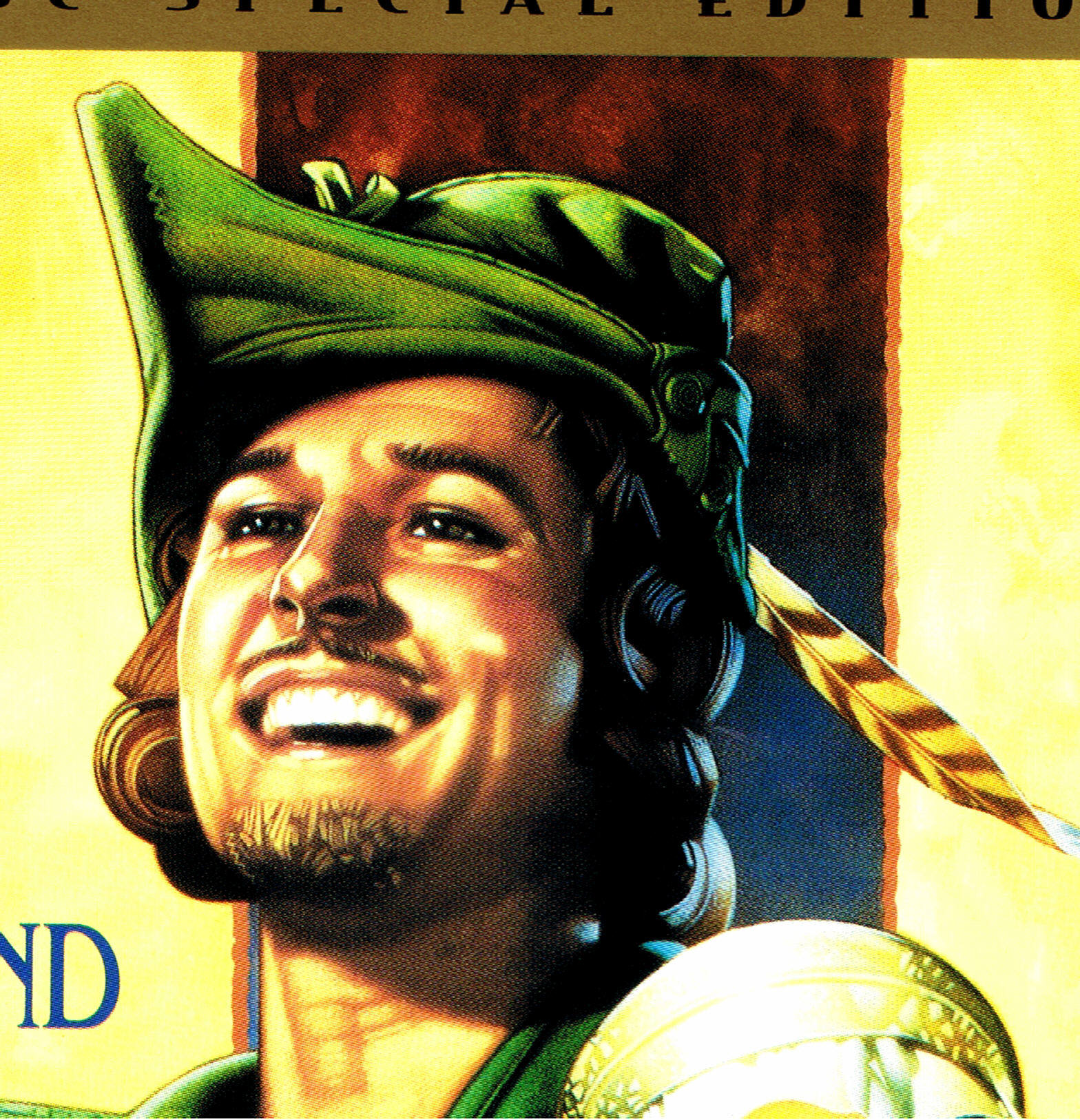
The Robin Hood tax campaign, which is sponsored by some 50 charities and other non-government organisations and supported by such luminaries as Comic Relief founder Richard Curtis and Archbishop of Canterbury Rowan Williams, is pushing this course of action.

According to the campaign, a package of financial transaction taxes on the purchase and sale of foreign exchange, shares, bonds and various derivatives, could raise over $400 billion (£250bn) worldwide.

That is more than enough to achieve the Millenium Development Goals, which range from halving extreme poverty to halting the spread of HIV/Aids and providing universal primary education by 2015, or even more ambitious goals.

But aren't these campaigners being a little starry-eyed? Assuming this amount could be raised by such means, can we trust governments to spend it for that purpose?

Already, the German and French governments want to hijack such taxes to fund the EU, whose accounts are notoriously opaque and corrupt.

Moreover, if Western governments were serious about ending poverty and so on, surely they would have long since put up the funds for that purpose?

If a Robin Hood tax could raise such funds, it would be up to the rest of us to campaign for it to be used in that way.

At the moment, the likelihood of a Robin Hood tax being introduced in Britain is nil, given the vehement opposition of the City, the Con-Dem government and right-wing lobby groups.

But just because the City and rightwingers are opposed to it, does that mean we should be for it?

Say a change of government did introduce such a tax and that we could prevent the EU grabbing it. Would the tax be capable of raising the kind of money suggested?

The trouble is that the calculations assume that the buying and selling of those various financial assets would carry on more or less as before.

Consider a transaction tax just on foreign exchange dealings, which is what the Robin Hood tax originally referred to when it was first coined by the campaigning group War on Want in the late 1990s - up to then it was known as the Tobin tax, after the Sveriges Riksbank (aka "Nobel") prize-winning economist James Tobin.

Tobin's original intention when he proposed the tax in 1972 had been not so much to raise funds but to make speculation less attractive. This would make exchange rates less volatile following the 1969 collapse of the Bretton Woods agreement, which had done that job the previous 25 years. But the Tobin tax was never implemented.

Today currency trading amounts to some £400 trillion a year. This is 50 times the total value of goods and services traded globally each year. The difference, it is assumed, is due to the large sums used for speculation.

Campaigners latch onto these figures, suggesting that a transaction tax of just 0.05 per cent could yield some £200bn just on foreign exchange dealings.

However, if the tax was doing its job according to Tobin, the amount of foreign exchange traded would slump to around that required for the purposes of real trade.

That is because it would no longer be worthwhile to speculate, which depends on very thin margins, and trading very large sums. It is likely therefore that nothing like that amount could be raised.

In 1984 Sweden introduced a 0.5 per cent transaction tax on the buying and selling of shares - that is, 1 per cent on a round trip.

Two years later it was doubled, and in addition, a 0.002 per cent transaction tax on bonds and other financial assets was introduced.

However trading volumes fell dramatically - to zero in some cases - and the revenues turned out to be barely 5 per cent of what had been anticipated. The policy was abandoned in 1990.

Britain has had a transaction tax on the purchase of shares - now known as the stamp duty reserve tax - for over two centuries.

The rate of tax has varied between 2 per cent and 0.5 per cent, the current rate.

Studies have found that trading volumes fell considerably when the rate was higher, and vice-versa. These days all financial intermediaries, which account for over 70 per cent of share dealings, are exempt, so its effect on trading volumes is minimal.

This is the dilemma for all transaction taxes. Are they to modify behaviour or to raise revenue?

If the former, they will not raise much revenue. If the latter, if the rate of tax is higher, trading volumes will reduce, so there is less to tax, and if low enough not to affect behaviour, they are likely to be hardly worth collecting.

Moreover, the financial sector is very adept at coming up with devices to get round regulations and avoid tax, making use of offshore tax havens to protect its privileges.

In effect, transaction taxes are an attempt to do things by proxy. Why not campaign for governments to address these issues directly and openly?

First there are more effective ways of raising revenue and to address poverty, and stimulate investment in real productive activities upon which that depends.

For a start, governments could make dealings with offshore tax havens illegal, so that the giant transnational corporations and the rich pay their fair share of taxes.

For Britain, this would of course affect the City, the world's second-biggest tax haven after Switzerland, as well as various enclaves still under British jurisdiction such as the Cayman Islands.

But this would be offset by the extra revenue made possible by eliminating tax evasion, especially if tax rates on profits and high incomes were raised to what they were in previous times.

Furthermore the diminished role of the City would make investment in other parts of the economy more attractive, which is sorely needed.

Meanwhile, genuine traders want stable exchange rates. At present they have to set up complex and expensive hedging arrangements to offset volatility, which in fact is what a large share of the supposed speculation in currencies is about.

This is what the Tobin tax was meant to address, though more recent research suggests that its effect could be to make currencies even more volatile.

It would be far better for all international trade to be conducted in a single global currency not connected with any particular country, with all national currencies adjusted to it, say, every quarter, on the basis of purchasing power parity.

Countries with failing economic polices might suffer, but this would not affect other countries.

Had the euro been introduced on that basis the eurozone now would not be in such difficulties.

For such a policy to work, capital controls would also be needed, but these are needed anyway, not only to cut out speculation but also to stop the surplus labour or profit generated by a country's people ending up somewhere else and therefore not available for investing in that country's economic development - which is what is needed to eliminate poverty.

In short, the campaign for a Robin Hood tax in the form of financial transaction taxes is largely a diversion from the real issues that need to be addressed

Thursday, 7 July 2011

Why has Labour not supported the Robin Hood Tax?


Thursday's Morning Star reported that the Labour frontbench failed to back a Labour backbench amendment to the Finance Bill that would have forced the government to report on the feasibility of introducing the modest 'Robin Hood' Tax on financial transactions.

The parliamentary debate can be viewed via Hansard, and I particularly recommend the moving speech by John McDonnell MP (excerpt below) but what is shocking is that such a moderate proposal with such widespread appeal was opposed by the Labour frontbench. In fact only 25 MPs voted for it, and they were:

Gregory Campbell (DUP), Ronnie Campbell (Lab), Jeremy Corbyn (Lab), John Cryer (Lab), Frank Dobson (Lab), Mark Durkan (SDLP), Jonathan Edwards (Plaid), Andrew George (LD), Kate Hoey (Lab), Kelvin Hopkins (Lab), Stewart Hosie (SNP), Elfyn Llwyd (Plaid), Caroline Lucas (Green), Angus MacNeil (SNP), William McCrea (DUP), Alasdair McDonnell (SDLP), John McDonnell (Lab), Andrew Miller (Lab), Austin Mitchell (Lab), Margaret Ritchie (SDLP), Angus Robertson (SNP), Dennis Skinner (Lab), Mike Weir (SNP), Eilidh Whiteford (SNP), Hywel Williams (Plaid), David Winnick (Lab) and Mike Wood (Lab).

The question John McDonnell MP rightly asks is why the Labour frontbench has refused to support calls for Robin Hood Tax. Another opportunity to lead a progressive, popular campaign lost. As this was a Treasury issue, why did shadow Chancellor Ed Balls not back it? And why has Ed Miliband missed an opportunity to support this policy and place Labour back at the head of a progressive coalition?

John McDonnell: I can think of no better day on which to debate this issue, having seen the pictures shown on our television screens last night and today of the tragedy that is taking place in the horn of Africa. This morning, Radio 4 broadcast the story of a family—parents with one child—who had walked for miles to the aid station, only to find that the one-year-old child had died as a result of suffering the drought and famine. I also commend last night’s “Dispatches” programme, presented by Jon Snow, which identified the activities of Rachmanite landlords in west London. Some of those landlords operate in my constituency, and the matter has been raised in the Chamber in the past. It demonstrates the poverty that still exists in this country.

On a personal note, let me say that this morning I received letters from children at Cherry Lane primary school in my constituency as part of their campaign to encourage politicians to think about how we can fund education in the developing world so that children there can go to school. That is what my proposal is all about.

When the transaction tax was relaunched last year as the Robin Hood tax, it was supported by a wide range of churches and religious organisations. I will not name them all, but let me give Members a flavour of them. They included the Trades Union Congress, Crisis, Action Aid, Article 12 in Scotland, Barnardo’s, the Catholic Fund for Overseas Development, Christian Aid, Church Action on Poverty, Comic Relief, the Church of Scotland’s Church and Society Council, the Christian Socialist Movement, the Disability Alliance, the Ecumenical Council for Corporate Responsibility, EveryChild, Family Action, Faith2Share, Friends of the Earth, the General Assembly of Unitarian and Free Christian Churches, Greenpeace, Oxfam, Quaker Peace and Social Witness, Save the Children, Tearfund and the Salvation Army.

That was the largest alliance of civil society organisations that we have seen in generations campaigning on a single issue, and, as you know, Mr Speaker, they came here last month. Twelve hundred people came to Parliament, and met us in Central Hall over a cup of tea. The event was organised in particular by Oxfam, Action Aid, Save the Children, Tearfund, CAFOD and Christian Aid, and their message was simple: 1 billion people have no access to clean water and 2.5 billion lack basic sanitation, and it is time for change and action.


Read full speech and debate and online

Tuesday, 14 June 2011

Expert joins calls for tax on bankers


Economic experts have unearthed “hard evidence” supporting TUC claims that a tax on bank transactions would raise billions of pounds currently being hived off Britain’s public services.

Institute of Development Studies published its latest findings yesterday, which argued that a financial transaction tax (FTT) could be viably implemented across Europe. The research sparked fresh calls for the government to introduce a Robin Hood tax in Britain.

The institute will tell a gathering of economists, policy makers and academics in Brussels today that an FTT on bankers making foreign exchange transactions would raise as much as £15 billion worldwide.

The charity will add that in Britain alone it could raise £7.5bn — roughly the same as the country’s entire aid budget.

TUC general secretary Brendan Barber argued that the findings confirmed that a Robin Hood tax is completely viable and could play a key role in reducing deficits and supporting economic growth.

He said: “As more European governments sign up to a Robin Hood tax, it’s time for the British government to admit that banks are not contributing their fair share towards repairing the mess they’ve created and publicly commit to a stronger tax on banks and major financial institutions.”

John Christensen of Tax Justice Network, an independent organisation analysing the harmful aspects of tax evasion, tax avoidance, tax competition and tax havens, argued that an FTT would not only reduce opportunities for making profits on ultra-low margin trades, it would also potentially raise billions of additional revenue to offset the ongoing damage caused by the financial crisis.

He said: “Bankers may well howl in protest but very few, if any, will act on their threats to leave the country.”

The findings by the institute were laid out in the first comprehensive review of the feasibility of FTTs, dubbed The Tobin Tax: A Review of the Evidence.

Report author Dr Neil McCulloch stressed that the evidence of a significant source of currently untapped revenue cannot be ignored when most of the world’s financial centres are driving through large spending cuts.

“There has never been any compelling economic case against what is a very modest tax on activity by banks and other financial institutions,” said Roger Seifert, professor of industrial relations and human resources at Wolverhampton Business School.

But he added that the main problem has always been and remains the lack of political will by those running the economy for the benefit of the rich and powerful.

Left Economics Advisory Panel co-ordinator Andrew Fisher said: “It is not markets that need to be stabilised, but the people whose lives are derailed by market speculation. The revenue raised from FTT could secure real investment in jobs and support those ravaged by rising fuel and food costs — increasingly caused by speculative trading.”

"Speculative trading is exacerbating crises around the world. A financial transaction tax (FTT) should, like green taxes, have a deterrent as well as a revenue raising effect. This report highlights both how feasible and beneficial a FTT would be."

This article first appeared in the Morning Star on Tue 14 June


Download the IDS report in full

Thursday, 24 March 2011

LEAP Chair John McDonnell MP speaks in Budget debate


John McDonnell (Hayes and Harlington) (Lab): I listened to the Budget debate yesterday as well as today, and I want to take up some of the points raised in it. I clearly come from a different economic school from the hon. Member for Wimbledon (Stephen Hammond)—and I probably come from a different one from his erstwhile colleague the shadow Chancellor as well!

The premise of the debate so far has been that as a result of profligate public expenditure by the last Government, we have an economic crisis on our hands. The conclusion is that we can solve the deficit largely by cutting public expenditure. My hon. Friend the Member for Bassetlaw (John Mann), who is no longer in his place, referred to various Treasury charts, and I have to say that one that was published a short while ago demonstrates that the profligate expenditure argument is simply not true.

Let us consider the recent Treasury chart about public spending under the last Government and previous Governments as a percentage of gross domestic product. It shows that public expenditure under the last Government was, in fact, less than it was at the height of Thatcherism and under John Major’s period in office. I shall circulate this chart to Members. I know this is true because for many of the years the last Labour Government were in office, I was attacking them for not spending enough and for poor expenditure. I fully agree with the criticisms made of the private finance initiative; I opposed every PFI scheme that was proposed.

If we look at the chart to find out when expenditure as a proportion of gross domestic product rose dramatically, we discover that it was, as the shadow Chancellor said, only when the economic crisis hit and we had to pump out the quantitative easing into the economy. In my view, the deficit occurred as a result of the failure to match expenditure with tax justice. We had large levels of tax evasion and avoidance and, in addition, we failed to develop a whole range of other tax bases within the economy. Genuine criticisms can be made of over-dependence on the financial sector and the failure to develop the manufacturing sector during that period.

What do we do now? It is not all about cutting expenditure. In yesterday’s debate, reference was made to the crisis of the 1930s and the lessons that can be learned from it. It is worth Members returning to J.K. Galbraith, who I believe wrote the best book on the crisis, The Great Crash 1929. What Galbraith says is that although economic structures can be put in place, what will defend us most against a repeat of the crisis is memory. We seem to forget that the cause of that crisis was the cause of this crisis—speculation by the banks and other speculators and, yes, a Government who failed to regulate. I have to say, however, that when a number of Members called for bank regulation in this House, there was an element of quietude on all sides. I remember fighting for four years, in almost a solitary capacity, to secure the passage of the City of London (Ward Elections) Bill at a time when we were pressing for regulation.

One of the lessons of the 1930s is that the one thing we should not do in a recession is cut public expenditure, because that will turn a recession into a depression. However, it is exactly what the Government seem to be doing. At present 2.5 million people are unemployed, 1 million young people are unemployed, according to recent statistics 1.7 million people are in involuntary part-time employment, and the £80 billion cuts proposed by the Government will make at least another 1.2 million people unemployed.

What I am really anxious about, however, and what we should all be anxious about, are the cuts in capital expenditure. We are told that there will be a 4% cut next year and a 6% cut in the year after that, and that local government capital expenditure is to be cut by 30%—possibly more, according to the Red Book. I believe that if that element of demand is removed from the economy, we will experience either a deflationary spiral or the worst of all worlds, stagflation: increasing inflation along with stagnation in the real economy. I do not believe that there will be a double dip. My fear is that we will become like Japan, where asset values are falling, and will scrape along the bottom of economic activity for perhaps a decade.

People ask what the alternative is. I have mentioned the lessons of the 1930s, and Keynes’s name has been bandied about many times today. It is true that Keynes concentrated on the bond market, but one of the main lessons to be learned from him is that the key issue is unemployment. I think we should be declaring, across parties, that our objective must be the return of full employment, which appears no longer to be cited as a policy objective. As has already been pointed out, the most effective way of restoring investment is through capital investment—the development of capital programmes in housing, renewable energy and transport. I ask Members to look at the green new deal and to examine the One Million Climate Jobs booklet produced by trade unions including the Public and Commercial Services Union, which sets out a capital investment programme that could get people back to work.

How would that be paid for? Let me list just a few short-term measures. I am very pleased that windfall taxes have come back into fashion, and I commend the Government for that, but I do not think that the windfall taxes on the banks go nearly far enough. The lending rates on personal loans in particular are exploitative and extortionate in the markets. I also think that if we are to consider organisations that have profiteered during the recession, we should consider the supermarkets. Commodity inflation is about 3%, but they have increased prices by 6% and above, and they have been profiteering for a number of years.

I think that a windfall tax on energy is appropriate. The current profits of British Gas average 24%, and Ofgem has reported an average profit margin of 38% per customer since last November. That is profiteering during a recession. Some economists have suggested that a windfall tax in those three areas would produce up to £10 billion to get people back to work.

Let me make clear, however, as I did under the last Government, what should happen in the longer term if we are to avoid future deficits. Yes, it is about careful expenditure and it is about having confidence in local and regional decision making, but it is also about achieving a fair and just tax system which will fund our expenditure. First, we must tackle tax evasion and avoidance. What has been done about that by past Governments and by the present Government is trivial. According to Richard Murphy and John Christensen of the Tax Justice Network, £150 billion a year is potentially available to us. Secondly, we need a financial transaction tax. We have been talking about a Robin Hood tax for too long, and we should now be implementing it. Thirdly, I think we should deal with land speculation. I believe that now is the time for land value taxation. If we tax the wealth in land, we will encourage development rather than preventing it.

On Saturday, there is to be a 'march for the alternative'. I expect at least half a million people to march in the streets against the cuts, and I want them to march for a just alternative. I believe that one of the alternatives they will expect us to implement in the House is a fair taxation system allowing investment in public services so that we can all share in that wealth.

Tuesday, 16 February 2010

Robin Hood Tax - a critical perspective

From Raphie de Santos of the SSP, reproduced from Facebook:

"I think the tax has a lot of problems at a lot of levels. First, it needs international agreement – most of these transactions are also off market – on unofficial over the counter (OTC) markets which are currently unsupervised. Far from curtailing banks from speculation it would push banks from a low margin execution business for pension and insurance funds where the margins are thin (we would end up paying through increased fees on running our pension/insurance funds) to trading for the Bank’s own account (speculative proprietary trading with high returns).

Brown and co know all this and that it will never be implemented. He is using it as a bit of Bank bashing ahead of the election. The real way would be to tax the banks investment banking profits and hit the high earners with a 100% tax above £100,000.

Of course really taking over the banks and using their tens of thousands of billions of pounds of assets for social use and closing down all their speculative businesses and turning their lending into social rents is the real way ahead. The Robin Hood Tax campaign is becoming a substitute for real action and something Brown and co can hide behind."

For those who haven't seen it here's the launch video, more details on the Robin Hood Tax campaign website.