Showing posts with label pay. Show all posts

Tuesday, 4 February 2014

Winning the Living Wage at the Royal Opera House


The Independent Workers Union (IWGB) confirmed today that porters and cleaners working for MITIE at the Royal Opera House have secured a landmark victory in their fight for workplace justice that will lift them out of the poverty trap. 

Workers at the Royal Opera House have overwhelmingly accepted an agreement with the facilities company MITIE which guarantees all porters and cleaners receive the London Living Wage of £8.80 per-hour.

The workers voted by a 100% margin to strike during the BAFTA awards on 16 February. Their campaign has won widespread support. Award winning director Ken Loach issued an appeal for support demanding “No-one should cross your picket lines”. The actors' union Equity and the Musicians Union wrote to the Royal Opera in support of the IWGB members. Glenda Jackson MP joined 25 other MPs signing Early Day Motion 919 tabled by John McDonnell MP in support of the workers.

LEAP chair John McDonnell MP said: 
“This is a tremendous victory for the IWGB workers and it sends out a message to all low pay employers that we are not willing to tolerate poverty pay and we're coming for you."
The Royal Opera saw a series of mass protests by trade unionists and students who invaded the premises demanding justice. Following failed talks at ACAS, the Royal Opera offered to pay the current Living Wage in April 2015. The IWGB made a counter offer for:1 February 2014 the pay rate of £8.00 will apply; and from 1 April 2014 the pay rate of £8.80 will apply.  

The pay rise from 1 April represents a 25% increase from the cleaners' current pay of £7 per hour, but this increase (including employer national insurances costs) represents just 0.15% of the Royal Opera House's annual income. That's the equivalent of adding just 24p a ticket to every performance.  

With the union campaign escalating MITIE and Royal Opera House finally agreed to the settlement. Chris Ford IWGB General Secretary said: 
“IWGB pays tribute to the courage and determination of our members. Combined with the solidarity of the labour movement, of students and youth, we have secured this fantastic victory. In five months we have gone from arrogant disdain by the employers to win the first pay rise in three years for these cleaners and porters. It is an example to all workers struggling to live at present.”

Saturday, 25 January 2014

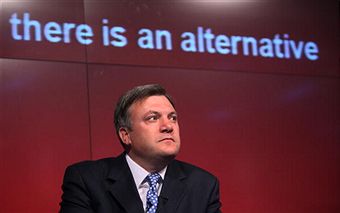
The two faces of Ed Balls


During the Labour leadership election, many people were impressed by Ed Balls' apparent conversion to a social democratic economic settlement as espoused in his Bloomberg speech.

But since then Balls has committed a Labour government in 2015 to sticking with Tory spending plans for at least the first year. He has also said that Labour will not promise to reverse Tory cuts, and that Labour would have to make more in office. He has supported the public sector pay freeze, while Ed Miliband somewhat contradictorily waxes on about the cost of living crisis.

This morning the media was filled with similar tough messages, briefing ahead of Balls' speech at the Fabian Society, including the parliamentary garbage that "Balls will promise to legislate for new fiscal rules within 12 months of the general election, including a commitment to a budget surplus by the end of the parliament". Legislate for it? Really? Will the chancellor be surcharged if the target is not met? Or will a technocrat be installed to make cuts? It really is nonsense. On the upside, it should be noted that Balls is committing to a current account surplus, which allows for borrowing for capital investment - see 'Borrowing for Growth - some advice for Ed'.

Nevertheless, like any wannabe chancellor, Balls knows how to pull a rabbit out of a hat. And so the tough, 'we'll enforce austerity too' message will be overshadowed by a debate about a modestly higher rate of income tax on a few high earners. It is very welcome that Balls has committed to restoring the 50% tax rate on those earning over £150,000. It was probably the most popular policy in Gordon Brown's premiership.

What is also welcome, and will hopefully be widely reported, is that Balls also said:
"The latest figures show that those earning over £150,000 paid almost £10 billion more in tax in the three years when the 50p top rate of tax was in place than when the government conducted its assessment of the tax back in 2012"
This corrects the crap put out by the Treasury in its dodgy dossier of the 2012 Budget. Both the move to pledge to restore the 50% rate and the analysis is welcome, and hints at a return to '
Bloomberg Balls'.

However, before Labour activists start getting weak at the knees about a return to some form of modest social democracy, Balls also told the Fabian conference that Labour supported the benefit cap, the public sector pay freeze, thought public utilities belonged in the open market, and that universal winter fuel payments for pensioners should be means-tested.

We've seen the two faces of Ed Balls today in one day. Capitulating to Osborne, the financial markets and the Murdoch media this morning, while throwing a modest redistributive morsel to the left at lunchtime. Bon appetit!

Thursday, 5 December 2013

Autumn Statement 2013: Evaluating Osborne ... 15% successful!


Are the austerians right and the opponents of austerity proved wrong? Is Osborne's strategy vindicated?

Let's judge by his own standards. In June 2010, just as the ink had dried on the coalition agreement, George Osborne rushed to the House of Commons to deliver an 'Emergency Budget'.
"It supports a strong enterprise-led recovery. It rewards work. And it protects the most vulnerable in our society. Yes it is tough; but it is also fair."
With this rhetoric, Osborne opened his remarks. But the devil was in the detail of the accompanying forecasts. So how has he done 3 years on? We evaluate:

Osborne predicted that economic growth would be 2.8% this year - a target he may get close to (we'll find out next month), but that was on the back on growth of 2.8% last year as well (instead, in 2012 the economy grew by just 0.2%). The OBR predicts that growth will be 1.4% in 2013 (but this is still an underestimate)

Far from being back on track, the UK economy still lags 2.5% below where we were in 2008. So at best half marks for Osborne on economic growth. And that's before we factor in growing concerns about the sustainability of George's recovery. Half marks.
  • Economic growth 0.5/1
That same June 2010 forecast predicted that average wage growth in 2013/14 would be 4.9%. With average wage 'growth' currently at just 0.7% there is no gentle way to put this, that was woefully wrong.

While this year the FTSE100 directors will see their seven-figure salaries increase by an average of 14%, for the rest of us there is no recovery. People's incomes have been cut in real terms. The ONS points out that the median household income has dropped 6.4% for working age households over the last five years. Fail.

  • Wages 0/1
Unemployment has declined marginally in recent months, but is still high at 7.6% of the economically active population. That figure however conceals stubbornly high youth unemployment and long-term unemployment - failed by shambolic government programmes.

In 2010, Osborne told us unemployment would today be just 6.8%. So 250,000 fewer people should be unemployed today had Osborne hit his target. Fail.
  • Unemployment 0/1
Given Osborne erroneously said he would deal with "our country's record debts" (they were nowhere near record levels) with austerity, one would assume he would have at least had some success in reducing our debt (or at least stemmed the rate of rising debt).

By now, predicted Osborne in 2010, our debt should be 73.7% of GDP. Instead it's 75.5%.

But much of that is because GDP is far lower than predicted, so not even half marks for getting close, so quarter marks.
  • Debt 0.25/1
The reason the Chancellor is not reducing the debt, is because the deficit has not been closed at anything like the rate he predicted. By now the deficit should have been just 5% of GDP. Today Osborne announced it would be 6.8%. In cash terms they predicted £63 billion in 2010, but today it's £111bn - 75% higher than the 2010 forecast. So he'll borrow £198 billion more than he planned. Fail.
  • Deficit 0/1

Overall 0.75 out of 5 (or 15%)

Tuesday, 3 December 2013

Are you really worse off? Er, yes.


Labour has recently made some headway with its message that there is a cost of living crisis - which has continued despite Osborne's recovery. This feeds a number of other important messages, including that this is a recovery for the rich, and that you're being ripped off - and so the energy price freeze fits into the same narrative.

The average non-retired household is today 6.4% worse off since the recession - that was the finding of a report by the Office for National Statistics out earlier this week. It showed that the average household income fell from £37,900 to £32,600, in real terms over the last five years.

In fact, the average household is £300 a year worse off than it was in 2002/03. There is therefore a 'lost decade' of stagnation for household incomes.

This decline in income triggered entitlement to extra benefits (e.g tax credits) so that benefits rose from providing 7.6% to 12.3% of gross income for the median household. This is fundamentally a redistribution in the cost of living from the employer to the state - as a result of pay freezes and pay caps. So when Labour talks about a structural welfare spending cap (not individual benefit caps which are disgraceful) it is alluding to this phenomenon, and pledging to deal with the structural issues - and advocating the living wage is a part of tackling low pay subsidies like tax credits.

The resonance that Labour has had with this line has rattled the Tories.

So, in a blatantly politically-driven misanalysis, HM Treasury has produced data that shows compensation for workers has stayed the same, but what they don't see is that employers are paying more in national insurance and pension contributions. The idea that wages have been cut to sustain or even increase profits is, apparently, a myth.

Sky's economic correspondent, Ed Conway, says the Treasury report explains:
"Overall compensation includes not just wages but also the social contributions made by employers, including pension contributions and National Insurance Contributions. Technically-speaking, these are forms of payment, except that because they don’t go straight into your pocket they don’t feel particularly obvious."

In fact a less kind interpretation of this Tory spin - still not on the Treasury website - is that because it doesn't goes into your pocket, it's not really payment.

So the Tory argument is that pay has gone down (Ed Miliband's cost of living crisis) due to NI contributions going up (all Gordon Brown's fault) and pension contributions going up (your fault for living longer).

However, the argument doesn't really stack up for several reasons:
  1. Pension contributions have only gone up in real terms for funded pension schemes - which most workers don't have
  2. Part of the reason extra pension contributions are needed are due to pension holidays taken by employers in the 1990s
  3. Is the logic of the Treasury analysis of NI rise that a cut in NI would be passed on to workers in higher wages
  4. If that's the case why have the cuts in corporation tax not been passed on to workers then? Because corporation tax has fallen from 33% to 28% under New Labour, and now down to 22%.
  5. If we're all actually no worse off why - by official figures - are a million more of us living in poverty? Why are half a million of us using food banks this year?
(There's a more detailed and wonkish analysis by the TUC's Duncan Weldon here)

So was this just a political attack to try to blunt Labour's resonant cost of living line? If so, it's another sign of the civil service being used for party political purposes (and not the first time either).

But it's an indication that ahead of this year's Autumn Statement, Osborne has only spin to offer.

Saturday, 2 November 2013

Remember, "It wouldn't be happening without the Liberal Democrats"


The two strongest periods of growth for three years, 0.7% followed by 0.8% and the Tories and Lib Dems hangers-on are jubilant. Chief among the examples of this heady growth jubilation is Financial Secretary to HM Treasury Danny Alexander, who wrote in the Telegraph:
"Britain is on its way back. We need to stick to our plans to make sure this is a recovery that is built to last. That is the only way to improve living standards.
"Our economy is growing because of the hard work of people and businesses throughout Britain. But the coalition's economic plan is the rock on which our recovery is being built - so it wouldn't be happening without the Liberal Democrats."
On almost every count, he is wrong. This 'recovery' is doing nothing for living standards, which continue to fall. Wages are rising at just 0.7%, while inflation is four times that at 3.2% (RPI, 2.7% CPI).

For people on out of work benefits (and indeed those on low pay whose incomes are topped up by tax credits) benefit increases were capped by this government at 1%.

Put that alongside rents rising way above wage increases, energy prices rising at 8-9%, and the forthcoming 6% rail fare increase in January - and you can see the problem isn't being resolved soon. Figures show that workers have collectively lost £50 billion a year in real terms cuts in pay.

For many of the lowest paid - and those on out of work benefits - the impact has been devastating:
  • an extra million people are, by the government's own figures, living in poverty since the coalition was elected;
  • half a million people have had to use food banks in the last year;
  • homelessness is rising, and the number of families housed in B&B accommodation now stands at a ten year high, and the number of households in rent arrears is increasing sharply;
  • unemployment remains stubbornly high at around 2.5 million - with long-term unemployment and youth unemployment unaffected by failing privatised government schemes

So when Danny Alexander says that this 'recovery' is the only way to improve living standards, it is an evidence-free assertion, a delusion and, since he probably knows this, a flat-out lie. Of course living standards are improving for some people: the 1000 richest Britons increased their wealth by £35 billion last year (if you wanted to know where your missing pay rise ended up).

So where has the recovery come from? Mostly, debt. Consumer and mortgage debt to be precise. Yes, exactly what caused the crash, an unsustainable credit bubble. George Osborne (Danny Alexander's boss at HM Treasury) is huffing and puffing into that bubble with his Help to Buy scheme - re-introducing 95% mortgages at a time of rising house prices and falling wages ... what could possibly go wrong?

The "rock on which our recovery [sic] is being built" is that least rock-like of entities, a bubble. The question for the government is whether that bubble will burst before or after the 2015 election ... they may hope after, but the longer it inflates, the worse it will burst.

Alexander is right about one thing: "it wouldn't be happening without the Liberal Democrats", it's just that the "it" he refers to is rising poverty, homelessness, inequality, and a credit bubble that could spell further disaster for the UK economy and his government.

Remember, "it wouldn't be happening without the Liberal Democrats."

Tuesday, 24 September 2013

John McDonnell MP's verdict on Ed Miliband's conference speech


Since Ed Miliband became leader, the strategy of the left has been to make issues safe for him by building support within and outside the party issue by issue. Only when it's safe is he confident about moving on an issue. Today's speech demonstrated that we are setting the agenda but there's so much further to go. A major housebuilding programme is needed, but it needs to be public housing alongside rent controls to stop landlords profiteering from housing benefits.

Challenging the scapegoating of unemployed and disabled people needs to be made a reality by scrapping the rigged capability tests associated with Atos and abolishing workfare. Time limited price controls won't end the rip-offs. A clear commitment to end privatisation is needed, especially in the NHS, and to bring rail, water and energy back into public ownership plus, if it goes ahead, Royal Mail. 

To tackle low pay, we need to make the minimum wage a living wage by right, re-establish trade union rights and restore a commitment to full employment. People already suspect this is a recovery for the rich and ongoing recession for the rest. This is exactly the time when people want more radical action. Make today's speech a beginning.

Sunday, 4 August 2013

Nine million more struggle to pay bills


by Luke James
Austerity-Addicted Chancellor George Osborne has left nine million more people in financial difficulty compared with seven years ago, Money Advice Service revealed today.
The independent body found that 26 million people across Britain are now living on the brink of financial ruin - a massive 35 per cent rise since their last survey in 2006.
Failing Tory economic policies have sent hourly income plumetting by 6 per cent and sparked a "live for now" attitude to cash among the population.
For example, more than one in five of the 5,000 people surveyed would rather have £200 immediately than £400 in four months' times.
A Treasury spokesman claimed the government had helped households meet the rising cost of living by raising the personal tax allowance and freezing fuel duty.
He said: "We recognise that times are still tough for families, but Britain is holding its nerve, we are sticking to our plan and the British economy is on the mend."
But Labour shadow Treasury minister Catherine McKinnell said the figures bust George Osborne's "out of touch claims that people are better off."
She said: "This government's failed economic policies mean prices are rising much faster than wages. And their unfair choices have seen hard-working people hit hard while millionaires get a huge tax cut."
Ms McKinnell said Labour would help families "with a lower 10p starting rate of tax, paid for by a mansion tax, and take action to tackle soaring rail fares and energy prices."
TUC general secretary Frances O'Grady added that only "strong growth underpinned by decent jobs and higher pay" would end the "longest real wage squeeze since Victorian Times."
Separate figures showed there had been a 3 per cent rise in the number of people being force to declare themselves bankrupt over the last three months.
And the Left Economic Advisory Panel's Andrew Fisher warned: "As personal debt starts rising again it is clear that the squeeze on living standards also creates a huge economic risk if loan and mortgage defaults rise, threatening the banking sector again."

This article first appeared in the Morning Star

Wednesday, 10 July 2013

Is the UK economy on the up?


In the 2013 Spending Round in June George Osborne said he was taking decisions to "secure the recovery". Yesterday talk of recovery increased when the IMF revised its prediction for UK growth for this year from 0.7% to 0.9%.

However the same upward adjustment in UK growth is not replicated globally. Last April the IMF was predicting 4.1% growth in 2013, now it says just 3.1% will be achieved. This may be reflected in the UK by another set of disastrous figures for manufacturing and industrial production (down 2.9% and down 2.3% respectively in the last year), and a widening of the UK's already substantial trade deficit. So much for the economic rebalancing Osborne promised in 2010 ...

The extra 0.2% growth the IMF is predicting is not much to get excited about - especially when in 2010 Osborne's newly formed Office for Budget Responsibility was predicting growth would be 2.9% this year. However, the IMF revision is among a number of positive signals about the UK economy.

Last week the Services PMI - a survey of purchasing managers in the services sector (which accounts for 75% of the UK economy) - indicated growth at its fastest rate for over 2 years. The respected and independent National Institute for Economic and Social Research predicts that growth in Q2 of 2013 will be 0.6% (while Markit suggests 0.5%).

The prospects for George Osborne therefore seem to be looking up. However, all may not be what it seems. With no let up in the decline of household income, what is supporting this stronger growth in the services sector? As Duncan Weldon shows clearly and insightfully, household income is  falling, but household spending is rising - eating into savings that recovered after the 2008 crash, but are now declining again (see graph below).


What does this mean for the sustainability of the nascent UK recovery and for households? Well, as Weldon concludes, "a falling savings ratio really is underpinning our recovery. The 'new economic model' looks increasingly like the old one". This is even more so the case with the increasingly unreality of rising house prices, underpinned by the bubble-inflating Help to Buy scheme.

The overall households savings ratio masks the reality that for many households they are not eating into their savings, but in fact sinking deeper into debt (good news for payday loan companies like Tory funders Wonga). For many people - including the 500,000 that are reliant on food banks - there is a real crisis emerging. Many are struggling to pay rents - especially with tax credit and housing benefit cuts to those in and out of work.

With pay continuing to rise below inflation, and benefits similarly capped and being cut in cash terms for hundreds of thousands of households, the recovery looks very fragile. There can be no sustainable recovery through increased consumer debt. That way paves a renewed round of loan, credit and mortgage defaults - and with the state lacking the capacity to perform the sort of bailouts that were necessary in 2008 and 2009.

The economy may well be on an upward trend at the present time and this could extend into the latter part of the year. But while economic growth in 2013 is likely to far outsrip the OBR's modest 0.6% prediction, in 2014 growth of 1.8% looks perilous, as does 2.3% in 2015.

The upturn in the UK economy is built (again) on an inflating debt bubble, and the longer it inflates the more damaging the final bang when it bursts. As the manufacturing figures show, there is no evidence of rebalancing, no prospect of a revival in workers' incomes (through pay or benefits), and no substantial investment that could at least stimulate medium term growth and create jobs (in fact unemployment remains stubbornly around 2.5 million).

So while Osborne will be cheering green shoots and patting himself on the back - most gratuitously at party conference in the autumn - the underlying problems of the UK economy remain unresolved, and any temporary respite may only be storing up greater problems for the future.

Wednesday, 19 June 2013

Price rises pile pain on struggling workers


Will Stone

Workers struggling with wage freezes and below-inflation rises were hit by higher prices for basics last month - and worse is set to come, the Office for National Statistics said.

The consumer prices index rise 0.3 points to 2.7 per cent in May.

Officials predict it will top 3 per cent over the summer.

But average earnings increased just 1.3 per cent in the year to April, meaning millions of workers have had a real-terms pay cut.

The retail price index, which includes housing costs, rose 0.2 points to 3.1 per cent.

A 22 per cent rise in air fares, the fastest increase since records began in 2001, helped push up CPI.
Overall transport prices rose by 0.4 per cent between April and May, and the cost of clothing and footwear also rose 1.2 per cent.

Furniture, carpets and garden tools also became more expensive.

Politicians, unions and economists issued a stark warning that plummeting wages are dragging Britain downwards.

Shadow Treasury minister: Catherine McKinnell MP
TUC general secretary Frances O'Grady warned: "Forty consecutive months of real wage falls means people have less to spend on the high street," leaving the economy stuck in the gutter.

Shadow Treasury minister Catherine McKinnell said that "the cost-of-living crisis is deepening," noting that because of inflation and low pay people's spending power is now £1,300 a year less on average than when the coalition came to power.

Left Economics Advisory Panel co-ordinator Andrew Fisher said: "Today's rise in inflation exacerbates the squeeze on wages being felt by workers - sending ever more into poverty and reliance on food banks.

"To tackle low pay, we need stronger trade union rights, a significant rise in the minimum wage and a credible plan to create jobs."

He urged the Labour Party to ditch support for pay freezes for low-paid public-sector workers.

Soaring inflation is also hitting people with savings hard, with none of Britain's 820 standard accounts paying enough interest to outpace tax and inflation, according to Moneyfacts.co.uk.

This article first appeared in the Morning Star

Friday, 10 May 2013

The UK minimum wage - flying at half mast ...

As previously reported on this blog, the UK minimum wage is being cut in real terms this October, and would be 7% higher today if it had increased in line with inflation over the past 5 years.

The infographic below shows just how much the UK minimum wage needs to catch up not only with inflation, but with rates in many other comparable countries.

(We're reliably informed that if the national minimum wage (NMW) had increased at the rate of that for FTSE100 Chief Executives since 1998, it would today stand at more than £19 per hour - equivalent to a full-time salary of £39,000 a year!)


A recently published infographic by the PCS union* shows that the UK NMW lags behind comparative rates in many other nations (though the UK edges the US on 32%).

The graphic also mentions that if our minimum wage was equivalent to that in France, low paid UK workers would be earning an extra £1.95 per hour - equivalent to nearly £4,000 extra a year. (If it rose to New Zealand levels, our NMW would be £9.55 per hour - equivalent to nearly £19,000 a year for full-time work).

For the national minimum wage to reach the UK living wage of £7.45 per hour would mean the NMW being equivalent of 42% of average earnings - the same rate as in Portugal, and just below that in Australia.

It's a commonly made argument that raising the minimum wage would increase unemployment. Indeed that same argument was made the NMW was first introduced. Study after study (including this one from the US) shows that not to be the case - and there are even Tories calling for an increase in the minimum wage.


It's quite clear that the UK's low wage economy is having a drag on demand (one that loosening credit doesn't solve). Indeed, a PCS report published earlier this year - Britain needs a pay rise - showed that the real value of wages has fallen by 7%, there has been a real terms drop in consumer demand of 5% over the same period.

And the misery doesn't end there for low paid UK workers - who are also facing a real terms cut in a range of in-work benefits, including working tax credit and child tax credit - while child benefit is frozen for the third consecutive year.

If you want an economic recovery, you need more £s in people's pockets. If you want more £s in people's pockets, you have to either legislate for a higher minimum wage (as many other nations have done) or restore some trade union rights, so that workers have greater bargaining power to win better pay.

*PCS has a great series of infographics which you can see via the PCS Facebook page

Monday, 4 March 2013

Pushing on a piece of string

The Funding for Lending Scheme (FLS) published its quarterly results yesterday. Announced at the 2012 Budget and established in August, the scheme aimed to boost lending by effectively subsidising it - £14 billion has so far been given to the banks.

In total £70bn is being made available to banks at reduced interest rates to lend on to small and medium-sized businesses, as well as individuals.

However, results announced yesterday for the last three months of 2012 show that bank lending fell by £2.4 billion. So despite giving cheap money to the banks, lending fell why?

The answer is simple: demand. With the average wage growing by just 1.3% in the last year - and inflation at 3.3% - people's living standards are falling, and have been for over four years now. You can supply as much cheap credit as you like, but if there's not sufficient demand then it's just pushing on a piece of string.

As I told the Morning Star:
"When people's incomes are being constrained and job insecurity remains there is no confidence to borrow money, even at marginally reduced rates.

"Likewise businesses know that consumers are spending less and are not borrowing to invest in expanding their operations,"
Consumer spending in the retail sector fell 0.6% in January from December which itself saw a 0.3% fall in sales. The January 2013 figure is also down 0.6% from January 2012. With wages lagging inflation a sustained upturn is highly unlikely to materialise.

That's why it's encouraging that members of the PCS union have voted to strike - primarily over pay - but this needs to be widespread and result in inflation-busting pay awards to boost demand.

Even some Tories are reaching the conclusion that the supply-side is not the problem. Step forward the Mayor of London's new economics adviser Dr Gerard Lyons, writing in the Telegraph today:
"The economy is suffering from a lack of demand. There needs to be more spending by the Government on both infrastructure and construction and people and firms with the ability to spend need to be given the confidence to do so"

On the business side, some have pointed to statistics showing that the number of small business loans rejected by the banks has quadrupled since the crisis - they say this is evidence of unmet demand. That may be true to a limited extent, but it ignores three salient factors:
  1. Businesses are now making more loan applications to cover (what they hope are temporary) shortfalls, rather than to invest
  2. Banks, whose reckless lending practices played a major role in causing the crisis, are now more rightly more cautious
  3. The same business plan in 2006/07 at a time of high employment and rising real wages was a lot more attractive to invest in than it is in 2012/13

I expect that lending via the scheme will pick up marginally in 2013, as from the low base borrowing at reduced interest rates will be more attractive to some businesses and to some people. However, increases in FLS lending are not likely to be enduring until something happens to increase demand.

Tuesday, 12 February 2013

Britain needs a pay rise

The PCS union today launched a new report 'Britain needs a pay rise' looking at the effect of falling wages on the UK economy.

The report shows that UK workers (public and private sector) are collectively losing £50 billion a year since austerity pay policies were introduced from 2008.

As today's inflation figures show RPI inflation at 3.3%, this looks set to continue and worsen - as the average pay settlement has been 1.5% over the last year.

The report notes that since the onset of recession in 2008 the real value of wages has fallen by 7% (£50 billion a year). During the same period there has been a real terms drop in consumer demand of 5%.

This is not a coincidence - freezing or capping wages sucks demand out of the economy. It also forces more workers on to tax credits, housing benefit and other welfare payments costing the government more.

For public sector workers in general, and civil servants in particular, there are lots more facts specific to them in the report - including comparators with the private sector. In the public sector, where all increases are capped at 1% this year (for many for the second year after a two year pay freeze), pay policy will cut £7 billion a year until 2015 (at least).

Whatever sector you work in, the report highlights the necessity for workers' wages to improve for any recovery to take hold.

Launching the report today, PCS general secretary Mark Serwotka said:
"Almost everyone can now see that austerity is not working. The chancellor George Osborne is borrowing more for failure, we are on the verge of a triple dip recession, food banks are on the rise and pay day loan sharks are preying on the vulnerable.

"We believe the government's pay policy, built on the lie that hardworking civil servants are paid too much, is having a seriously damaging effect on the whole economy.

"Instead of burying their heads in the sand and hoping for the best, ministers can and should act now to put money into people's pockets and back into our economy."

Read the report

Tuesday, 17 January 2012

Two Eds aren't better than none


It's been a demoralising spectacle watching senior Labour politicians attempt to announce their 'fiscal credibility'.

Far from being on the side of the economics gurus, the two Eds have lined up with George Osborne as austerity enthusiasts - to be condemned by Nobel Prize winning economist Joseph Stiglitz.

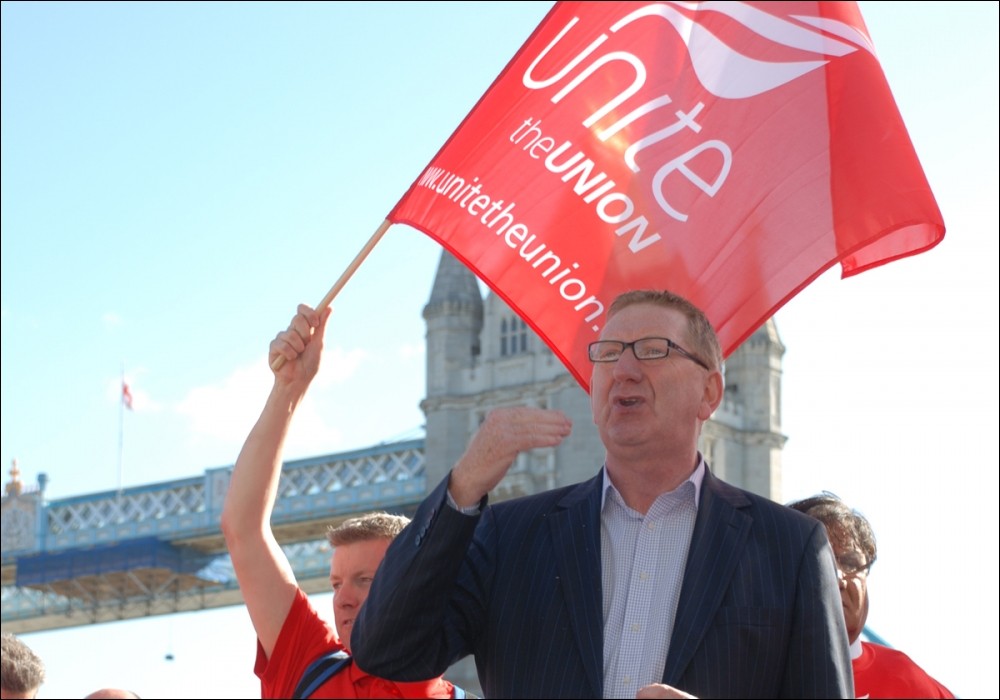
The last time we had a consensus such as this was the 1930s, and Unite general secretary Len McCluskey was right to invoke the spectre of Philip Snowden in his Guardian article today excoriating the two Eds.

McCluskey's riposte was in response to Ed Balls' Fabian speech on Saturday, and various media interviews, during which he said: "There is no way we should be arguing for higher pay", and supported the pay freeze followed by pay restraint policy of the Tory-led coalition.

Indeed with failing consumer demand and rising living costs, why would higher pay be important? Best to just drive wages down to ensure what? More loan and mortgage defaults, less consumer demand and VAT revenues, lower income tax revenues, more stress, anxiety and suicides (that inevitably accompany money worries).

Ed Miliband went on the offensive via Twitter today (as Len McCluskey started trending). Ed tweeted:
"Len McCluskey is entitled to his views but he's wrong. Im changing Labour so we can deliver fairness w less money.That means tough decisions"

Less money? Really? Rolls Royce and Bentley sales are up over 30% in the last year, while executive pay shot up by 49%. The tax gap is £120bn, the money's there - you just need to get it.

Tough decisions? Really? Why not take a 'tough decision' to scrap Trident, cancel Osborne's proposed reductions in Corporation Tax or raise the 50% tax rate to 60%?

So the two Eds weren't being credible, just capitulating to the Tories failed economics of austerity. They weren't making 'tough decisions' either, just ones already written for them by the leader writers of the Times and the Telegraph.

Friday, 3 June 2011

Madhouse economics with lunatics in charge


Where has all the wealth of this country actually gone?
by Prem Sikka
Friday, June 3rd, 2011

Britain’s economic landscape is blighted by economic misery and social exclusion. Nearly 2.5 million people are officially unemployed and 1.5 million are working part-time but would like a full-time job. Youth unemployment is heading towards the one million mark and graduate unemployment is around 20 per cent. Approximately 13.2 million people, including 2.8 million children and 1.8 million pensioners, are living in poverty. Britain’s state pension, as a percentage of average earnings, is the lowest in western Europe. Some 15 per cent of high street shops are empty and the Government’s austerity measures are set to deepen the misery. This is the stark reality of the world’s sixth largest economy and the third largest in Europe. So where does all the wealth go? The answer to this question is crucial because it has a bearing on the possibilities of building a sustainable economy and society.

This country’s gross domestic product has grown from the 1976 figure of £621.22 billion to a current estimate of £1,318.31 billion, but has not been accompanied by equitable share for working people. In 1976, salaries and wages paid to workers accounted for 65.1 per cent of GDP. Following mass privatisations, the demise of skilled jobs in the manufacturing sector and the weakening of trade unions, this declined to 52.6 per cent of GDP in 1996. Following the introduction of the national minimum wage and expansion of the public sector, workers’ share rose. It is now in decline again and stands at 54.8 per cent of GDP. The indications are that, at some companies, the workers’ share of value added is running at less than 50 per cent. Many are facing wage freezes and loss of pension rights. The Government is reviewing employment laws which will inevitably further shrink workers’ share. Of the 200,000 new jobs created in the last year, only 3 per cent are full-time and many do not give employees statutory rights to pension, sick pay or holidays.

All this tells only a partial story, because corporate executives have taken the largest slice of the shrinking share. A recent report by the High Pay Commission shows that, between 1997 and 2008 when Labour was in power, income for the top 0.1 per cent of the population grew by 64.2 per cent, while that of an average earner increased by just 7.2 per cent. A typical FTSE 100 executive receives a pay package of £3.7 million – nearly 145 times more than the average worker.

These trends have resulted in 50 per cent of the population owning less than 1 per cent of the national wealth. The Sunday Times 2011 Rich List shows that the 1,000 richest people in the country have amassed wealth of £395.8 billion, an increase of £60.2 billion since 2010. With wealth of £4.2 billion, Sir Philip Green is listed as the 13th richest person. Many of his employees still receive the minimum wage.

The state has not collected a higher share of the GDP in taxes to enable it to redistribute wealth. In 1976-77, taxation took 43 per cent of GDP. By 1995-96, the tax take declined to 37.2 per cent of the GDP, rising to 38.6 per cent in 2007-08 and back to 37.2 per cent in 2010-11. This decline is one of the reasons behind the brutal public expenditure cuts and loss of welfare rights. The state, or the public share, of taxes has declined even though more people are in work, there are more billionaires than ever before and the corporate sector enjoyed, before the recession, record rates of profitability.

Corporations have been the biggest beneficiaries of government policies, as successive governments have shifted taxes away from capital to labour, consumption and savings. Hikes in VAT and National Insurance contributions are a reminder of this major shift in policy. Income tax personal allowances have not kept pace with inflation and more individuals have become liable to higher rates of income tax at middle earnings. For example, the freezing of personal allowances in the 2011 Budget may result in another 750,000 people paying the 40 per cent higher rate of income tax.

Successive governments have been engaged in a race to the bottom and have appeased the corporate lobby by reducing corporate taxes. In 1982, the rate was 52 per cent of taxable profits. By 2007, it declined to 30 per cent. It is set to be further reduced to 23 per cent by 2014 and corporations are demanding even lower taxes.

The supporters of corporations will point to the fact that, in 1979, corporation tax receipts of £4.6 billion accounted for 5.4 per cent of total tax revenues. Last year, they rose to £38.5 billion and accounted for 7 per cent of the total tax revenues. However, this does not tell us the amounts that they should be paying, as corporations and wealthy elites have become very adept at shifting incomes and profits by using opaque structures and schemes to avoid taxes. For example, Boots, the high street chemist, now has its headquarters in Switzerland to enable it to avoid British taxes. Google dominates the internet and its revenues from this county have soared to £6.35 billion over six years, but the company is estimated to have paid only £8 million in corporate tax.

The United Kingdom is the home of a destructive global tax avoidance industry, headed by major accountancy firms: KPMG, PricewaterhouseCoopers, Deloitte & Touche and Ernst & Young. Various economic models suggest that, due to organised tax avoidance, we may be losing around £100 billion tax revenues each year. Inevitably, this has reduced the tax take, increased the national debt and threatened hard-won welfare rights.

The claim is that reducing corporate taxes somehow stimulates investment and creates jobs. Such a thesis is very simplistic and ignores the availability of skilled labour, education, training, infrastructure and disposable income of ordinary people. A recent study by the Canadian Centre for Policy Alternatives concluded that: “As a means of stimulating growth, employment and even private business spending, the historical evidence suggests that business tax cuts are both economically ineffective and distributionally regressive.”

The reduction in workers’ share and the state’s share of GDP means that more is available to corporations and their shareholders in dividends. This does not mean that their resources necessarily stimulate the UK economy. According to a government study, individuals in Britain own around 10 per cent of the shares listed on the London Stock Exchange. Investors from outside this country own 42 per cent of the shares listed on the London Stock Exchange and a variety of insurance companies, pension funds, unit trusts and investment trusts. Banks own the other 48 per cent. This means that a vast amount of dividends flow out of Britain and are not subject to UK tax.

A few years ago, Sir Philip Green’s business empire paid a dividend of £1.3 billion. Of this, £1.2 billion was paid to his wife who was resident in Monaco and thus escaped a tax of around £285 million, which would have been payable if she resided in the UK. Many private finance initiative companies use tax havens to avoid taxes on payments made to them by British taxpayers.

The current distribution of income and wealth will not facilitate a sustainable economic recovery. Ordinary people spend money on everyday things such as food, transport and clothing and thus generate a greater multiplier effect compared to the concentration of wealth in relatively fewer hands. Yet the UK trend has been in the wrong direction. There is no evidence to support the contention that feeding fat cats somehow percolates wealth downwards. The obsession with reducing corporate taxes has not been matched by any boom in private sector investment and jobs.

Too many people already make ends meet by borrowing and that was one of the factors behind the banking crisis. Yet the Government has learned nothing from that. Rather than redistributing wealth or pursuing progressive taxation policies, it expects ordinary people to take on even more borrowing to stimulate demand. Personal household debt is already £1.62 trillion, bigger than Britain’s GDP and the largest per capita in Europe. The Government expects it to reach £2.13 trillion by 2015. These are the economics of a madhouse. There is so sign of any sustained attack on organised tax avoidance or broadening of the tax base by considering financial transactions tax, mansion tax, wealth tax, monopolies or land value tax.

Prem Sikka is professor of accounting at the University of Essex

This article first appeared in Tribune magazine

Friday, 8 April 2011

Minimum wage 'welcome' and 'an insult' say unions

For the fourth year in succession the national minimum wage will rise below the rate inflation, when it is uprated in October 2011.

LEAP has previously criticised the TUC for submitting below-inflation bids for the minimum wage, and then for welcoming an even lower rate.

This year with RPI at 5.5% and CPI at 4.4%, the national minimum wage rises only by 2.5% - up by 15p to £6.08. For younger people aged 18-20 it rises only by 1.2% and for 16-17 year olds by 1.1%.


Len McCluskey, the general secretary of Unite rightly condemned the rises
This small increase in the minimum wage is completely outstripped by the current rate of inflation. The rise will do little to help the lowest paid in our society keep up with the rising cost of food and fuel.

But he reserved his venom in defence of young workers:
The paltry increase in the minimum wage for the under twenties is an insult. There is no reason why younger workers should be paid less and have to struggle more to keep up with the cost of living - it's tantamount to exploitation. Workers should be paid the rate for the job regardless of age. This is yet another attack on young people by this Tory-led government.


Yet again though the TUC played its usual supine role, with Brendan Barber describing the real terms cut as "a welcome pay boost for around 840,000 low-paid workers in the UK."

Most outrageously though, Barber uses the bosses' arguments to defend below inflation rises:
"The LPC [Low Pay Commission] has taken great care to ensure that the new rates are set at a level that will not damage job creation in these uncertain economic times."

When corporate profitability is at an all-time high, the TUC is asking workers to accept declining pay in order to shore up corporate Britain's profit margins.

But while the TUC's general secretary was speaking for business not workers, this year's TUC President (and Unison general secretary) Dave Prentis set out the reality of what this means for low paid workers and put the economic case for a higher increase:
"This small increase is totally outstripped by the rising cost of essentials like food and fuel. The vast majority of a low paid worker’s pay is eaten up by basic living costs – so increases in inflation hit hard.

“We know that many low paid workers are already struggling with heavy debt. Others are cutting back on food, and what they spend on their children. Not only does this show that many families are really struggling – it’s also bad news for local shops and businesses.

“It’s wrong to suggest that a smaller rise in the young people’s rate is better for businesses. Hitting young people’s spending power is a direct hit on those businesses. We need strong demand in our economy to stimulate growth and recovery. Young people also need a helping hand – they are victims of a recession that they did nothing to cause.

“A bigger rise would have also helped restore the balance of fairness in our country – which is suffering hugely under the Tories. It seems incredible that MPs can claim expenses of £3.2 million in just two months, but young people are fobbed off with an extra 10 pence.”

These are welcome signs of unions shaking off the passivity of the TUC. Labour representation is an industrial issue, not just a political one.

Monday, 28 March 2011

Britons £1,000 poorer


From today's Morning Star by John Millington

Workers in Britain are more than £1,000 worse off than two years ago because of pay freezes and inflation, according to research by the BBC.

The study found that average annual salaries after tax are £20,419, higher than in 2008 but far lower than 2004 rates once the impact of price rises was factored in.

Construction sector workers have been hit particularly hard with the value of their take-home pay falling by £1,188 a month in real terms since 2009.

The Panorama programme, aired this evening, found that the squeeze in people's living standards has been made worse by workers being too afraid of losing their job to ask for a pay rise.

Even homeowners are suffering with an estimated 659,000 households struggling with their mortgage payments while around 117,000 people are in arrears.

It is thought that a further 36,000 households would struggle if interest rates were to rise by 1 per cent to 1.5 per cent, while 179,000 people would have trouble keeping up with repayments if rates returned to their pre-credit crunch level of 5 per cent, plunging an additional 17,000 people into arrears.

Economic analysts Leap co-ordinator Andrew Fisher warned following the release of the figures that pay freezes and rising joblessness because of Tory cuts were making the chance of recovery "impossible."

"The only comparable situations are the Friedmanite experiment in cuts and privatisation unleashed in Chile under Pinochet and Ireland's brutal austerity from 2008 - both with disastrous consequences for people's living standards."

And Communist Party of Britain general secretary Rob Griffiths said that the real situation was much worse than the BBC research suggested.

"A working-class cost-of-living index would show inflation running at 12 per cent a year instead of the current RPI level of 5.5 per cent," he said.

"Food, domestic fuel and public transport and housing costs have been rocketing for many millions of workers and their families, which underlines the need for price controls as well as a substantial increase in pensions wages and benefits."

Tuesday, 15 March 2011

Just what is fair pay?


The report of Will Hutton's Fair Pay Review was published today (download from HM Treasury website). To call it a 'damp squib' would be to oversell it. The long touted 20:1 ratio between high and low earners in public sector organisations was abandoned as "illogical". Instead the main proposal is that pay differentials are published and 10% of the earnings of top public sector chiefs be subject to performance-related targets.

Nevertheless the whole debate about pay does raise some interesting questions, about how much people earn, what is fair and how we can judge it.

The Prime Minister and Local Government Minister Eric Pickles have highlighted public sector chiefs, especially in local councils, earning more than the Prime Minister. Peter Wilby writing for Public Finance describes their "campaign against public sector pay" as "pernicious, small-minded and innumerate" pointing out that cuts in council bosses' pay would go nowhere in ameliorating the funding cuts.

Wilby also point out that a council chief executive on c.£200,000 per year compares well with the equivalent in the private sector. Indeed the PCS union highlights executive pay in the outsourcing companies that have taken advantage of privatisation:

Capita: Chief executive, Paul Pindar - £1,618,218
G4S: Chief executive, Nicholas Buckles - £1,656,251
Hewlett Packard: Chief executive, Mark Hurd - $23,863,744 (£14,842,760 at exchange rate on 14 March 2011)
Serco: Chief executive, Christopher Hyman - £1,578,662

These bosses were the subject of an excellent Dispatches programme on Channel 4 last night.

It's also worth pointing out that private sector bosses have one outcome to hit: profit. Public sector bosses have a whole range of outcomes against which their performance is measured with financial management just one among many. For NHS bosses there will be a range of health outcomes, community engagement, and equalities targets - to mention just a few.

But the questions about elite of high earners in the public sector distract from the very real problems of low pay in the sector. For example the average civil servant earns £22,850 per year, and there are thousands on little more than the national minimum wage.

The questions of comparison are also more stark. It's easy to justify a £200,000 council chiefs salary in comparison with a corporate chief exceuitive managing a similar budget on seven times as much pay. However in what way is that same council chief executive worth 19 cleaners on the national minimum wage (and many are) or 8 police officers or 10 nurses? Is a GP worth 3.5 nurses? Is a FTSE 100 CEO worth 16 GPs?

The reality is in a capitalist society there is no link between earnings and social value (even if we could define such a concept). We therefore should make two things necessary: 1) that no one is paid a wage that excludes them from the rest of society; and 2) that we have a redistributive tax system that compensates for the market failure in wages.

Of course this excludes discussion of the millions not in work (pensioners, the unemployed, students, the ill or disabled, children). Just consider, Jobseeker's Allowance pays £3,403.40 this year and the basic state pension £5,077.80.

Will Hutton has failed to address the limited remit he was given, but the wider issues his study raises must be the subject of ongoing campaigning against poverty pay and poverty benefits.

Wednesday, 17 November 2010

Part-timers hide jobs fall

From today's Morning Star, by John Millington

Unemployment fell slightly in the last quarter - but only because a growing army of temps and part-timers masked the true picture.

The latest Office for National Statistics data showed unemployment fell by 9,000 to 2.45 million in the three months to September.

However part-time employment rose by 142,000 - the fastest rise on record - taking the total to 7.98 million, 5.94 million of them women.

And the number of 16 to 64-year-olds described as "economically inactive" now stands at 9.27 million.

The TUC warned that the figures showed no sign of a recovery despite claims that the private sector is leading an economic resurgence.

General secretary Brendan Barber said: "While any fall in unemployment is welcome, it would be dangerously naive to believe that these figures constitute a jobs recovery.

"The overall rise in employment is based on shaky foundations with a notable rise in involuntary part-time work.

"With unemployed people outnumbering job vacancies by five to one it's time the government focused on helping them back into work, rather than insisting that the labour market is flourishing."

Job vacancies fell 27,000 to 453,000 over the quarter.

Left Economics Advisory Panel co-ordinator Andrew Fisher said the figures made grim reading for workers and the unemployed, particularly with the VAT rise due to come into force in the New Year.

"The underlying data reveals there are 62,000 fewer people in full-time work, but 94,000 more in part-time work," he said.

"But there is other bad news too. The number of vacancies in the economy has again fallen - and all this is before the bulk of the job cuts announced in the spending review have been implemented.

"With no strategy for job creation, the coalition government will make 2011 a year of rising unemployment and misery for millions."

Trade unionists also had little to celebrate, with only a 2 per cent average pay rise including bonuses across all sectors.

Monday, 8 November 2010

Most workers take pay cuts

From today's Morning Star, by John Millington

Most workers have taken a pay cut over the past year, with the average deals lagging well behind inflation at 2 per cent, the Labour Research Department revealed today.

One in six pay settlements involved a wage freeze, with many workers not getting a pay rise for the second successive year.

Only a minority of deals kept pace with RPI inflation, which peaked at 5.3 per cent in April, and these mainly involved long-term agreements with a built-in inflation link.

Pay rises in private firms - such as inflation-beating deals at Jaguar Land Rover (5 per cent) and South West Trains (5.2 per cent) - remained exceptions to the rule due to high-density unionisation.

The report also revealed that public-sector workers faced pay freezes and there were plans to "undermine" wage bargaining in sectors including agriculture, schools and health.

The findings come just over a week after a study by Incomes Data Services, which said that over 80 per cent of pay settlements were actually real-terms cuts to workers' wages.

Labour Research Department pay and conditions researcher Lewis Emery said the research showed that disparities in pay could widen between "those able to push for a pay deal at least close to the level of inflation and the rest where job security and minimum standards become the over-riding priorities."

Leap co-ordinator Andrew Fisher said the evidence had to be put into the context of the overall cuts agenda.

"With utility bills, rail fares, food prices and housing rents all set to rise there will be a real squeeze on household income, especially as job losses increase too," he said.

"Wages as a percentage of GDP are already at a post-war low, while corporate profits are at a high.

"There is no economic reason why workers should accept pay freezes."

Communist Party of Britain general secretary Rob Griffiths said workers were being made to pay for the economic crisis and faced a "clear choice" on how to deal with it.

"With big increases to come in VAT, public transport and energy prices workers are faced with a clear choice - either defend their living standards and our public services or to let the corporate fat cats get away with crime of the century," he said.

"Workers, pensioners, the unemployed, students and benefit claimants are being called upon to pay the bill for bailing out the banks, boosting corporate profits and funding massive increases in directors' salaries and bonuses."

Tuesday, 10 August 2010

Taking down the public sector punchbag: Part 1 - Pay

Public sector workers caused the economic crisis - it was their bloated pay, gold-plated pensions and comfortable conditions which started it all . . . or so you'd think if you read the mainstream press in the UK.

Even if you didn't believe that, you'd still be forgiven for believing that the public sector has it easy compared with the private sector. You'd be wrong again though.

The reality though is somewhat different. In the year to March 2010, ONS figures show that the average pay rise in the private sector was 3.6%, while in the public sector (excluding settlements in the 'nationalised' banks) it was 2.8%. The average pay rise in the finance sector was 5.2% over the same period.

Despite Osborne and Cameron regularly referring to private sector workers having to cope with pay freezes last year, just 20% of private sector workers faced a pay freeze in 2009 and only 10% did in 2010. This divide-and-rule strategy of public sector vs private sector is underpinned by f**k all evidence. In 2009, the average pay rise in the public and private sectors was 2%.

The Hay Remuneration Report published earlier this year shows that public sector pay is 4.3% below the private sector nationally. This differential drops to 3.6% in London, presumably because public sector unions have won 'London weighting' in many areas.

At lower paid grades, the public sector average is roughly comparable with the private sector, but private sector pay pulls away at the higher grades. There is one noticeable exception to this though - call centre workers in the public sector are paid 14.3% less than their counterparts in the private sector. Most of these will be civil servants working for the Department for Work & Pensions or HM Revenue & Customs.

Indeed, civil service pay compares particularly poorly with Administrative Officers, who make up 48% of the civil service staff, paid 21% than their colleagues doing comparable jobs in the private sector (perhaps the reason why they have better pension and redundancy schemes?).

The grade below AOs, Administrative Assistants, in the civil service (doing clerical duties like processing benefit claims, tax credits, self-assessment forms) earn £979 less per year than their private sector counterparts and £572 less than their colleagues in the rest of the public sector.

To counter these excessive pay packets in the public sector, the Blairite right-wing Social Market Foundation is urging the government to impose a three year public sector pay freeze - rather than the two year freeze imposed to date. This would mean a real terms pay cut of over 10%.

These pay differentials will get worse - 35% of public sector pay settlements in April 2010 were pay freezes. In 2011, IDS estimate the average private sector pay rise will be 4%, while in the public sector just 1%.

Of course Cameron and Osborne have another alternative - their Big Society - and volunteers will run public services: Volunteer firefighter, database engineer, or dentist anyone? No, thought not.

We should not forget, as the HM Treasury leak in June told us, cutting public sector jobs (and/or pay) will only harm the private sector. That's why the estimated 600,000 jobs cuts in the public sector will result in 700,000 lost in the private sector.