Showing posts with label profit. Show all posts

Tuesday, 11 February 2014

Barclays and the sack race 2


Last year Barclays bank made a large profit and celebrated by sacking thousands of staff (see Barclays and the sack race).
This year Barclays made even more profit - and so to celebrate will sack even more staff. Barclays adjusted pre-tax profits were £5.2 billion for 2013, that's £165 every second in profit. In a month that's £430 million.

The sack race

Barclays also announced that it will be sacking up to 12,000 people (including 7,000 in the UK). So assuming every employee to be sacked is on the average UK full-time wage of £26,500, Barclays could afford to keep every single one of them on for a year (including NI and pension contributions) from less than one month's profits.

As we said last year, no company should be able to make redundancies as long as it was profitable. After all, why should a company making profits be allowed to sack the workforce that produced those profits - simply to try to make higher profits for shareholders and to give ever larger bonuses to casino bankers?

Bonuses

But take a look at where the money is going. Before profits are calculated, Barclays will £2.38 billion in bonuses to its investment bankers - the socially useless parasites of late capitalism - a 10% increase on last year.

Instead of paying those bonuses (on top of above average wages) that £2.38 billion could pay for a golden goodbye of £200,000 to each of the 12,000 staff being sacked.

The Barclays model

But it won't. Barclays' the epitome of a nihilistic cannibal capitalism, that strips jobs, pay and dignity away from the many to give riches to the few. This is the gratuitous redistribution of wealth from poor to rich.

It also means customers will get worse service - those sacked staff will translate into few cashiers, fewer staff in call centres and possibly the closing of some high street branches.

Thursday, 14 November 2013

Ripped-off UK looks for radical solutions


At the 2011 Budget, LEAP called for "a Windfall Tax on recession profiteers": UK banks, energy companies and supermarkets - to fund job creation and capital expenditure programmes (full report here).

John McDonnell MP, said in the 2011 Budget debate, "I think that a windfall tax on energy is appropriate. The current profits of British Gas average 24%, and Ofgem has reported an average profit margin of 38% per customer since last November. That is profiteering during a recession."

There are indications the British public agree - and may want to go further. A YouGov opinion poll commissioned by the Class thinktank found that 68% want the energy companies renationalised, while 35% believe the government should have the power to regulate grocery prices (rising to 44% among Labour voters - and 40% of UKIP voters!).

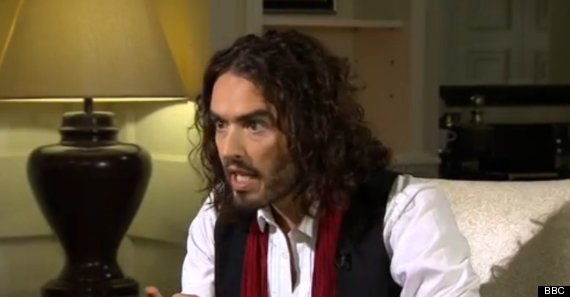
The poll coincided with Russell Brand's thought-provoking essay in which he wrote, "Profit is the most profane word we have". Indeed it is.

In the last few days Sainsbury's results showed like-for-like sales were up 1.4%, yet their profits were up 9.1% - which shows profit margins keep increasing.

And the energy companies are ripping off UK consumers with further price hikes - adding to inflationary pressures. The claim that this is a reflection of wholesale prices is refuted by this graph comparing causes of inflation between the UK and the Eurozone. The gross disparity between the Eurozone (where energy prices have fallen sharply) and the UK where prices have risen (and are bout to rise more sharply) clearly tells the story of the UK energy cartel ripping off consumers. No wonder 68% want energy renationalised.


Even John Major (the Prime Minister who privatised the railways, which 66% want renationalised) now supports a windfall tax on the energy companies.

And it's little better with the banks - as our European neighbours again show us up. The chart below shows the difference between the interest banks give to savers and the rates they charge borrowers. While UK banks have lower margins than US banks, they are far wider than Eurozone banks.


It would be interesting to work out the economic stimulus to consumers if UK banks reduced their margins to Eurozone levels (nearly half that of UK banks) ...

It is clear that rampant profiteering has, if anything, got worse since our March 2011 report - and it's no surprise that the public supports more radical solutions to address it. The vacuum remains the political movement to reflect those radical solutions ...

Wednesday, 13 February 2013

Barclays and the sack race

Yesterday, Barclays announced it had made profits of £246 million in 2012, or just over £700,000 per day (or £8.14 every second of every hour of every day of every week of the year).

This was however down on 2011's looting when the bank made profits of £5.9 billion.However, when adjusted to remove fines over Libor rigging, PPI mis-selling and other scandals that have ravaged the bank, then its 2012 profits (on an adjusted basis) were £7.05 billion (or £224 per second).

The bank also announced a bonus pool of £1.85 billion (down 11% from 2011). The fall in profits and in bonuses though still large, excessive and exploitative are not enough.

So despite announcing these untold riches to be shared between shareholders and directors and other high fliers, the bank also announced that 3,700 staff will be made redundant - split roughly evenly between the retail business and the investment bank.

When I met with Jean-Luc Melenchon, the French Left Party leader, at the end of last year, he told me that one of his one his policy proposals was that no company should be able to make redundancies as long as it was profitable. After all, why should a company making profits be allowed to sack the workforce that produced those profits - simply to try to make higher profits for shareholders?

In the case of Barclays, their 2012 bonus pool of £1.85bn  would be enough to give each sacked worker £500,000 - more than enough to cover their wages. Barclays unadjusted profit of £246m would pay for 3,700 staff on average salaries of £66,000.

Now you might argue that such rules would be inflexible, especially in the case of a company that is trying to restructure - in the case of Barclays to restructure away from investment banking, and closing its tax avoidance unit, under considerable public scrutiny.

However, while voluntary redundancies could still be requested, what Melenchon's proposals would mean is that even when restructuring a company should offer alternative posts with re-training if necessary.

In fact Melenchon's proposals could be part of a modern full employment strategy, and would be a good way of preventing rising unemployment - something the OBR predicts we will see this year.

Friday, 7 October 2011

Corporate Britain: The wages into profits miracle


Times are tough - living standards are falling, as the IFS reported last month. Average wages are rising by around 2% while inflation is over 5%. Consumers are cutting back on spending, demand on the high street is suppressed and employers are laying people off: unemployment continues to rise.

Amid all the gloomy headlines about unemployment, pay freezes, lay-offs, the eurozone crisis and the imminent need for further bank bailouts, you might have missed this virtually unreported statistical release from the Office for National Statistics.

The release demonstrates that corporate Britain is actually doing rather well: the profitability of UK companies was 12.1% for the second quarter of 2011 - up from 11.7% in 2010 and 11.3% in 2009.

In the service sector the picture is even more rosy, with companies profit rate at 15% in Q2 2011, up from 14.7% in 2010 and 14.2% in 2009.

Now of course LEAP did point out in its March 2011 report that some UK firms were engaging in rampant profiteering. We identified banks, supermarkets and energy companies - and called for a windfall tax on each sector.

So how - when times are tough, wages are falling further behind inflation, benefits are being cut and unemployment is rising - is the corporate sector managing to increase its profits?

The answer is part of the reason why we're in this crisis: because there has been a power shift from workers to corporations ('from labour to capital' if you like it in Marxist terms). As the share of the national wealth going to wages has declined so the the proportion going to corporate profits has increased. Workers are easier to sack and harder to unionise, and we have deregulated, liberalised and privatised.

Take a couple of examples where this is true in corporate Britain today:
Newsquest, a company which owns a large number of local newspapers in the UK has frozen staff pay, slashed 800 UK jobs, and last year closed its pension scheme. Times are tough? Well, not for the shareholders: their profits went up 15% (£10.8m) to £82.5m. More on Newsquest here.

Park Cake is a company you've probably never heard of, but you have probably seen their products. Its biggest customer is Marks & Spencer, for which it makes its famous Colin the Caterpillar cake and its popular chocolate ganache birthday cake. This year Park Cake directors awarded themselves a 10.6% pay increase and the Managing Director a 15% pay rise. Their workers' pay was frozen. To compound their greed, they are also exploiting their agency staff by exploiting a loophole in the new agency workers regulations. No pay rise, no rights, let them eat cake. More on Park Cake here.
In both these cases, the workforce is unionised - which is why you've now heard of them - but the law is so stacked in employers' favour that even the best unions (and the NUJ and BFAWU are two of them) are struggling to fight back.

Of course this squeeze cannot go on forever - if wages continue to be squeezed and unemployment continue to rise then people will cut back on buying things like newspapers and caterpillar cakes. As Nouriel Roubini said, capitalism might eat itself.

The solution to this crisis is therefore to restore trade union rights, raise not cut (as Osborne is doing) taxes on big business, uprate the national minimum wage and invest to create jobs. Trade unions are saying it. They're right. Labour should say it too.

Monday, 15 August 2011

Will capitalism eat itself?


The liberal economic commentariat may have choked on its cornflakes this morning, when Professor Nouriel Roubini said "Karl Marx said it right, at some point capitalism can destroy itself because you cannot keep on shifting income from labour to capital" (see video below).


The shift from labour to capital has been a long term process, acute in the US and increasing in the UK too where, as PCS points out, the value of wages has declined from nearly 65% of GDP in the mid-1970s to 55% today. Over the same period, the rate of corporate profit has increased from 13% to 21%.


Roubini also seemingly dismissed the Keynesian solutions used in the 1930s as 'kicking the can down the road', the debt is now too great.


So is Roubini becoming a Marxist and was Marx right? Certainly there is the risk - as Roubini says - that capitalism might self-destruct. It does seem that there is no way out, because of the inherent contradictions of capitalism playing themselves out in this crisis:


1) Governments that impose austerity measures are reducing demand, squashing any chances of recovery.
As Roubini says, "If you are not hiring workers there is not enough labour income, there is not enough consumer confidence, there is not enough consumption, there is not enough final demand. We had a massive reditribution of income from labour to capital from wages to profits, ineqaulity of income and wealth has increased."


2) Governments could invest in the economy to create jobs. But in the short term and on the necessary scale that would mean borrowing in the money markets, and the markets have shown their propensity to punish any government not slashing budgets - see Greece, Spain, and Italy - and perhaps even the US following the S&P downgrade. One could counterpose increasing taxes on the wealthiest and clamping down on tax avoidance and evasion - but that takes time, and no western government is even preparing for that eventuality.


So if governments can't save their way out of recession or spend their way out, could capitalism self-destruct?


Certainly some defaults are likely - Iceland effectively defaulted in 2010 and Argentina in 2001. There has been talk of Greece leaving the euro and effectively defaulting. But that would damage the euro - and bond markets would inevitably up the risk factors on any country with a large deficit (Spain, Italy, Portugal - and potentially the US and the UK). This would make it more expensive to borrow, and rule 2) out while requiring more cuts under 1).


Now you might argue that the Argentinian and Icelandic defaults did not cause contagion, but a eurozone country would be a very different proposition, as would a major global economy like the UK, let alone the world's largest economy, the US.


So the only way out seems to be to take on the markets (e.g. shutting down stock markets, nationalising the finance sector, and taking currencies out of international money markets. The only risk for any country trying this route might be US invasion - but can they afford it?


I'll write more on how this could be done soon.

Wednesday, 9 February 2011

Slavery behind the food on your table

In the two years since the global crisis erupted, conditions in Spain for migrant workers from Morocco, West Africa and Eastern Europe that were already appalling have deteriorated further.

The crisis has driven unemployment in Spain to 20%, forcing Spanish workers to compete for work in the huge plastic-covered farms which grow salad and vegetables destined for sale in all the major supermarkets in Britain and other parts of Europe.

As the recession and inflation bites into living standards across the world, and the cost of competition amongst the supermarkets like Tesco and Sainsbury drives their buyers to put the squeeze on the price they pay to farmers, payments to the workers have been reduced to less than half of the legal minimum wage.

Research by investigative journalist Felicity Lawrence and charities reveals that migrants in Almeria, adjacent to the main tourist destination of the Costa del Sol, are now living in unbelievable squalor.

They live in “chabolas”, shelters made from used vegetable boxes covered in plastic, without food, water or work. Increasing numbers are reduced to taking handouts from charities like the Red Cross and groups of nuns just to stay alive.

Spitou Mendy, who was himself an illegal migrant from Senegal until he gained his papers in an amnesty, now helps run Sindicato de Obreros del Campo (SOC), a small union for migrants. He thinks the numbers have swollen to more than 100,000 due to the recession.

In Mendy's eyes the conditions are slavery.


You don't find the sons of Spain in the hothouses, only the blacks and people from former colonies... The farmers only want an unqualified, malleable workforce, which costs absolutely nothing. Only one part of the business is benefiting from this. It's the big agribusiness that wins. It's the capitalists that win. And humanity is killed that way. This is slavery in Europe. At the door to Europe, there is slavery as if we were in the 16th century.
Farmers argue that the supermarkets have squeezed their margins even harder during the downturn, while costs for fuel and fertiliser have gone up. They have no choice but to cut wages, which is the one element of their production costs they can control. Farmers trying to employ people legally and at the proper rate find it hard to compete or make a profit.

Wages approaching zero, and declining profits shine a bright light on the unsustainable character of food production using capitalist methods.

Rather than weep for the supermarkets, or try to find solutions to their problems, there has to be another way. Food production is undergoing a dramatic turnaround in Venezuala. The Bolivarian revolution led by Hugo Chavez is establishing a food system free of corporate control, rejecting the free market, capitalist ideology and developing alternative systems of international trade and co-operation.

With a state controlled system, cheap agricultural credit has increased from $164 million in 1999 to $7.6 billion in 2008. In a new system of participatory democracy, more than 35,000 community councils as well as councils of farmers and fishermen are enabling communities to monitor their food needs, shape food policies and take control of their local food systems.

These, and other examples, have to be the way forward.

Gerry Gold
Economics editor
A World to Win Blogs Slavery behind the food on your table

Friday, 19 December 2008

Henry Ford's model runs into the sand

Global production of cars is coming to a standstill. This is just the most dramatic and immediate result of a rapidly deteriorating crisis which has paralysed the global financial system and rapidly sent the world economy into recession.

Chrysler has halted production at all 30 of its factories for a month or maybe longer. The closures affect 46,000 workers directly, but, should the temporary closure become permanent, repercussions throughout the industry and the rest of the economy will affect millions in America and worldwide.

GM has suspended work on its $370m engine factory in Michigan, dashing hopes that climate change offers a route to a profitable future. It was planning to build a new small car engine, working towards fuel-efficient and all-electric cars, but the market for cars has disappeared along with all of the other things people used to buy, as unemployment rockets upwards.

The demand collapse is trashing all car manufacturers. GM said it was shutting down 30% of its North American production. Also on Wednesday, Ford announced it was to extend the normal two-week Christmas shut-down at 10 of its North American plants for an extra week. The Canadian car parts sector, which employed 120,000 people in 2006, expects to see its profits tumble by two-thirds next year, and employment levels plunge 20% by 2010. Almost 600,000 jobs in Canada would be at risk from a collapse of Chrysler, Ford and General Motors. It’s no different in the UK where car sales are in meltdown and manufacturers are closing their factories well into the New Year and even longer.

Bourgeois economists and analysts have been brainstorming solutions now that everything tried in the last year has failed. Their problem is they can’t see beyond the constraints of the system which depends on capital expansion to generate profits. And right now there’s not much profit-making going on.

The fewer goods people buy, the less the profit made in production can be realised, and as prices begin to drop everything just gets worse. Even the oil-producing nations’ plan to cut production hasn’t prevented the price from falling below $40 a barrel from its peak of around $140 earlier in the year.

With a downward spiral of deflation beginning, governments and central banks are now prepared to consider just about anything that will make us buy the products they employ us to make. Interest rates are dropping towards zero, already a strange enough concept that opens the door to new possibilities.

The one which is perhaps at the same time both easiest and hardest to understand is looking the most popular just now. Instead of pouring taxpayers’ money into banks which just hold on to it to rebuild their reserves, costing each of us many thousands of pounds in the future, the new big idea is that governments and central banks start issuing new money – just printing notes, creating the stuff out of thin air and giving it direct to us in the hope that we’ll go out and start spending it.

Must be the Christmas spirit, you say? No they really mean it. The really, really wonderful thing is that with zero interest rates, the cash bonanza would be a no-interest giveaway. Trouble is – there’s always a catch – printing money devalues the currency and eventually leads to runaway inflation. Higher prices are, in any case, bound to follow the uncontrolled slide in sterling – unmatched in size since 1931, when Labour prime minister Ramsay MacDonald took the pound off the gold standard. Devaluation on this scale could also lead to a flight of capital from Britain and a collapse of the currency, some are warning.

Whichever way you look at it then, the capitalist economy is well and truly broken. In 1908, Henry Ford gave the world the Model T and the production line for cars. A century later, it’s time for a revolutionary new model.

reposted from A WORLD TO WIN www.aworldtowin.net