Thursday, 30 January 2014

Corporate justice?


This blog has not shied away from taking a sideways approach to economics at times, and neither has it hesistated from looking at how economic power influences other spheres of life. One of those areas has been criminal justice - from comparative approaches to fraud to the relative crimes of Barclays and naked ramblers.

Today, the Guardian reported 'Metropolitan police accused of acting on behalf of big business' - helping make arrests for Virgin to bring a private prosecution for fraud, for which Virgin paid the Met. Many people, including Green London Assembly member Jenny Jones have highlighted the apparent ability of corporations to buy justice:


Labour MP Tom Watson said: "This sounds like emerging two-tier policing where corporate interests can buy the time of the police, leaving those who can't offer remuneration losing out. This is creeping privatisation with big business hiring police powers."

Of course the law is far from equal, especially since the massive cuts to legal aid which will undermine the ability of the less well-off to seek justice.

But another aspect of this story caught my eye, and that was the sentencing of those who supplied imported set-top boxes to allow people to watch cable TV without subscription.

"Munaf Zinga received eight years' imprisonment, and two other men were also convicted. They had sold 400,000 boxes over more than three and a half years."

Eight years imprisonment: there is no suggestion violence was involved, no one was killed, and there is no suggestion that any of those prosecuted posed a threat to the public. They supplied set-up boxes to people who wanted them, made some money, but Virgin estimated the equivalent income would have been £144 million a year. For reference Virgin Media still managed to scrape a profit last year of £1,030 million.

So why then was a man sentenced to eight years in prison. For reference eight years imprisonment is the average sentence for rape. Is selling illegally imported set-top boxes (even in large quantity) as bad as raping someone? And is it worth 8 years in prison?

Sunday, 26 January 2014

Review: The Poverty of Capitalism ... but a wealth of insight


Andrew Fisher, LEAP Co-ordinator, reviews John Hilary's 'The Poverty of Capitalism: Economic Meltdown and the Struggle for What Comes Next'. Published by Pluto Press.

War on Want's Executive Director John Hilary has been an outspoken and radical advocate of the global movement for social justice. Unafraid to speak plainly, to step outside and even condemn the cosy coalitions and tame agendas of some other NGOs. As such, it was with much anticipation that I started to read The Poverty of Capitalism.

The book not only draws upon Hilary's encyclopaedic knowledge of the global players and the struggles they provoke around the world for social justice, but also develops new theoretical underpinnings and useful concepts to better understand the global struggle against the power of almighty capital.

Hilary's fearless analysis not only takes on the known evils of globalisation - including the big corporations, the far from objective global economic institutions and the bought and paid for politicians. But it also takes aim at the wolves in sheep's clothing: the philanthropists, aid agencies and NGOs providing a humanitarian facade for a corporate agenda (reminiscent of the role of missionaries for the British Empire).

Like any well-researched book, it contains a number of great tidbits to develop the main thesis, including the quotes from Pentagon's 2012 paper on the 'Joint Operational Access Concept' which make it clear the US will go to war for resources - as it did in Afghanistan and Iraq - stating:
"the United States must maintain the credible capability to project military force into any region of the world in support of those interests. Thus includes the ability to force both into the global commons to ensure their use and into foreign territory as required."
Another also relates to the US, as we learn that 60% of personal bankruptcies in that country are caused by medical bills.

But the most important point in the book is to detail the corrupt power structures that keep the poor poor and the rich rich. In doing so, concepts like 'popular sovereignty', 'common ownership' and 'social production' are introduced and explained in developing the case for a democratic and ecologically sustainable transition in the global economy.

This is not an abstract vision, but rooted in social movements from across many of the most developed and successful of which are from Latin America, Africa and Asia. And it is this that perhaps gives the book its power - as the reader is transported along a compelling narrative from technical analysis of the realities of global realpolitik and economic institutaions, to an conceptual outlining of alternatives to the discontented struggling and often succeeding to make those alternatives a reality.

Those realities could take us, as Hilary labels the final chapter, 'Beyond Capitalism'. I'm in.

Andrew Fisher edited 'Building the new common sense: social ownership for the 21st century'.

Saturday, 25 January 2014

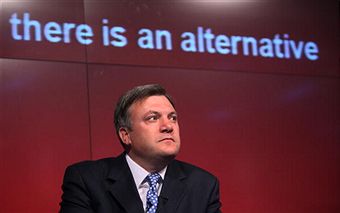
The two faces of Ed Balls


During the Labour leadership election, many people were impressed by Ed Balls' apparent conversion to a social democratic economic settlement as espoused in his Bloomberg speech.

But since then Balls has committed a Labour government in 2015 to sticking with Tory spending plans for at least the first year. He has also said that Labour will not promise to reverse Tory cuts, and that Labour would have to make more in office. He has supported the public sector pay freeze, while Ed Miliband somewhat contradictorily waxes on about the cost of living crisis.

This morning the media was filled with similar tough messages, briefing ahead of Balls' speech at the Fabian Society, including the parliamentary garbage that "Balls will promise to legislate for new fiscal rules within 12 months of the general election, including a commitment to a budget surplus by the end of the parliament". Legislate for it? Really? Will the chancellor be surcharged if the target is not met? Or will a technocrat be installed to make cuts? It really is nonsense. On the upside, it should be noted that Balls is committing to a current account surplus, which allows for borrowing for capital investment - see 'Borrowing for Growth - some advice for Ed'.

Nevertheless, like any wannabe chancellor, Balls knows how to pull a rabbit out of a hat. And so the tough, 'we'll enforce austerity too' message will be overshadowed by a debate about a modestly higher rate of income tax on a few high earners. It is very welcome that Balls has committed to restoring the 50% tax rate on those earning over £150,000. It was probably the most popular policy in Gordon Brown's premiership.

What is also welcome, and will hopefully be widely reported, is that Balls also said:
"The latest figures show that those earning over £150,000 paid almost £10 billion more in tax in the three years when the 50p top rate of tax was in place than when the government conducted its assessment of the tax back in 2012"
This corrects the crap put out by the Treasury in its dodgy dossier of the 2012 Budget. Both the move to pledge to restore the 50% rate and the analysis is welcome, and hints at a return to '
Bloomberg Balls'.

However, before Labour activists start getting weak at the knees about a return to some form of modest social democracy, Balls also told the Fabian conference that Labour supported the benefit cap, the public sector pay freeze, thought public utilities belonged in the open market, and that universal winter fuel payments for pensioners should be means-tested.

We've seen the two faces of Ed Balls today in one day. Capitulating to Osborne, the financial markets and the Murdoch media this morning, while throwing a modest redistributive morsel to the left at lunchtime. Bon appetit!

Monday, 13 January 2014

House prices go further beyond reach


Prices set to continue to rise as help-to-buy scheme drive's inflation housing market

by Ryan Fletcher

House prices surged further beyond the average person's reach in 2013 with a full-year 7.5 per cent rise to December the biggest in six years, Halifax bank revealed yesterday.

Prices are likely to shoot up even further this year as a lack of new homes and the government's controversial help-to-buy scheme combine to drive inflation in the market.

Taxpayer-backed help-to-buy sees our money used to underwrite high-risk 95 per cent mortgages that banks had stopped handing out to avoid bad debt.

But Left Economic Advisory Panel co-ordinator Andrew Fisher said: "With house prices rising at nearly 10 times the rate of wages, more mortgage funding is not the solution.

"If interest rates rise, as many predict in the next 18 months, many people could end up being burned by this scheme."

He said that an urgent mass council house-building programme was needed instead.
"This would help those in most housing need, for whom help-to-buy does nothing and be a far better economic stimulus than inflating another debt bubble."

In the Commons yesterday shadow communities secretary Hilary Benn (right)called for an end to speculation where greedy investors buy land, gain planning permission and sit on it, sometimes for years, until prices rise so that they can cash in the profits.

Mr Benn said local authorities should be able to tell companies to "get on and build the houses you said you would" and slap them with a levy if they don't comply.

But he stopped short of committing a Labour government to a centrally funded building scheme.

However Tory MP Alec Shelbrooke accused Labour of planning "Stalinist tactics of land seizure" if they win the 2015 election.

This article first appeared in the Morning Star on 9 January

Tuesday, 17 December 2013

Hamstrung SFO not capable of holding bankers to account


Prem Sikka

Iceland has sent four former directors of its bank Kaupthing to prison for fraud. But the chances of similar legal action happening in the UK are low, where fraud investigators have a poor record.

The Serious Fraud Office (SFO) is the main agency for investigating and prosecuting major fraud. It was formed in 1988 after a spate of high-profile cases. A government-sponsored inquiry into share price rigging at Guinness in the 1980s concluded that too many executives at major corporations had a “cynical disregard of laws and regulations … cavalier misuse of company monies … contempt for truth and common honesty. All these in a part of the City which was thought respectable”.

But rather than changing corporate laws, amending personal liability of directors, or creating an effective enforcement agency, the government created the SFO.

Last week, the SFO’s case against businessman Victor Dahdaleh collapsed because at the last minute it could not provide evidence of alleged graft. This is not the only case the SFO has botched. It spent between £25-40m investigating price-fixing by pharmaceutical companies supplying the UK’s National Health Service (NHS), but the case collapsed because of errors in the interpretation of law.

Previously, the SFO was very slow in taking action against BAE Systems over allegations of corrupt practice. The SFO mislaid 32,000 documents relating to the case. It is currently facing a lawsuit for damages from the Tchenguiz brothers after dropping a three-year investigation into the collapse of Icelandic bank Kaupthing.

Bigger beasts


In 2012-13, the SFO brought 12 cases covering 20 individuals, eventually securing 14 convictions and recovering £11.4m from fraudsters. But it rarely went after the bigger beasts. Money laundering and sanctions busting by British banks did not appear on its radar. The SFO has hardly been visible in investigating and prosecuting the misdemeanours of bankers who brought the UK economy close to collapse.

In mitigation, it might be argued that the SFO’s failures are the outcome of the politics of government cuts. In 2008-09, the SFO had an investigations and prosecutions budget of £52m. Despite the banking crash, LIBOR rigging and other scandals, the UK government has drastically reduced SFO’s resources.

For 2013-14 its budget is £30m and will decline to £28.8 million for 2014-15. That is a cut of over 44% since the start of the global financial crisis.

Faced with a reduced budget and pay freezes, the SFO has been losing experienced staff and outsourcing a lot of its legal work, often paying very high fees. Such practices make it difficult to build in-house expertise and an institutional memory.

Other countries seem to assign higher priority to fraud investigation. The US equivalent, the Securities and Exchange Commission (SEC), has an annual budget of US$1.674 billion (about £1.1 billion). It is therefore in a far stronger position to take on the bigger beasts. The SEC has its shortcomings, but it is more likely to get a result than the SFO.

Ineffective patchwork


The SFO’s failures are indicative of Britain’s failure to build durable and effective institutional structures to fight financial crime. Rather than a single powerful and well resourced agency, there is an ineffective patchwork of institutions.

These include the Financial Conduct Authority (FCA), the Office of Fair Trading (OFT), The National Crime Agency (NCA) Her Majesty’s Revenue and Customs (HMRC), the Crown Prosecution Service, the London Stock Exchange and the Financial Reporting Council, to name just a few. The overlapping and often unclear boundaries result in duplication, waste, obfuscation, delays, poor accountability and outright failures.

Any effective fight against globalised financial crime needs to streamline its institutional structures. In the age of globalisation the UK cannot fight financial crime on a shoestring, with puny organisations. Large parts of the patchwork should be replaced by a UK equivalent of the SEC.

But a new organisation would not be able to combat wealthy elites or giant corporations without significant resources. This might be expensive, but it is an investment that would pay off.

Thursday, 5 December 2013

Autumn Statement 2013: Evaluating Osborne ... 15% successful!


Are the austerians right and the opponents of austerity proved wrong? Is Osborne's strategy vindicated?

Let's judge by his own standards. In June 2010, just as the ink had dried on the coalition agreement, George Osborne rushed to the House of Commons to deliver an 'Emergency Budget'.
"It supports a strong enterprise-led recovery. It rewards work. And it protects the most vulnerable in our society. Yes it is tough; but it is also fair."
With this rhetoric, Osborne opened his remarks. But the devil was in the detail of the accompanying forecasts. So how has he done 3 years on? We evaluate:

Osborne predicted that economic growth would be 2.8% this year - a target he may get close to (we'll find out next month), but that was on the back on growth of 2.8% last year as well (instead, in 2012 the economy grew by just 0.2%). The OBR predicts that growth will be 1.4% in 2013 (but this is still an underestimate)

Far from being back on track, the UK economy still lags 2.5% below where we were in 2008. So at best half marks for Osborne on economic growth. And that's before we factor in growing concerns about the sustainability of George's recovery. Half marks.
  • Economic growth 0.5/1
That same June 2010 forecast predicted that average wage growth in 2013/14 would be 4.9%. With average wage 'growth' currently at just 0.7% there is no gentle way to put this, that was woefully wrong.

While this year the FTSE100 directors will see their seven-figure salaries increase by an average of 14%, for the rest of us there is no recovery. People's incomes have been cut in real terms. The ONS points out that the median household income has dropped 6.4% for working age households over the last five years. Fail.

  • Wages 0/1
Unemployment has declined marginally in recent months, but is still high at 7.6% of the economically active population. That figure however conceals stubbornly high youth unemployment and long-term unemployment - failed by shambolic government programmes.

In 2010, Osborne told us unemployment would today be just 6.8%. So 250,000 fewer people should be unemployed today had Osborne hit his target. Fail.
  • Unemployment 0/1
Given Osborne erroneously said he would deal with "our country's record debts" (they were nowhere near record levels) with austerity, one would assume he would have at least had some success in reducing our debt (or at least stemmed the rate of rising debt).

By now, predicted Osborne in 2010, our debt should be 73.7% of GDP. Instead it's 75.5%.

But much of that is because GDP is far lower than predicted, so not even half marks for getting close, so quarter marks.
  • Debt 0.25/1
The reason the Chancellor is not reducing the debt, is because the deficit has not been closed at anything like the rate he predicted. By now the deficit should have been just 5% of GDP. Today Osborne announced it would be 6.8%. In cash terms they predicted £63 billion in 2010, but today it's £111bn - 75% higher than the 2010 forecast. So he'll borrow £198 billion more than he planned. Fail.
  • Deficit 0/1

Overall 0.75 out of 5 (or 15%)

Tuesday, 3 December 2013

Are you really worse off? Er, yes.


Labour has recently made some headway with its message that there is a cost of living crisis - which has continued despite Osborne's recovery. This feeds a number of other important messages, including that this is a recovery for the rich, and that you're being ripped off - and so the energy price freeze fits into the same narrative.

The average non-retired household is today 6.4% worse off since the recession - that was the finding of a report by the Office for National Statistics out earlier this week. It showed that the average household income fell from £37,900 to £32,600, in real terms over the last five years.

In fact, the average household is £300 a year worse off than it was in 2002/03. There is therefore a 'lost decade' of stagnation for household incomes.

This decline in income triggered entitlement to extra benefits (e.g tax credits) so that benefits rose from providing 7.6% to 12.3% of gross income for the median household. This is fundamentally a redistribution in the cost of living from the employer to the state - as a result of pay freezes and pay caps. So when Labour talks about a structural welfare spending cap (not individual benefit caps which are disgraceful) it is alluding to this phenomenon, and pledging to deal with the structural issues - and advocating the living wage is a part of tackling low pay subsidies like tax credits.

The resonance that Labour has had with this line has rattled the Tories.

So, in a blatantly politically-driven misanalysis, HM Treasury has produced data that shows compensation for workers has stayed the same, but what they don't see is that employers are paying more in national insurance and pension contributions. The idea that wages have been cut to sustain or even increase profits is, apparently, a myth.

Sky's economic correspondent, Ed Conway, says the Treasury report explains:
"Overall compensation includes not just wages but also the social contributions made by employers, including pension contributions and National Insurance Contributions. Technically-speaking, these are forms of payment, except that because they don’t go straight into your pocket they don’t feel particularly obvious."

In fact a less kind interpretation of this Tory spin - still not on the Treasury website - is that because it doesn't goes into your pocket, it's not really payment.

So the Tory argument is that pay has gone down (Ed Miliband's cost of living crisis) due to NI contributions going up (all Gordon Brown's fault) and pension contributions going up (your fault for living longer).

However, the argument doesn't really stack up for several reasons:
  1. Pension contributions have only gone up in real terms for funded pension schemes - which most workers don't have
  2. Part of the reason extra pension contributions are needed are due to pension holidays taken by employers in the 1990s
  3. Is the logic of the Treasury analysis of NI rise that a cut in NI would be passed on to workers in higher wages
  4. If that's the case why have the cuts in corporation tax not been passed on to workers then? Because corporation tax has fallen from 33% to 28% under New Labour, and now down to 22%.
  5. If we're all actually no worse off why - by official figures - are a million more of us living in poverty? Why are half a million of us using food banks this year?
(There's a more detailed and wonkish analysis by the TUC's Duncan Weldon here)

So was this just a political attack to try to blunt Labour's resonant cost of living line? If so, it's another sign of the civil service being used for party political purposes (and not the first time either).

But it's an indication that ahead of this year's Autumn Statement, Osborne has only spin to offer.