Showing posts with label supermarket. Show all posts

Thursday, 14 November 2013

Ripped-off UK looks for radical solutions


At the 2011 Budget, LEAP called for "a Windfall Tax on recession profiteers": UK banks, energy companies and supermarkets - to fund job creation and capital expenditure programmes (full report here).

John McDonnell MP, said in the 2011 Budget debate, "I think that a windfall tax on energy is appropriate. The current profits of British Gas average 24%, and Ofgem has reported an average profit margin of 38% per customer since last November. That is profiteering during a recession."

There are indications the British public agree - and may want to go further. A YouGov opinion poll commissioned by the Class thinktank found that 68% want the energy companies renationalised, while 35% believe the government should have the power to regulate grocery prices (rising to 44% among Labour voters - and 40% of UKIP voters!).
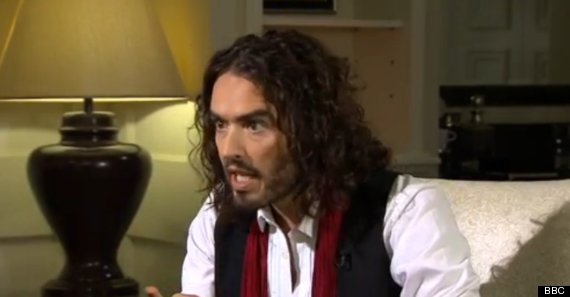
The poll coincided with Russell Brand's thought-provoking essay in which he wrote, "Profit is the most profane word we have". Indeed it is.

In the last few days Sainsbury's results showed like-for-like sales were up 1.4%, yet their profits were up 9.1% - which shows profit margins keep increasing.

And the energy companies are ripping off UK consumers with further price hikes - adding to inflationary pressures. The claim that this is a reflection of wholesale prices is refuted by this graph comparing causes of inflation between the UK and the Eurozone. The gross disparity between the Eurozone (where energy prices have fallen sharply) and the UK where prices have risen (and are bout to rise more sharply) clearly tells the story of the UK energy cartel ripping off consumers. No wonder 68% want energy renationalised.


Even John Major (the Prime Minister who privatised the railways, which 66% want renationalised) now supports a windfall tax on the energy companies.

And it's little better with the banks - as our European neighbours again show us up. The chart below shows the difference between the interest banks give to savers and the rates they charge borrowers. While UK banks have lower margins than US banks, they are far wider than Eurozone banks.


It would be interesting to work out the economic stimulus to consumers if UK banks reduced their margins to Eurozone levels (nearly half that of UK banks) ...

It is clear that rampant profiteering has, if anything, got worse since our March 2011 report - and it's no surprise that the public supports more radical solutions to address it. The vacuum remains the political movement to reflect those radical solutions ...

Wednesday, 10 August 2011

Tesco to contest OFT fine


From the Morning Star


Tesco threatened to take legal action against a competition watchdog today that gave the supermarket giant a £10 million fine for its alleged role in a dairy price-fixing scandal.


Tesco was among nine firms that the Office of Fair Trading judged to have colluded to rig the price of cheese and milk in 2002 and 2003.


The penalties imposed by the OFT total nearly £50m but the scandal is thought to have hit their customers' pockets to the tune of £270m.


Originally the OFT had intended to fine guilty parties more than £116m but it scaled back the penalties after a period of consultation.


Supermarket chains Asda, Sainsbury's and Safeway and dairy processors Arla, Dairy Crest, McLelland, the Cheese Company and Wiseman all received lenient fines after admitting liability.


Left Economics Advisory Panel co-ordinator Andrew Fisher said that it was not hard to see where the real looters are.


He said: "It is very welcome that the OFT has decided to act on behalf of consumers who are being hit with outrageous price hikes by energy companies, supermarkets and banks.


"As LEAP highlighted in its March report, British supermarkets have hiked prices at a higher level than their European counterparts. They are looting people's wages to maintain their fat-cat profits. It's a rich irony that these fat cats are overcharging for cream."


But Tesco stands alone in denying it had anything to do with the price fixing of dairy products stating it will defend its position "vigorously" and "through the courts if necessary."


The supermarket's director of corporate and legal affairs Lucy Neville-Rolfe said: "We are disheartened and disturbed that the OFT continues to pursue this costly and time-consuming case at the expense of both the taxpayer and British business.


"We have always said we did not collude on prices on cheese and we stand firm in our rebuttal of these ongoing allegations."


But the OFT defended its decision and the watchdog's chief executive John Fingleton said the fines send "a strong signal" to supermarkets, suppliers and other businesses that adopt anti-competitive tactics.

Wednesday, 9 February 2011

Slavery behind the food on your table

In the two years since the global crisis erupted, conditions in Spain for migrant workers from Morocco, West Africa and Eastern Europe that were already appalling have deteriorated further.

The crisis has driven unemployment in Spain to 20%, forcing Spanish workers to compete for work in the huge plastic-covered farms which grow salad and vegetables destined for sale in all the major supermarkets in Britain and other parts of Europe.

As the recession and inflation bites into living standards across the world, and the cost of competition amongst the supermarkets like Tesco and Sainsbury drives their buyers to put the squeeze on the price they pay to farmers, payments to the workers have been reduced to less than half of the legal minimum wage.

Research by investigative journalist Felicity Lawrence and charities reveals that migrants in Almeria, adjacent to the main tourist destination of the Costa del Sol, are now living in unbelievable squalor.

They live in “chabolas”, shelters made from used vegetable boxes covered in plastic, without food, water or work. Increasing numbers are reduced to taking handouts from charities like the Red Cross and groups of nuns just to stay alive.

Spitou Mendy, who was himself an illegal migrant from Senegal until he gained his papers in an amnesty, now helps run Sindicato de Obreros del Campo (SOC), a small union for migrants. He thinks the numbers have swollen to more than 100,000 due to the recession.

In Mendy's eyes the conditions are slavery.


You don't find the sons of Spain in the hothouses, only the blacks and people from former colonies... The farmers only want an unqualified, malleable workforce, which costs absolutely nothing. Only one part of the business is benefiting from this. It's the big agribusiness that wins. It's the capitalists that win. And humanity is killed that way. This is slavery in Europe. At the door to Europe, there is slavery as if we were in the 16th century.
Farmers argue that the supermarkets have squeezed their margins even harder during the downturn, while costs for fuel and fertiliser have gone up. They have no choice but to cut wages, which is the one element of their production costs they can control. Farmers trying to employ people legally and at the proper rate find it hard to compete or make a profit.

Wages approaching zero, and declining profits shine a bright light on the unsustainable character of food production using capitalist methods.

Rather than weep for the supermarkets, or try to find solutions to their problems, there has to be another way. Food production is undergoing a dramatic turnaround in Venezuala. The Bolivarian revolution led by Hugo Chavez is establishing a food system free of corporate control, rejecting the free market, capitalist ideology and developing alternative systems of international trade and co-operation.

With a state controlled system, cheap agricultural credit has increased from $164 million in 1999 to $7.6 billion in 2008. In a new system of participatory democracy, more than 35,000 community councils as well as councils of farmers and fishermen are enabling communities to monitor their food needs, shape food policies and take control of their local food systems.

These, and other examples, have to be the way forward.

Gerry Gold
Economics editor
A World to Win Blogs Slavery behind the food on your table