Thursday, 14 November 2013

Ripped-off UK looks for radical solutions


At the 2011 Budget, LEAP called for "a Windfall Tax on recession profiteers": UK banks, energy companies and supermarkets - to fund job creation and capital expenditure programmes (full report here).

John McDonnell MP, said in the 2011 Budget debate, "I think that a windfall tax on energy is appropriate. The current profits of British Gas average 24%, and Ofgem has reported an average profit margin of 38% per customer since last November. That is profiteering during a recession."

There are indications the British public agree - and may want to go further. A YouGov opinion poll commissioned by the Class thinktank found that 68% want the energy companies renationalised, while 35% believe the government should have the power to regulate grocery prices (rising to 44% among Labour voters - and 40% of UKIP voters!).
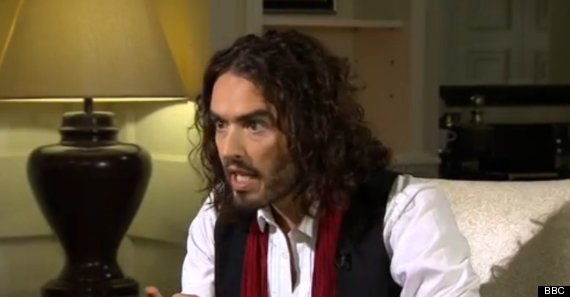
The poll coincided with Russell Brand's thought-provoking essay in which he wrote, "Profit is the most profane word we have". Indeed it is.

In the last few days Sainsbury's results showed like-for-like sales were up 1.4%, yet their profits were up 9.1% - which shows profit margins keep increasing.

And the energy companies are ripping off UK consumers with further price hikes - adding to inflationary pressures. The claim that this is a reflection of wholesale prices is refuted by this graph comparing causes of inflation between the UK and the Eurozone. The gross disparity between the Eurozone (where energy prices have fallen sharply) and the UK where prices have risen (and are bout to rise more sharply) clearly tells the story of the UK energy cartel ripping off consumers. No wonder 68% want energy renationalised.


Even John Major (the Prime Minister who privatised the railways, which 66% want renationalised) now supports a windfall tax on the energy companies.

And it's little better with the banks - as our European neighbours again show us up. The chart below shows the difference between the interest banks give to savers and the rates they charge borrowers. While UK banks have lower margins than US banks, they are far wider than Eurozone banks.


It would be interesting to work out the economic stimulus to consumers if UK banks reduced their margins to Eurozone levels (nearly half that of UK banks) ...

It is clear that rampant profiteering has, if anything, got worse since our March 2011 report - and it's no surprise that the public supports more radical solutions to address it. The vacuum remains the political movement to reflect those radical solutions ...

Wednesday, 13 November 2013

The great unemployment disappearing act


Today's unemployment figures revealed that the internationally recognised measure of UK unemployment fell by 48,000 and the claimant count (i.e. the number of people claiming jobseeker's allowance) fell by 41,700.

These two figures were remarkably close. To the uninitiated naively logical this might seem to corroborate that there are roughly 40-50,000 fewer unemployed people in the last 3 months.

However, with those subtractions ILO unemployment stood at 2.47 million, while the claimant count was only 1.31 million. So in relative terms the fall in the claimant count was nearly twice as sharp.

As the graph below shows - this is not a one-off occurence but part of a 20-year trend that has seen the ILO unemployment measure part company with claimant count.


Whereas the claimant count accounted for 96.6% of ILO unemployment 20 years ago in 1993, three years later the claimant count was only 83.2%. Five years on again - or twelve years ago - in 2001, the claimant count was just 64.5%.

Today, the claimant count was just under 53% of the ILO measure.

It is not entirely clear why this has happened. Certainly a part of the reason is the increased conditionality, and reduced eligibility that has applied to claiming unemployment benefit since the 1995 Jobseekers Act - and toughened by successive welfare reform acts under successive governments.

The recent sharp downturn in the claimant count - and sharp relative to ILO unemployment - is no doubt partially explained by the increase in sanctions (see LEAP analysis 6 November 2013).

But the rut set in slightly earlier. Under the Major government the claimant count averaged 93.3% of the ILO measure. In the Blair/Brown New Labour years, the claimant count averaged just 63.1%, and under Cameron's coalition government to date that has already dropped again to 59.9% (and was 53% in today's figures).

It means that the claimant count is becoming a less reliable indicator of true unemployment. With an increased sanctions regime, and extra conditionality generally (including workfare), and the demonisation of claimants as 'scroungers' and 'skivers', jobseeker's allowance has become a daunting benefit to claim.

As PCS research has found (see infographic here) the real value of unemployment benefit has fallen from 18% of average wages in 1990 to just 13% today.

With increasingly greater sanctions, more conditionality, less eligibility, more stigma and less value - is it any wonder the claimant count now represents barely half the true level of unemployment.

Tuesday, 12 November 2013

Help to Buy 'will fail if housebuilding slows'


Sharpest house prices increase since June 2002 sparks housing bubble fear

by Luke James

The thatcherite Help-to-Buy scheme will explode into another housing crisis if "soaring" demand is not matched by building, surveyors told the government yesterday.

Home sales are at their highest in over five years, according to monthly research by the the Royal Institution of Chartered Surveyors (RICS).

But its members also reported the sharpest increase in house prices since June 2002 - sparking fears over a new housing bubble.

Help to Buy's first phase offered a 15 per cent mortgage guarantee on new-build homes when it was launched in April.

That was extended to existing housing stock last month and over 2,000 people have since taken advantage.

Some were used as props at a Downing Street press conference yesterday as David Cameron hailed the scheme's success. He boasted: "This is all about helping hardworking people get on the first rung of the property ladder - and helping them get on in life."

But RICS chief economist Simon Rubinsohn called for the government to "urgently" address the imbalance between supply and demand.

"Housebuilding starts have picked up recently but we are still well behind in terms of the amount of properties needed," he reminded Mr Cameron.

Part-nationalised banks RBS and Lloyds, along with HSBC, have signed up to offer 95 per cent mortgages as a result of the scheme.

The Left Economics Advisory Panel pointed out that it was a huge gamble to increase personal debt when wages are stagnant and jobs are at risk.

Co-ordinator Andrew Fisher said: "If the dangers of rising house prices, greater borrowing and suppressed incomes sound familiar, then that is because it was this combination that in large part contributed to the 2008 crash.

"Unless accompanied by a massive programme of housebuilding, Help to Buy will continue inflate house prices - making home ownership even more unaffordable for most families - and lead to another crash."

Mr Fisher added that the scheme could land taxpayers with huge liabilities if people default on loans as a result of austerity.

This article first appeared in the Morning Star

Wednesday, 6 November 2013

Robbing from the poor ... £328,000 taken from unemployed daily


IDS...thieving from the poor
DWP sanctions data published today revealed benefit sanctions are robbing £328,767 from unemployed people every day - based on the new sanctions regime imposed since October 2012.

If you're thinking well, that's fair enough, they can't have been looking for work then I can only point you in the direction of the excellent report by Manchester Citizens Advice Bureau on people's real experience of being sanctioned.

If you don't have the time to read that report, then I'll appeal to your logic. The data shows that sanctions have increased by 137% compared with figures for between 2000-2010. Have claimants suddenly become so much worse? In the last two and a half years, the number of unemployed people sanctioned has averaged 64,307 a month, compared with 27,108 a month between 2000 and 2010.

N.B. And even the above may be a severe underestimate, due to sanctions decisions being deferred in 120,000 cases due to the 'Poundland case'.

In cash terms, the figures are even more stark: in 2009/10, £11 million of jobseeker's allowance (JSA) benefits were sanctioned, but in first six months of 2012/13 alone it was £60 million. This is because not only are more people being sanctioned, but more of their benefits are being removed - and for a longer period. The stats since October 2012 (when the new sanctions regime was introduced) show over 52,000 people have lost their benefits for 3 months or more.

This is about a far more brutal regime, not claimant behaviour. As the PCS union's Mark Serwotka said:
"The new sanctions regime damages the relationship between Jobcentre advisers and claimants, and is entirely counterproductive in helping people to find work

"The government’s perverse and punitive approach is a collective punishment on the unemployed and the disabled for its own failure to create sufficient jobs."
Over 4,300 lone parents have been sanctioned every month under new sanctions regime - and 230 a month have received high level sanctions involving loss of benefits for 3 months or more. The effect of this on children will be appalling - and surely constitutes cruel and unusual punishment, by reducing to abject poverty the children of those who have (supposedly) breached the rules.

In nearly a third of cases (31%) under the new rules, the sanction was directly related to failure to participate in the Work Programme, mandatory work activity or some other scheme. Given international research and Work Programme figures show the abject uselessness of these schemes in assisting in securing paid work, this is being sanctioned for avoiding doing something counterproductive.

For disabled people on employment and support allowance, sanctions have increased by 156% in the last year. These sharp increases highlight how the use of sanctions has been cranked up as part of the coalition's drive to reduce the deficit on the backs of the poor, while slashing corporation tax and the top rate of tax for the richest 1%.

The JSA data also shows non-white claimants are slightly more likely to get an adverse decision than white claimants. For all three categories of sanctions, non-white claimants got a higher proportion of adverse decisions: for low level, white claimants 56%, but for non-white 60%; for intermediate level white claimants 81% compared with 83% for non-white; and for high level sanctions (losing benefits for 3 months or more) white claimants referred for sanctions had adverse decisions 33% of the time, compared with 38% for non-white claimants. Although the differences are marginal, they are consistent across all three sanction levels.

Likewise for young people, while 16-17 year olds were sanctioned 64% of the time (after being referred for sanctions), for those over 55 it was 48%, and there was a direct correlation through the age brackets: the younger the claimant the more likely to be sanctioned. This is even worse given that young people inexplicably receive a lower rate of JSA (£56 per week compared with £71).

These data beg the question about whether the policy was subject to equality impact assessment - and if so whether this was predicted? (any insights welcome).

Saturday, 2 November 2013

Remember, "It wouldn't be happening without the Liberal Democrats"


The two strongest periods of growth for three years, 0.7% followed by 0.8% and the Tories and Lib Dems hangers-on are jubilant. Chief among the examples of this heady growth jubilation is Financial Secretary to HM Treasury Danny Alexander, who wrote in the Telegraph:
"Britain is on its way back. We need to stick to our plans to make sure this is a recovery that is built to last. That is the only way to improve living standards.
"Our economy is growing because of the hard work of people and businesses throughout Britain. But the coalition's economic plan is the rock on which our recovery is being built - so it wouldn't be happening without the Liberal Democrats."
On almost every count, he is wrong. This 'recovery' is doing nothing for living standards, which continue to fall. Wages are rising at just 0.7%, while inflation is four times that at 3.2% (RPI, 2.7% CPI).

For people on out of work benefits (and indeed those on low pay whose incomes are topped up by tax credits) benefit increases were capped by this government at 1%.

Put that alongside rents rising way above wage increases, energy prices rising at 8-9%, and the forthcoming 6% rail fare increase in January - and you can see the problem isn't being resolved soon. Figures show that workers have collectively lost £50 billion a year in real terms cuts in pay.

For many of the lowest paid - and those on out of work benefits - the impact has been devastating:
  • an extra million people are, by the government's own figures, living in poverty since the coalition was elected;
  • half a million people have had to use food banks in the last year;
  • homelessness is rising, and the number of families housed in B&B accommodation now stands at a ten year high, and the number of households in rent arrears is increasing sharply;
  • unemployment remains stubbornly high at around 2.5 million - with long-term unemployment and youth unemployment unaffected by failing privatised government schemes

So when Danny Alexander says that this 'recovery' is the only way to improve living standards, it is an evidence-free assertion, a delusion and, since he probably knows this, a flat-out lie. Of course living standards are improving for some people: the 1000 richest Britons increased their wealth by £35 billion last year (if you wanted to know where your missing pay rise ended up).

So where has the recovery come from? Mostly, debt. Consumer and mortgage debt to be precise. Yes, exactly what caused the crash, an unsustainable credit bubble. George Osborne (Danny Alexander's boss at HM Treasury) is huffing and puffing into that bubble with his Help to Buy scheme - re-introducing 95% mortgages at a time of rising house prices and falling wages ... what could possibly go wrong?

The "rock on which our recovery [sic] is being built" is that least rock-like of entities, a bubble. The question for the government is whether that bubble will burst before or after the 2015 election ... they may hope after, but the longer it inflates, the worse it will burst.

Alexander is right about one thing: "it wouldn't be happening without the Liberal Democrats", it's just that the "it" he refers to is rising poverty, homelessness, inequality, and a credit bubble that could spell further disaster for the UK economy and his government.

Remember, "it wouldn't be happening without the Liberal Democrats."

Sunday, 13 October 2013

Help to Buy won't Help, says Labour Land Campaign

 
In his Financial Times article (10 October 2013 “Buyers beware of Britain’s absurd property trap”) Martin Wolf exposes the real reason for the Government’s Help to Buy Scheme – to stimulate land speculation in the UK and give land owners even more unearned income as the next property bubble grows and grows at the expense of the economy. 

Land values are created by our collective demand for public and private services and production; it is our taxes, our investments and our consumption that create land value. Because we have monopoly ownership of land in the UK (70% of land is owned by less than 1% of the population) we have monopoly ownership of land wealth. The poorest taxpaying commercial and residential tenants are subsidising the richest land owners.

Carol Wilcox, Secretary of the Labour Land Campaign, says:
"The mythical housing ladder is unattainable to a growing number of households and the UK’s tax system sustains this economic injustice and actually encourages land speculation. This is now so hideous that blocks of apartments are being built in London that have already been sold to overseas speculators before completion.

"We don’t need a government that fuels land price rises through subsidies which make homes even more unaffordable to a growing number to buy or rent. We need a courageous and imaginative government that tackles our tax system by shifting taxes off earned incomes and on to unearned incomes that the owners of our land and other natural resources take as theirs. By taxing the annual rental value of all land at its optimum permitted use value, the government will capture wealth that the whole of society creates to be reinvested in our public services."
 For more details visit www.labourland.org.

Wednesday, 9 October 2013

What's wrong with Help to Buy?


The flagship announcement from Conservative Party conference was the bringing forward of stage two of the Help to Buy scheme. To encourage mortgage lending by the banks, the government will guarantee 15% of the loan value.

RBS, Lloyds and HSBC are among the banks that have signed up to the scheme and today announced 95% mortgages - something that had largely withered post-crash as banks (understandably) became more cautious in their lending.

Home ownership has been a central plank of the Conservative narrative for over 30 years now - but this government has been the first post-war which has overseen a decline in home ownership. Home ownership peaked at 72% of households, but it has now dropped to 65%. The Daily Telegraph described it as "a national crisis".

Leaving aside the Telegraph's attack of the vapours, I'd argue there's a lot wrong with Help to Buy - including:

It doesn't help those in the most housing need
The real national crisis is not the nature of housing occupancy, but the rising homelessness, chronic housing waiting lists, and the soaring cost of private rent - exacerbating the cost of living crisis. The number of households living in temporary accomodation has risen 10% in the last year. These households need social housing (preferably council housing).

It won't build the houses we need
While stage one of Help to Buy (began in April 2013) applied only for new build homes, stage two applies to existing housing stock. Last year, the number of homes built in the UK was the lowest on record since the 1920s. But the scale of house building required to meet housing need, cannot be driven by the mortgage market.

It will increase house prices - making home ownership even more unaffordable
House prices are rising due to constrained supply. Increasing the availability of credit to borrow to buy housing can only push up house prices (increased competition for the same number of units). This will make home ownership even more unaffordable. As wage increases remain stagnant, the average house
price has risen to 6.74 times the average wage. For comparison it was only 4.21 in 2000, but reached 7.23 in 2007 at the peak of the housing boom - and we know what happened then.

It helps private landlords more than aspiring homeowners
Help to Buy is available to buy-to-let landlords. Capital rich and in no housing need, it is hard to make a case for a government subsidy for buy-to-let - though of course the Tories did it in the 1980s too. Buy to let mortgages are already subsidised through the tax system as mortgage interest is tax deductible. Help to Buy is therefore a further taxpayer subsidy to the rich. The return of 95% mortgages still means an  deposit of over £12,000 is required on the average house price - not inconsiderable (according to the MoneyMood survey, the average household is saving just £42 a month).

It will push up private rents
The cost of private rents have outstripped wage rises in recent years. If house prices are inflated and more homes become buy-to-let investments (see above two points), the most likely outcome is that rents will rise as well - increasing the risk of those renting falling into arrears or debt, while pushing them further away from the stated goal of home ownership.

It's a crap economic stimulus
We have argued that there is a strong case for public borrowing for growth, but what Osborne's Help to Buy scheme does is land the public with potential liabilities, with nothing to show for it. If these loans default, then either tax rises or public services are cut to ensure the banks don't take the hit.

It could cause another crash
While Ed Balls has been among those calling the recently more positive economic growth figures "the wrong sort of recovery" - something we have also alluded to, twice - Help to Buy could tip that 'wrong sort of recovery' into another crash. Increasing debt levels when wages are stagnant and the labour market far from stable (not to mention any risks from global instability), increases risk and the government could end up with considerable liabilities if defaults rise.

In short, Help to Buy does nothing to solve the UK crisis in housing affordability (of whatever tenure), may actually make it worse, and comes with not inconsiderable risks to the wider economy - and the Prime Economics website thinks the EU may even rule the scheme to be 'illegal state aid'.

This is a government with no housing policy, only a mortgage policy ... and a pretty crap one at that.